These ideas stretch from a Saturday with a bag of mulch to a central stone fountain that needs a weekend, some conduit, and a plan for winter drainage.
The right pick is the one that lines up with the hours you will really put in each month, not the look you are chasing.
A 24-inch walkway bumped to 36-inch stone lets two people pass without brushing shoulders, and the same rule applies to everything here: pick the size your actual life can fill.
[link-whisper-related-posts]1. Use Mulch
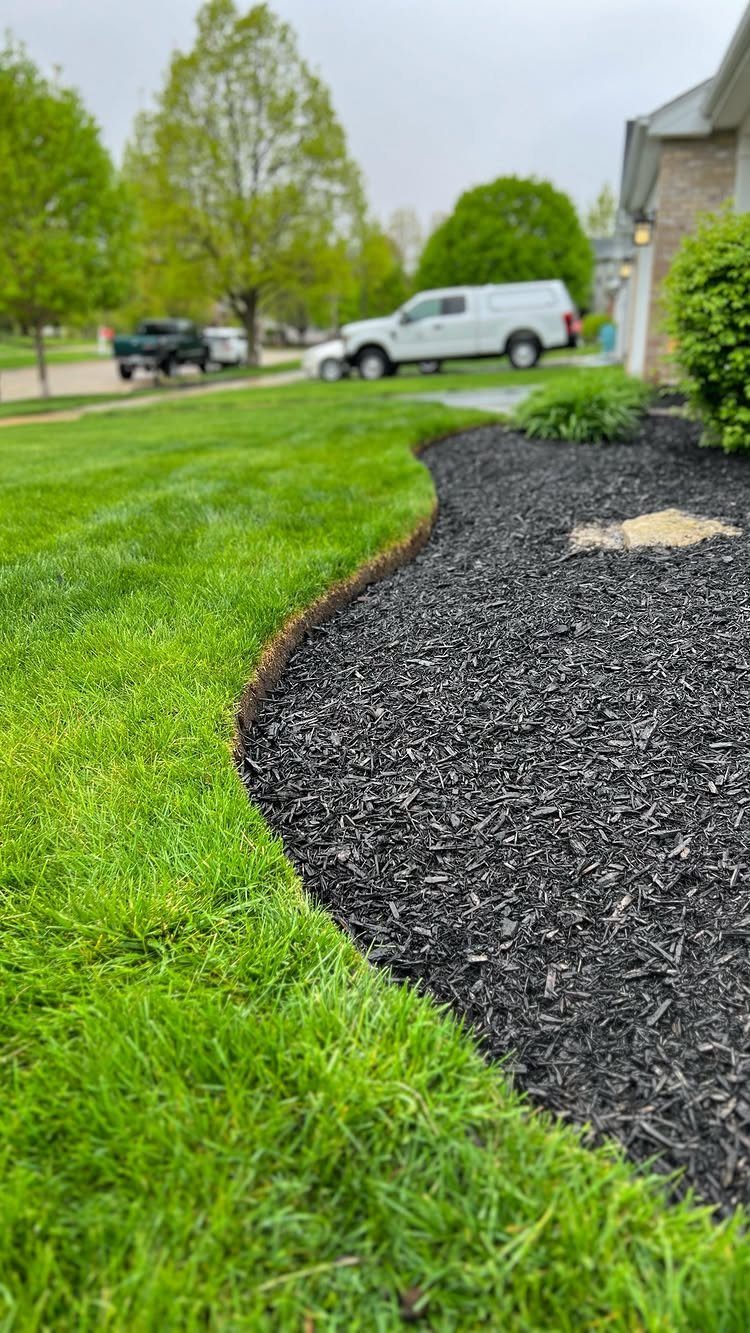
A crisp edge of black mulch against green lawn does more than look finished. It blocks sun from hitting bare soil, so weeds struggle to sprout and water from your hose actually reaches roots instead of vanishing in midday heat.
The first year matters most.
Your new shrubs and perennials are still small, and raw garden soil between them looks thin and unfinished. A smooth layer of mulch or a topsoil-mulch mix fills those gaps and gives the bed the weight of a real garden.
I refresh mine yearly, though some beds coast longer. Winter or summer, the ground underneath stays closer to a temperature plants can handle.
2. Plant Flowering Trees
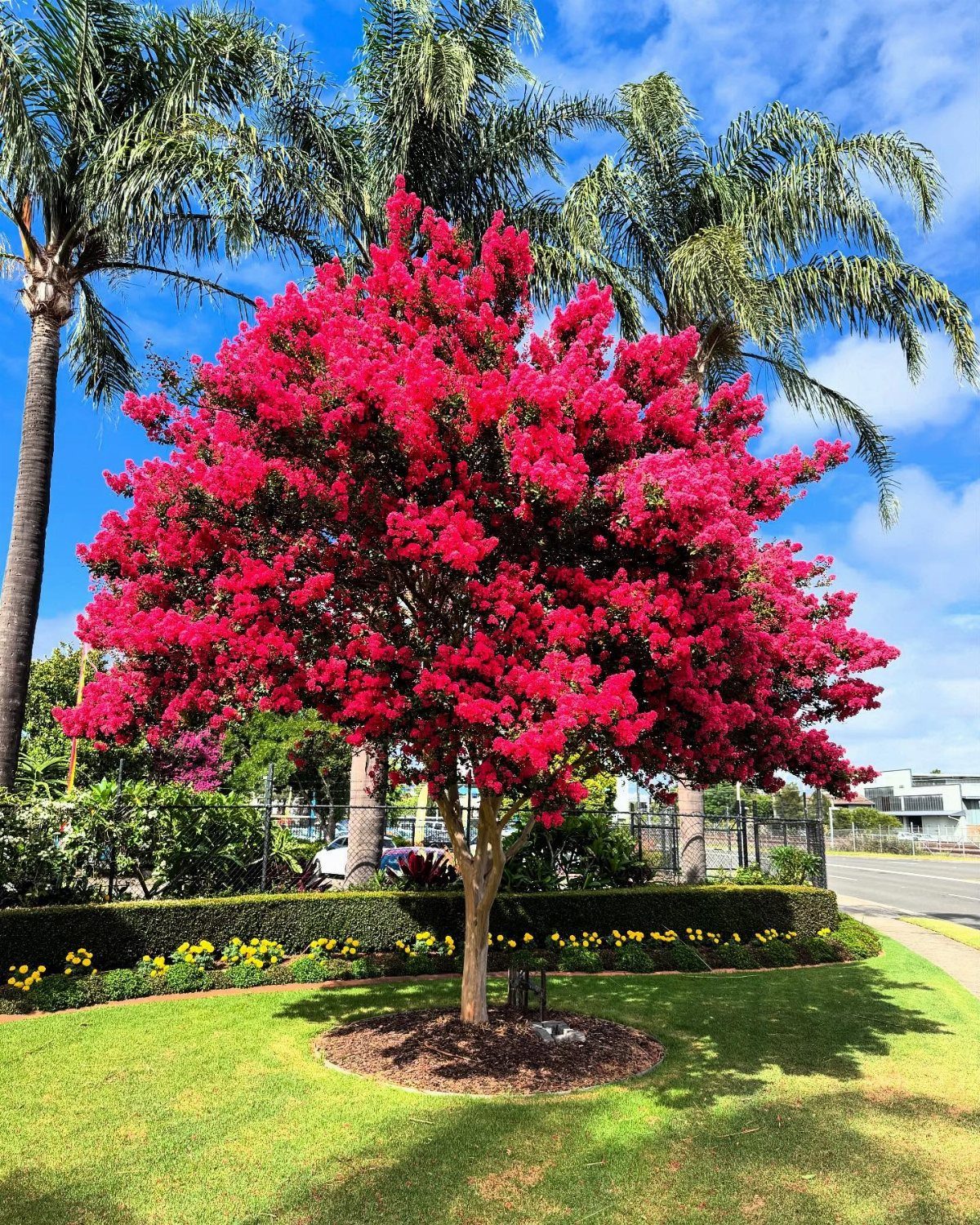
A single flowering tree in the lawn, circled by its own mulch bed, asks almost nothing of you after planting.
Kousa dogwood shrugs off the diseases that hit native dogwood hard, and redbud loses its spring petals cleanly instead of leaving the sticky litter some flowering trees dump on the lawn.
A crape myrtle gives you bare branches through winter, then months of color from summer into fall before the leaves drop. That rhythm suits a front yard where you want interest without a schedule of pruning or feeding.
Pick a spot visible from the street and from inside your house. One well-placed tree does the work of a whole border.
3. Walkways, Patios
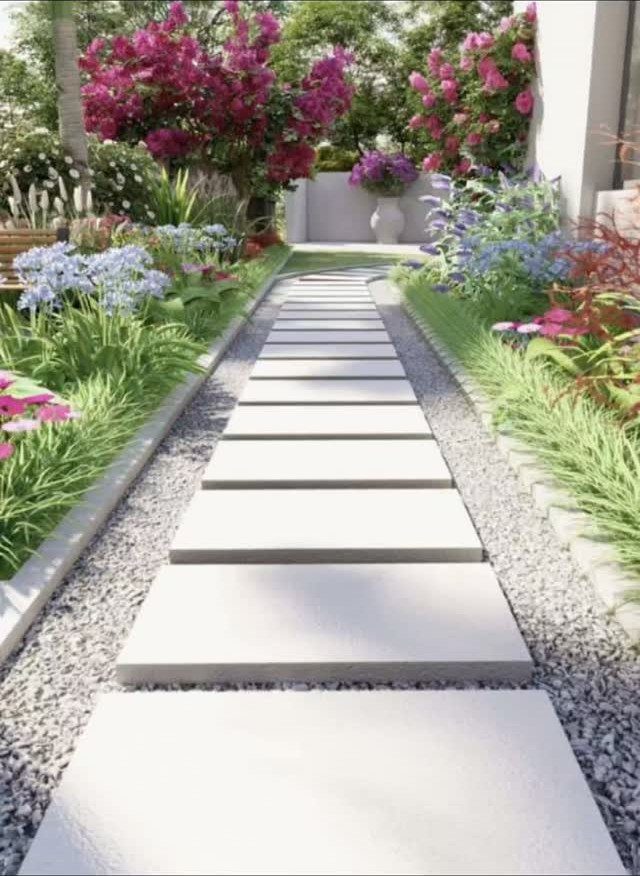
Concrete pavers set in gravel make a straight path that keeps foot traffic off your lawn and out of your beds.
The rectangle shape reads modern; brick would read traditional. Match your walkway material to any patio or stoop you already have, or treat the path as its own statement.
Wider is better than narrow. A cracked 24-inch walk upgraded to 36-inch stone gives two people room to pass and looks intentional rather than apologetic.
For a front yard that feels scattered, hardscape adds the structure planting alone cannot. A low stone border around a bed or a clean step up to the porch pulls the same trick with less labor.
4. Plant Ornamental Grasses
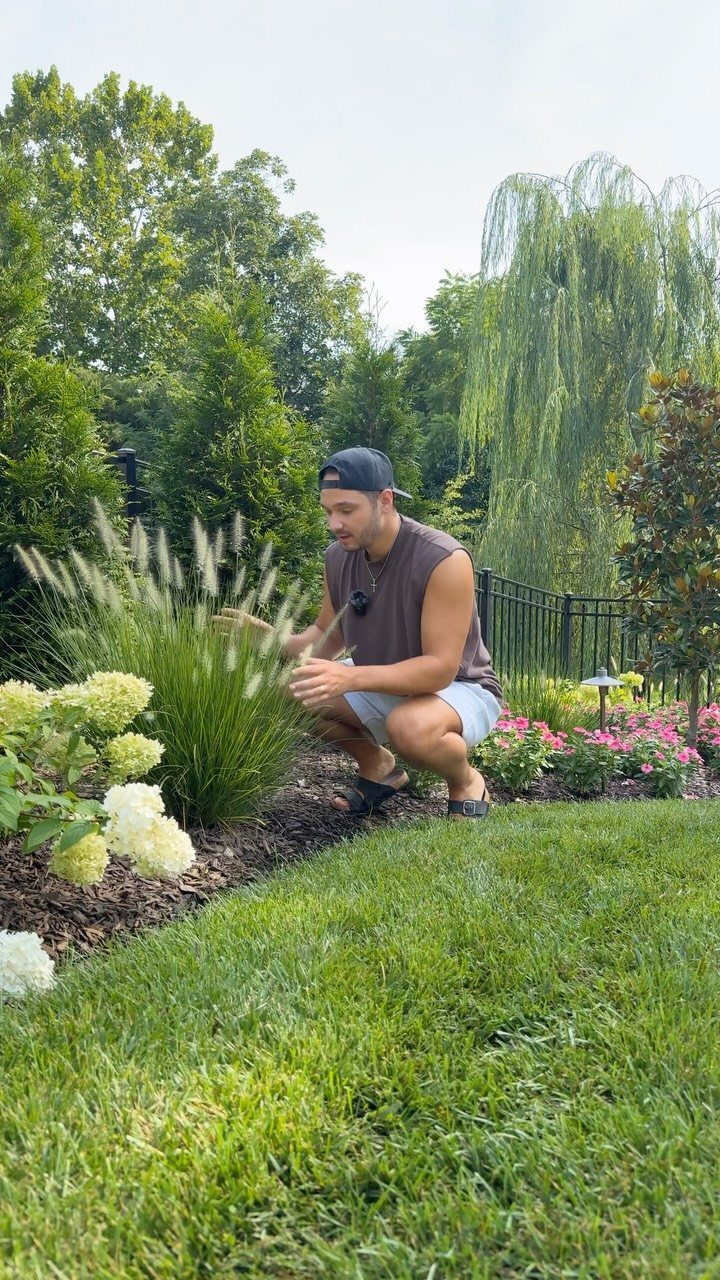
Fountain grass at the edge of a bed catches light and moves with any breeze.
Ornamental grasses need no spraying, no staking, and deer pass them by. Carex and hakonechloa work deeper in shade if your yard runs cool.
Texture is what grasses add that flowers cannot. In a bed of rounded hydrangea blooms, the narrow upright blades break up the silhouette and keep the eye moving.
I use them as edging, as fillers between larger shrubs, or in masses where I want height without the structure of a hedge. Native varieties to your area need the least babysitting.
5. Solar Lights and Uplighting
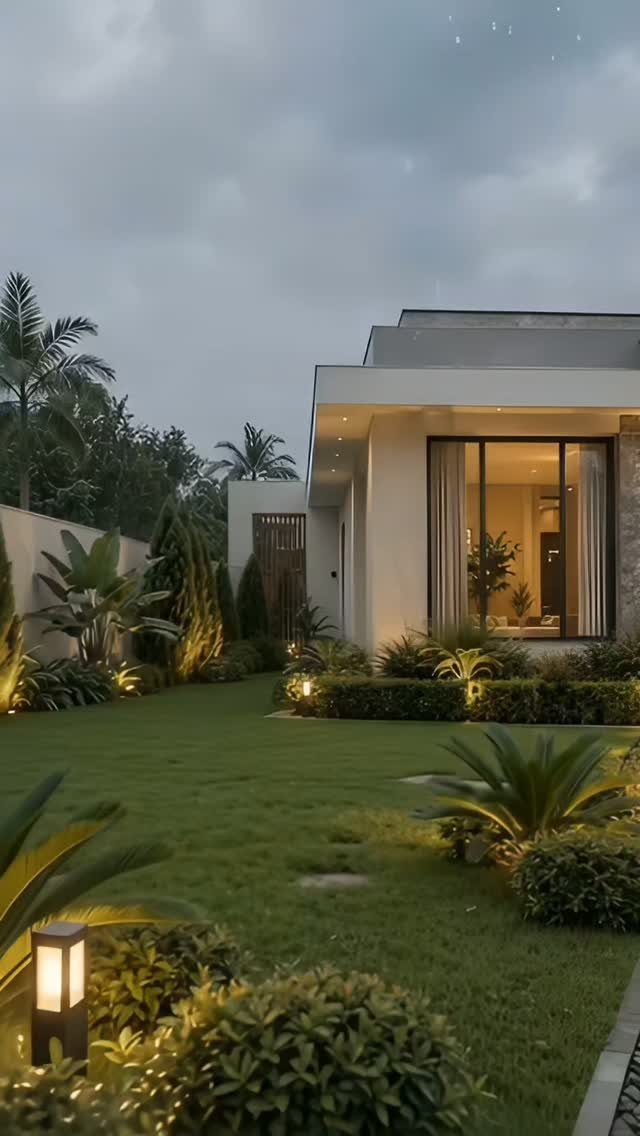
Solar path lights need no wiring and no electrician.
Stake them where they will charge by day and guide steps after dark. Uplights at the base of a tree or large shrub throw shadows upward and give the front yard presence it lacks at night.
The cheap sets fade fastest; spend enough that the housings do not crack in the first freeze. Position path lights close enough that their pools overlap slightly, not so far apart that you walk through dark between them.
Lighting buys you usable hours. A yard you only see by day is a yard you only half live in.
6. River Rock
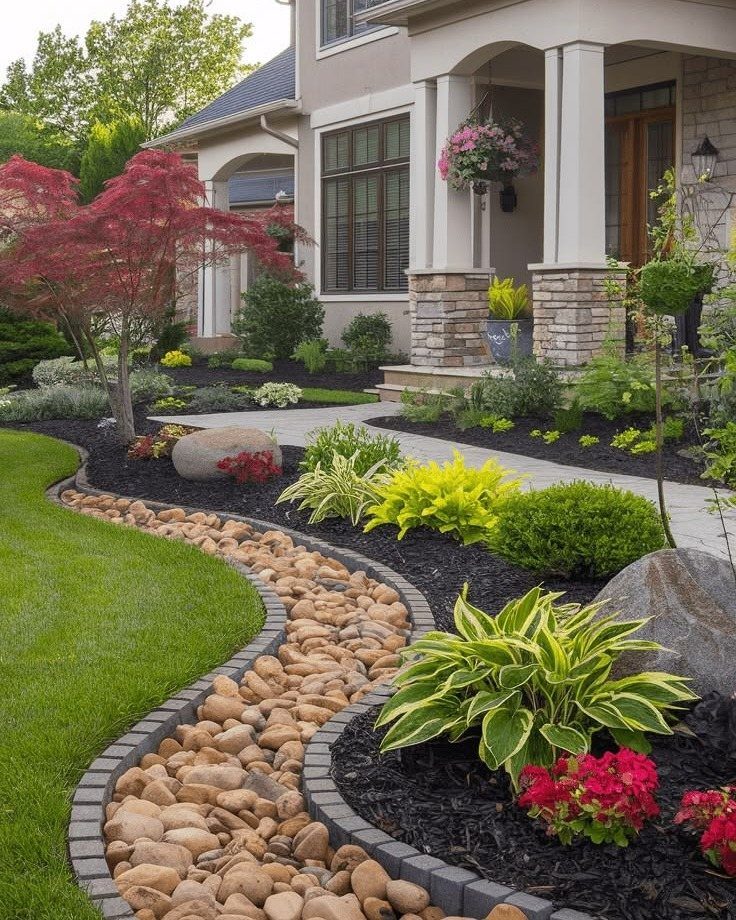
A channel of smooth tan river rock, edged in gray pavers and curving through dark mulch, breaks up planted area without adding maintenance. Rock needs no water, no fertilizer, no seasonal replacement.
In dry regions, a gravel bed or rock garden replaces lawn outright. Elsewhere, river rock works as accent: a dry stream bed, a drainage swale, or the visual pause between planting zones.
Local stone costs less than shipped; some pits will let you haul for sweat equity if you have a truck and a morning free.
River rock collects what blows in; leaves and twigs sit between the stones until someone picks them out. Leaves and dirt collect between stones and need sweeping or blowing out to keep the clean look you started with.
7. Plants to Frame the House
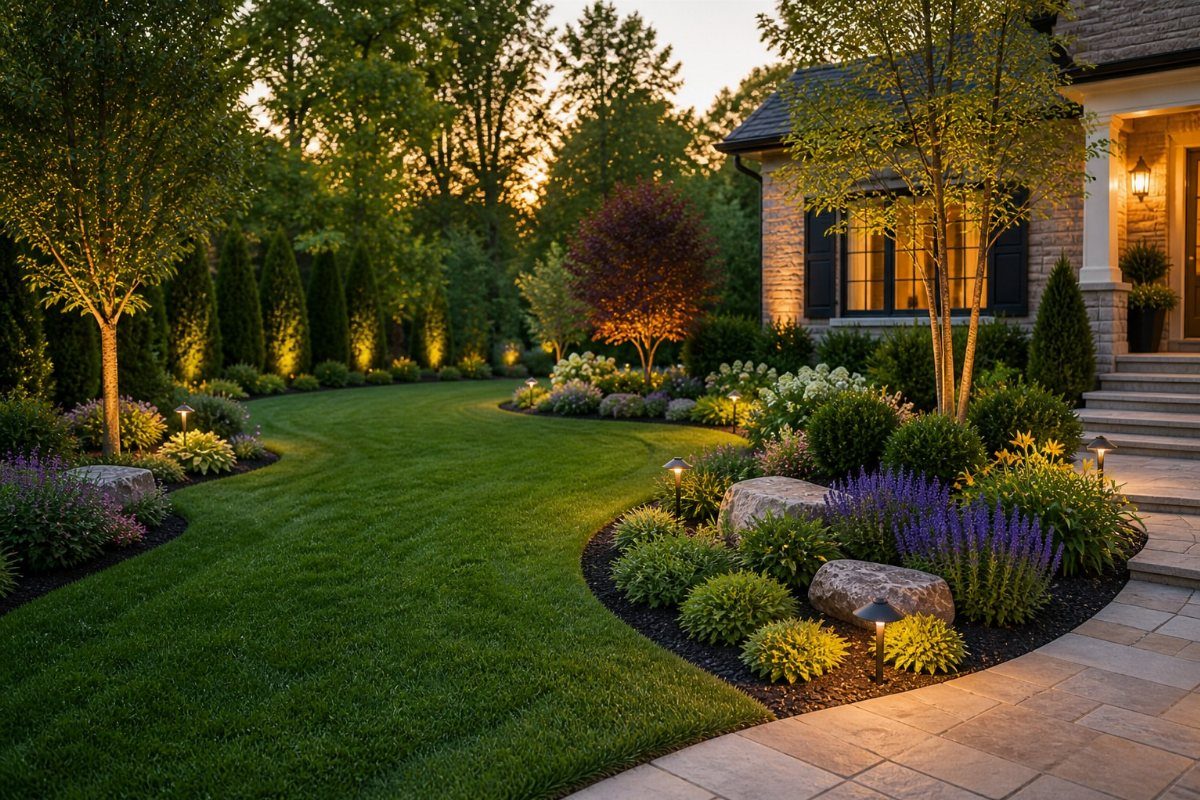
Curved beds flanking the house, planted tall at the outer edges and stepping down toward the door, pull the eye straight to where you want guests to arrive.
The tallest shrubs or small trees sit farthest out; perennials and groundcovers fill in closer, so nothing blocks the entry itself.
I laid out my own beds with a garden hose first, walking the curve from the sidewalk to see how it read from the street.
A dry spell in late summer showed me where the hose reached and where it did not; I adjusted before digging anything in.
The payoff is structure without a fence or wall. 2 matching beds give a plain ranch the symmetry it never had.
8. Rose Garden
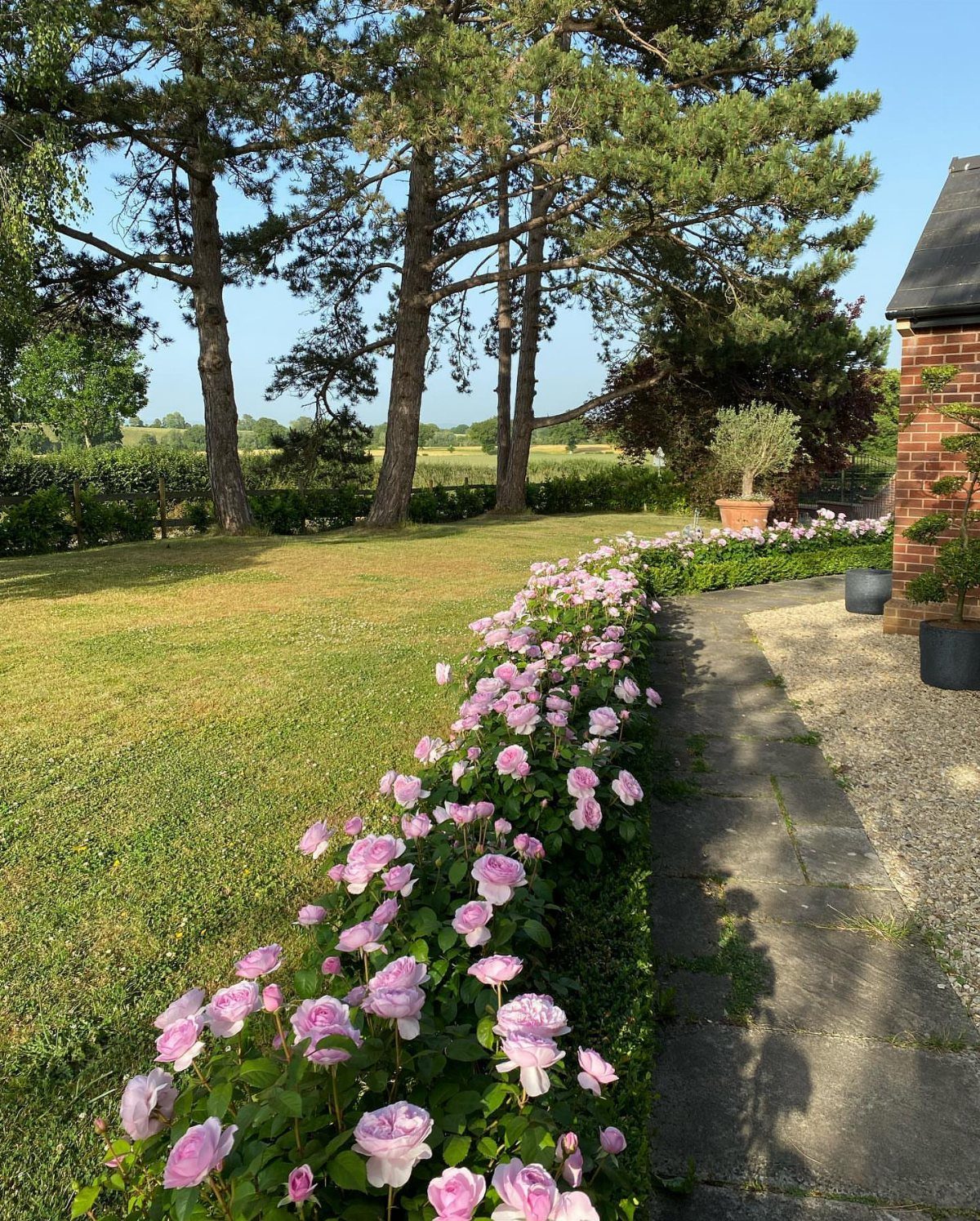
A row of roses along a stone walk reads formal and smells like summer.
The work is the thing: spraying, deadheading, winter protection in cold zones. Start with a few plants, not a full bed, and see if the schedule suits you before expanding.
Knock Out and other landscape roses need less fuss than the hybrid teas your grandmother grew. Climbing varieties on a porch post or arch add height without taking ground space.
Low evergreen shrubs at the back keep something green when the roses are bare sticks. Lavender or iris in front extend bloom without adding another high-care plant.

15.7" Large Paving Stones Covers More Area: our paver molds for concrete size is 15.7" x 15.7" x 2"; Each molds of concrete produces a realistic parquet style pattern, covering up to 0.15 sq; One mold creates a professional looking pathway pattern faster than traditional small stepping stones
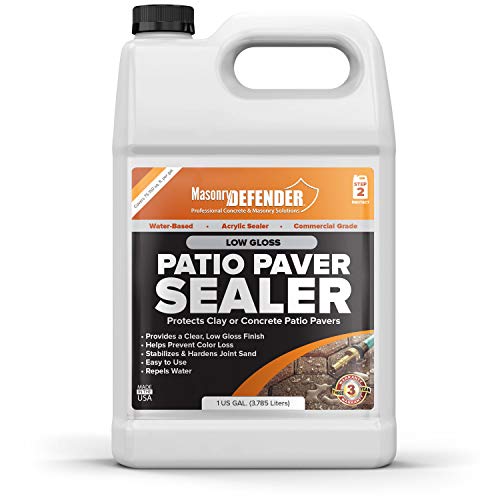
CLEAR WATERPROOF PROTECTION: Water based acrylic sealer dries clear with a low gloss finish, enhancing and protecting surfaces from fading. VOC-compliant and prevents color loss without yellowing.

9. Go with Evergreens
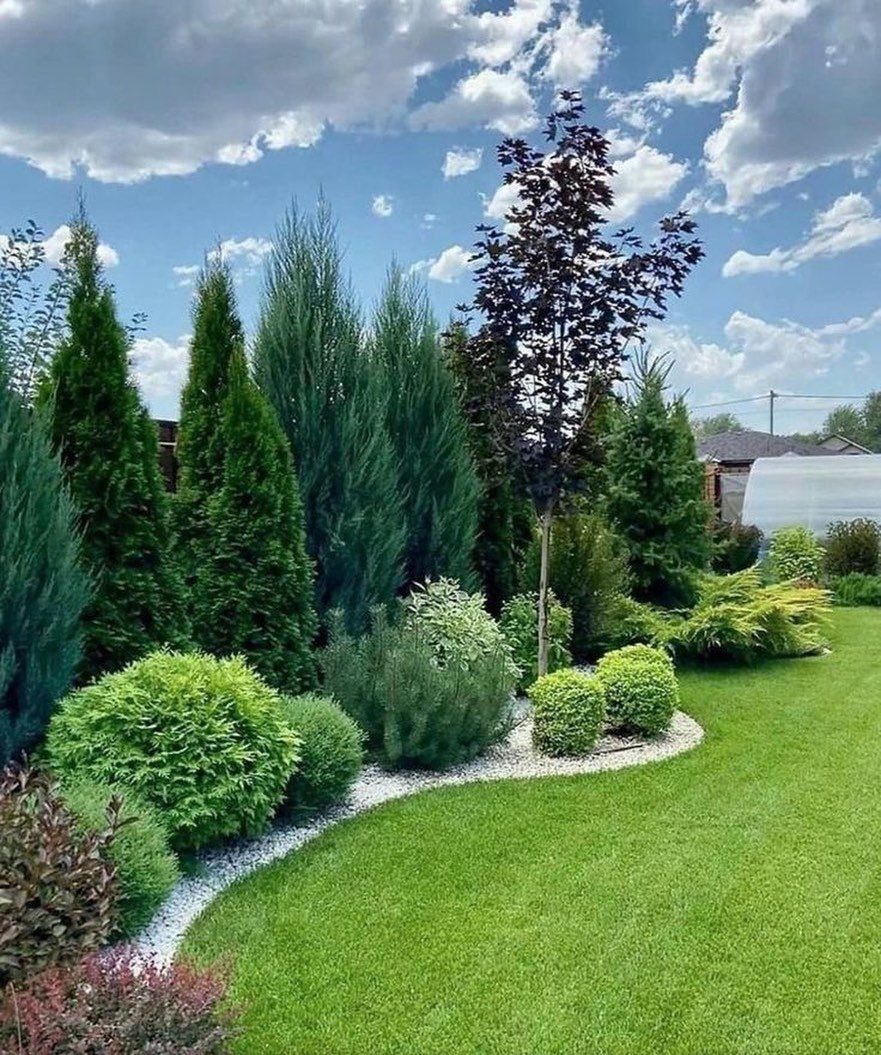
White gravel beds planted with conical and rounded evergreens carry color through January when everything else is brown sticks.
The range runs from blue spruce to gold thread cypress; mix the shades so the bed does not flatten into one mass.
Dwarf varieties stay where you put them. A spruce tagged for a compact mature height fills its space without shearing; anything labeled fast growing or screening will outrun a small front yard before you know it.
Mine are planted on a slope where mowing was treacherous. The gravel drains fast, the roots hold the soil, and I no longer risk the mower on that angle.

【Natural River Stone】Our stepping stones, made from river rocks, are naturally stunning. Each stone, crafted from genuine river stones, retains its natural texture to highlight its intrinsic beauty. With their unique natural colors, they can create an eye-catching garden path for your patio.

Weather-Resistant & Built to Last: Crafted from durable PC+ABS resin, these stepping stones are heat-resistant, crack-proof in freezing temps, and impact-resistant. Designed for year-round outdoor use, they won’t fade, warp, or lose their shape—rain or shine.

Vintage Charm: Natural gray finish features subtle color variation that replicates the look of weathered stone, adding visual texture to gardens, pathways, and outdoor spaces
10. Layered Groundcovers, Shrubs, and Taller Plants
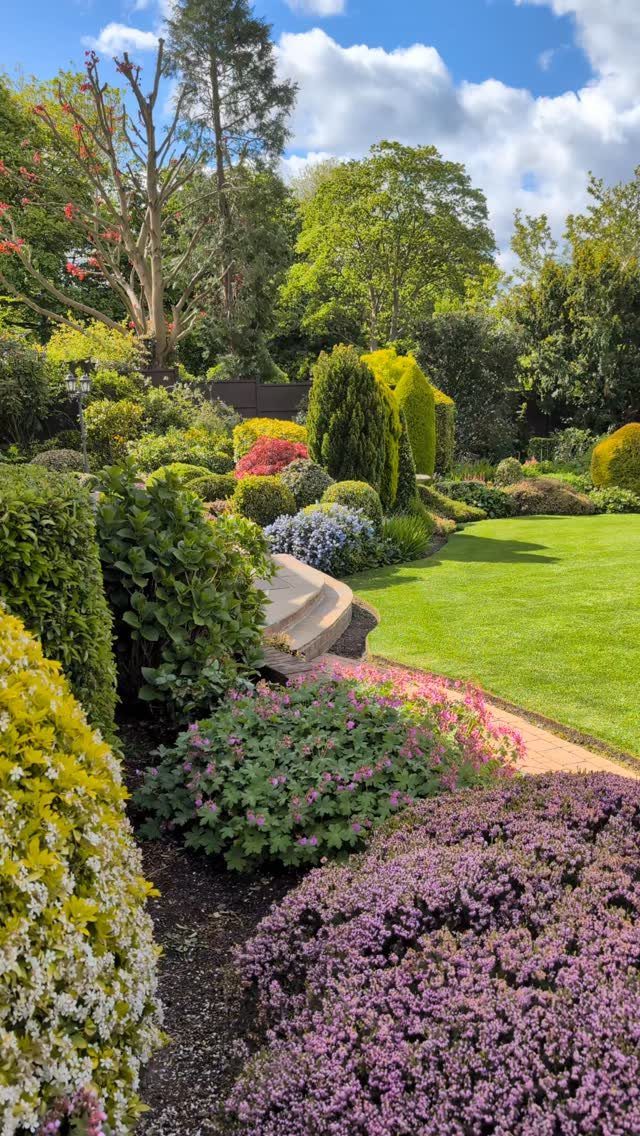
Low groundcovers in front, medium shrubs behind, trees or tall grasses at the back: the eye reads the depth as richness even when the plant count is modest.
A flat bed of one height looks like a foundation planting; layers look like a garden.
Density matters as much as height. Tight planting leaves no sun for weed seeds; the same look with gaps means hours of pulling.
Match the plant shapes to your house.
Rounded boxwoods and hydrangeas read traditional; upright grasses and sculptural agave suit modern lines. The layering works either way.

READY TO PLANT: Includes 12 Dwarf Fountain Grass (Pennisetum alopecuroides ‘Hameln’) starter plants in 2.5″ cubes. Each plant is well-rooted and ready to thrive. Natural variations in size, color, or seasonal appearance may occur.

LIVE BLACK FOUNTAIN GRASS: This ornamental grass arrives as 2 live plants about 4 inches tall, suitable for transplanting into garden beds, landscape borders, or outdoor planters.

STRIKING SMOKY PURPLE-BLACK PLUMES: This Black Fountain Grass features fuzzy, smoky purple-black flower spikes that emerge in late summer, creating a stunning contrast with its deep green foliage. The plumes add a dramatic touch to your garden that lasts well into the fall.
11. Use Color Thoughtfully
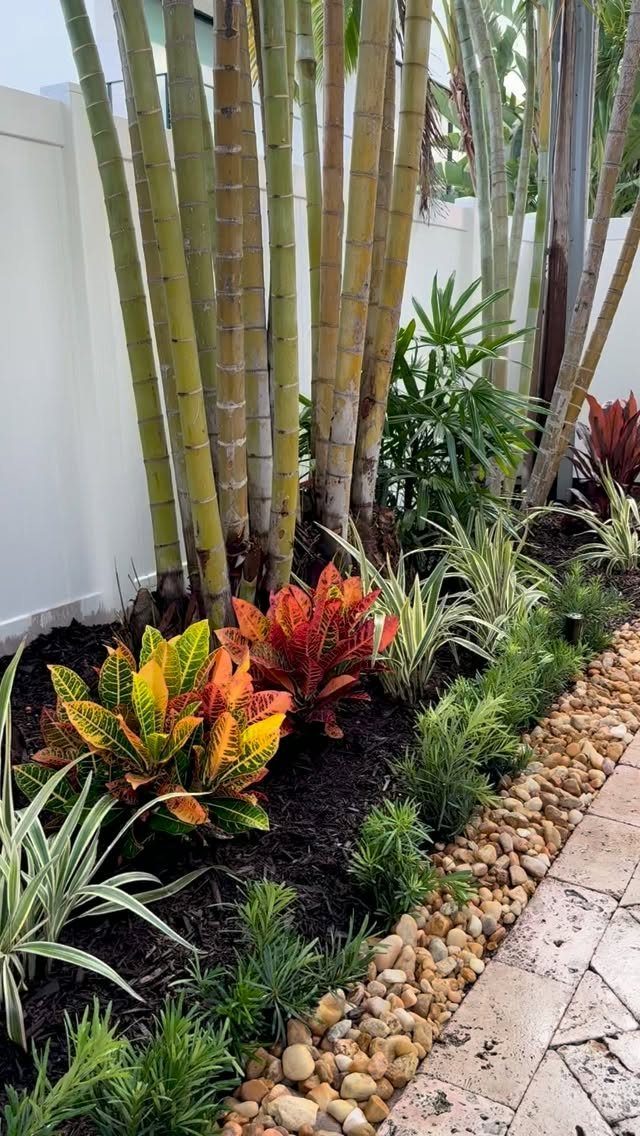
The crotons and flax lilies against that white fence do not fight the house; they pick up colors already there.
A beige or tan exterior wants warm reds and oranges; gray or blue siding needs cooler whites, purples, silvery greens. White houses take anything, though bold green foliage against clean stucco has its own punch.
A unified palette reads as intention. Three colors, repeated, beats a dozen competing for attention.
I learned this after planting a hot-pink azalea against my own brick.
The brick won; the azalea looked muddy from the street. Moved it to a white-fenced side bed where it sings.
12. Install Raised Beds
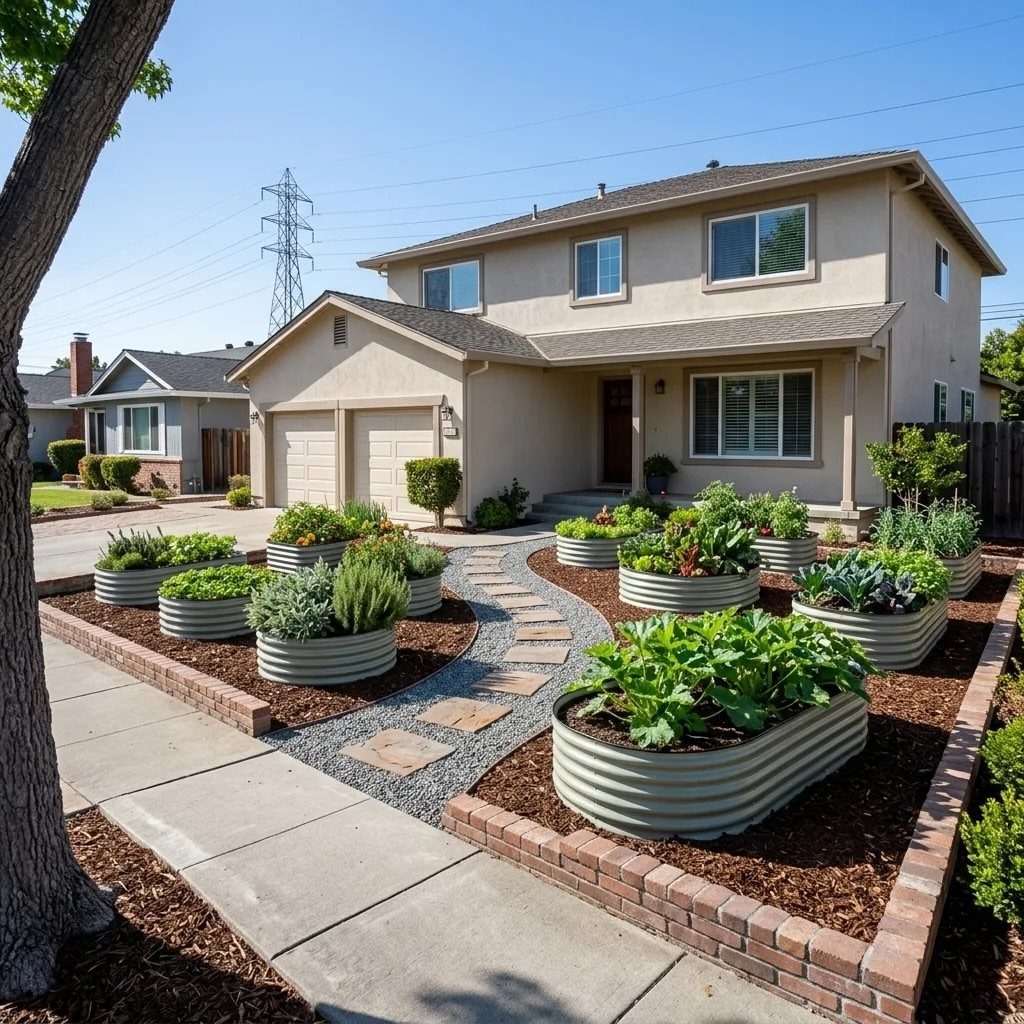
Corrugated metal beds turn a front lawn into a vegetable garden with clear lines and no ambiguity about where the garden ends and the grass begins. The height saves your knees and shows off the planting from the curb.
Gravel paths between the beds keep feet clean and drainage open. Curved lines soften the industrial look of the metal; straight rows read more utilitarian.
The soil inside is yours to build.
My own clay yard would have taken years to improve; the beds let me start with bagged mix and compost the first season. A liner inside the metal slows rust and keeps soil from direct contact.
13. Central Stone Fountain Feature
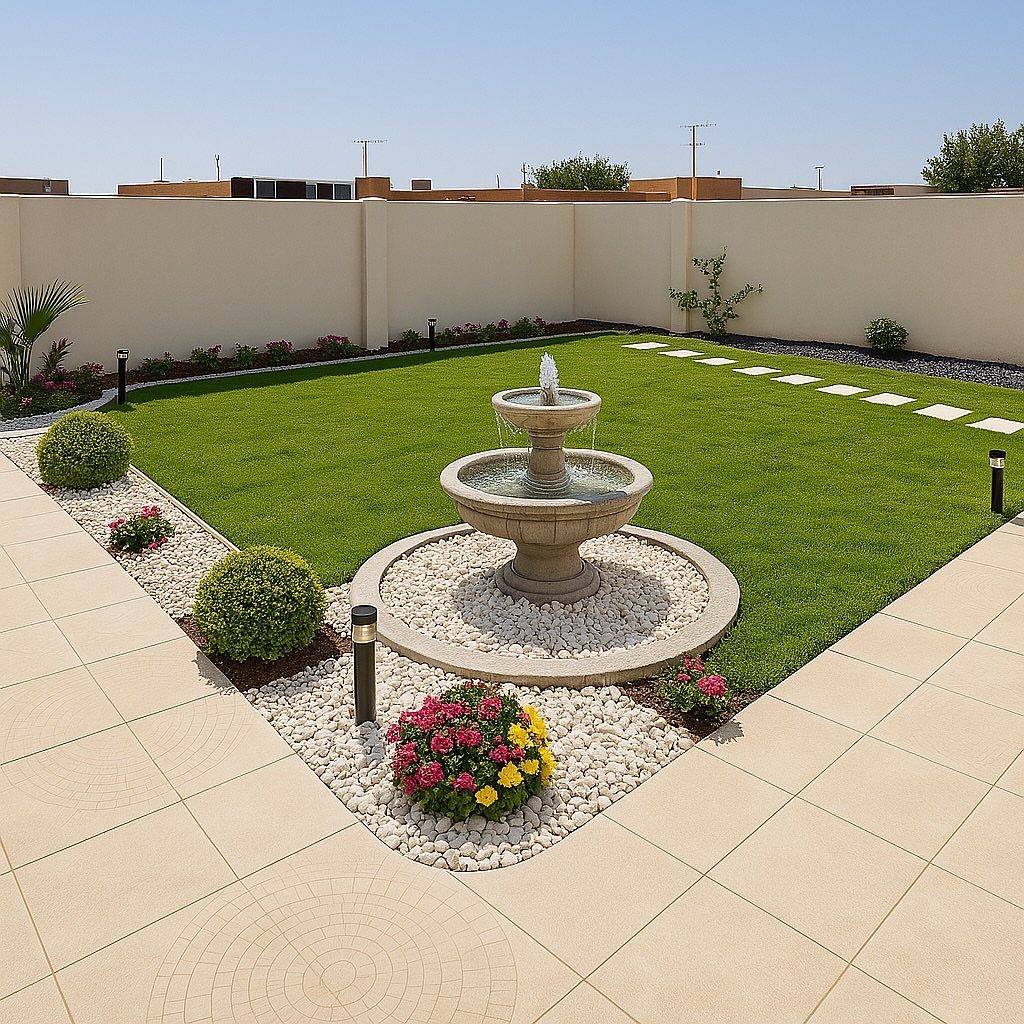
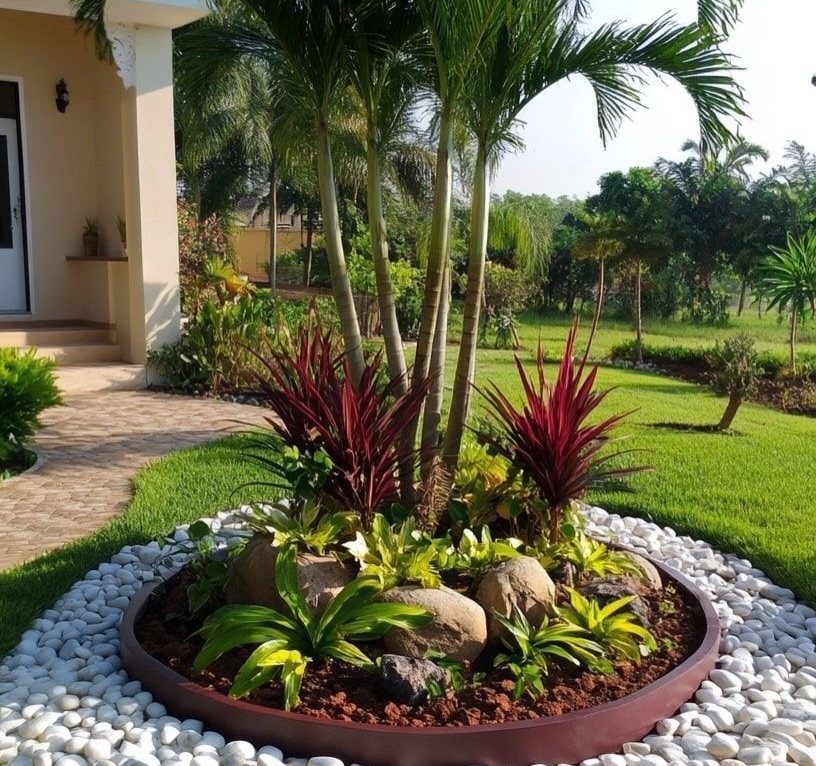
A stone fountain in a round bed of white pebbles gives a front lawn the gravity of a courtyard. The water sound covers street noise and draws birds.
Check your water line before you commit.
A recirculating pump needs power; bury the cord in conduit or plan to run it across the lawn. In freeze zones, winterizing means draining and covering the works, or the stone cracks.
The pebble bed needs a solid edge or the lawn creeps in. Pavers set flush keep the circle clean.
14. Low-Maintenance Artificial Turf
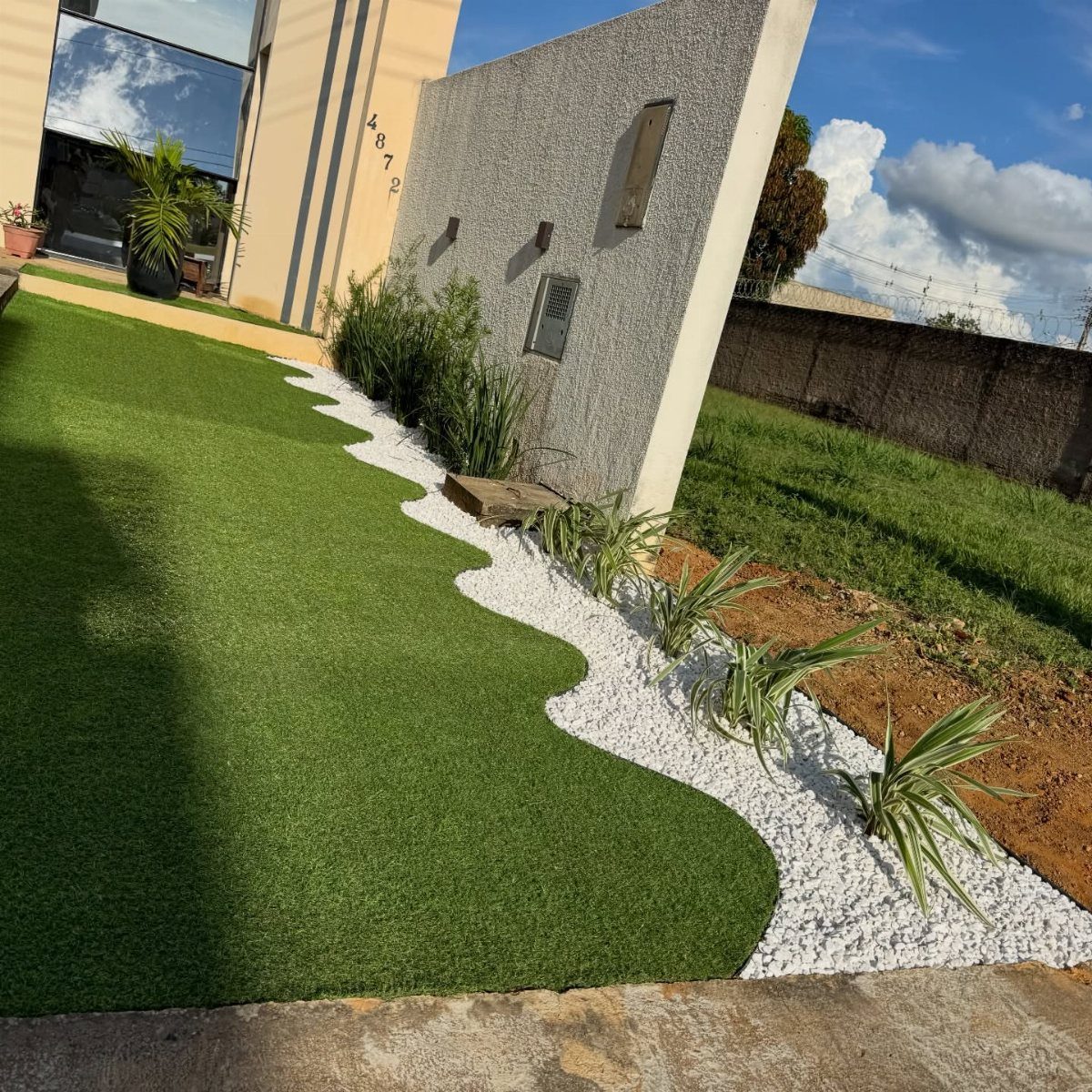
Artificial turf with a wavy gravel border reads modern and drops the mower forever. No watering, no fertilizing, no dead patches where the dog runs.
The turf itself varies. Nylon holds up longest; polyethylene feels softer underfoot.
Infill keeps the blades upright; silica sand or crumb rubber each has partisans. I would spend the extra for decent backing that drains fast, or rainwater pools.
Heat is the tradeoff.
Turf in full sun runs hot enough to sting bare feet; a white gravel strip throws light back and helps some. Trees or a porch shadow matter more.
15. Striped Mown Lawn Design
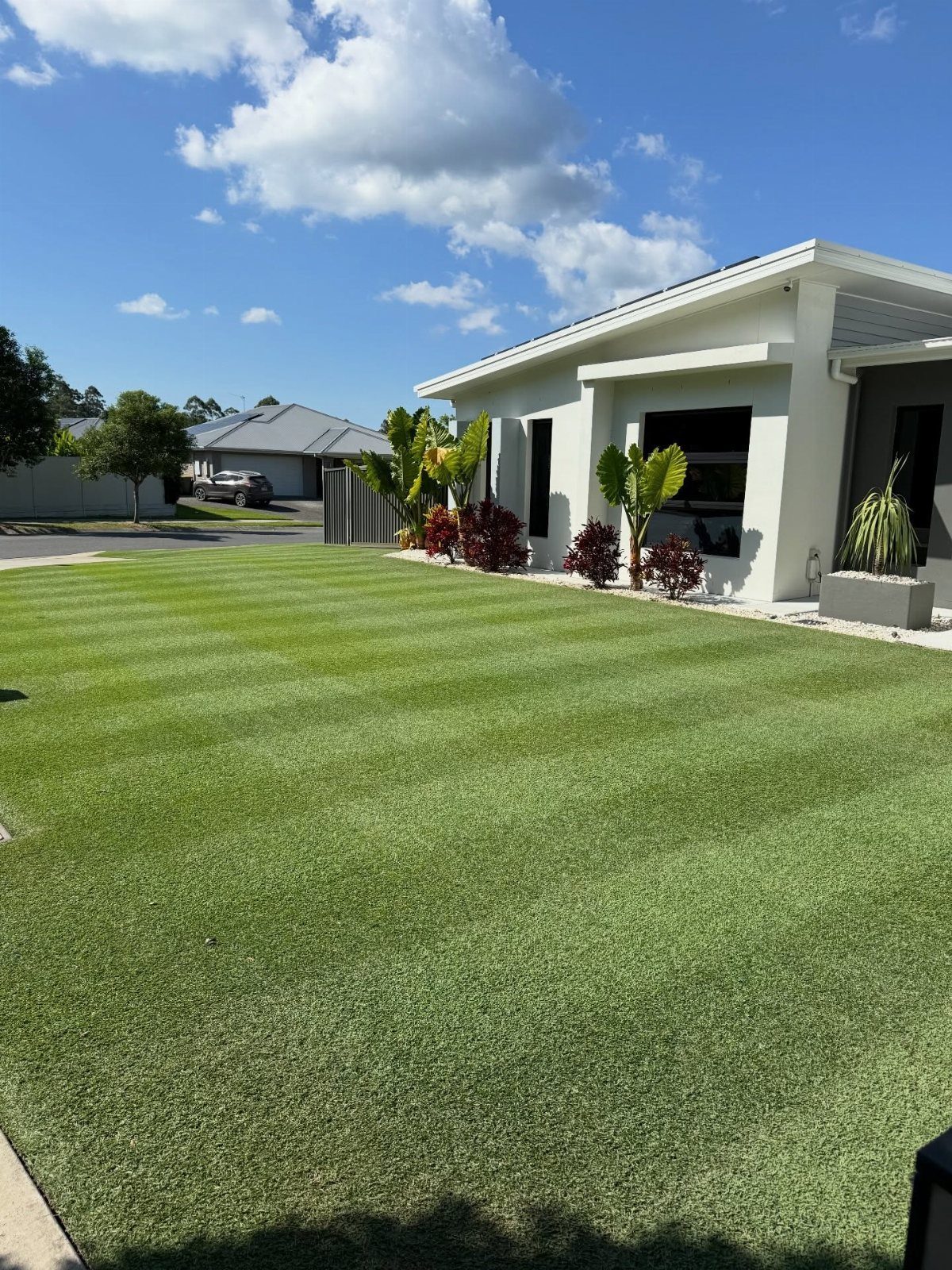
Alternating light and dark stripes on a mown lawn come from bending grass blades in opposite directions, not from different cuts. A rear roller on the mower presses each pass flat; light catches the bent blades differently.
The pattern shows best on healthy, dense turf with sun at an angle.
Midday overhead sun flattens the effect. Straight lines suit a formal house; curves follow a winding walk.
This is weekly labor, not a one-time setup.
The stripes last until the next growth spurt. For the reader with a small yard and a rotary mower without a roller, the effort does not match the result.
16. Japanese Maple Focal Point
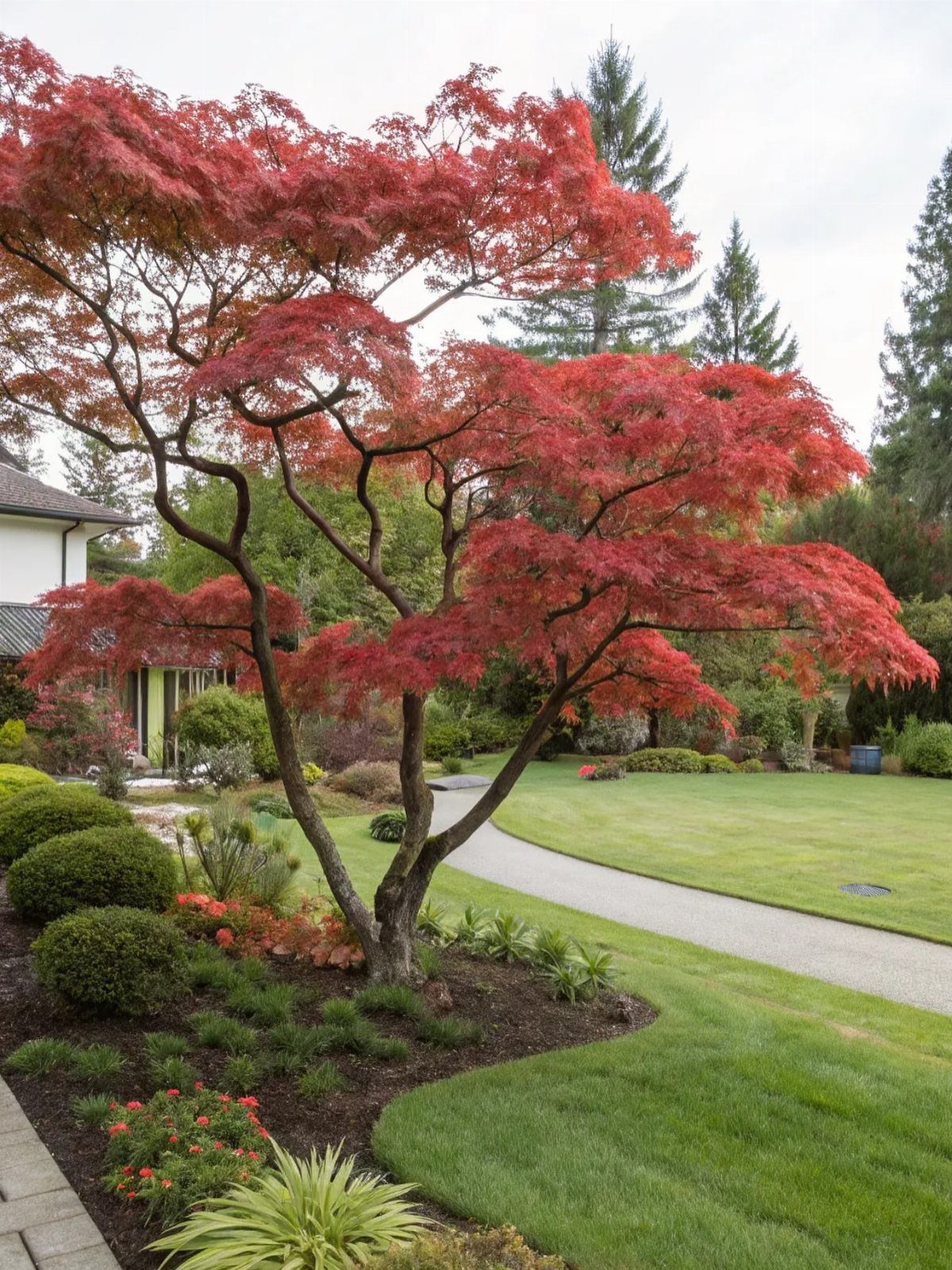
A red Japanese maple at the center of a curved bed gives a front yard its anchor. The color carries from early spring through fall; winter silhouette still holds interest.
Site it where afternoon shade protects the leaves from scorching, with room for the mature spread.
A dissectum variety weeps and stays smaller; an upright palmatum reaches full tree height and needs space. A young tree in a five-gallon pot takes years to fill the role of a full-size specimen.
Mulch wide, not deep. A thin layer of mulch over the root zone keeps moisture steady; piled against the trunk invites rot.
Evaluate Light Conditions
Start with a notebook and a Saturday. Walk your front yard at 9 AM, noon, and 4 PM, and mark which patches sit in sun and which have slipped into shade.
A south-facing wall bakes from 10 to 4; the north side of that same wall may never see direct light. Trees and your house throw shadows that move, so one check is not enough.
Morning sun is cooler and gentler than afternoon sun.
A hydrangea that thrives in eastern light may crisp against a western wall. The notes from your 3 rounds tell you whether you are shopping for full-sun, part-shade, or shade plants, and where each label applies.
Full-sun salvias planted in a bed the house shadow reaches by mid-afternoon will struggle no matter how bright the morning looks. They stretched and bloomed thin.
The tag said full sun; my yard did not deliver it. A morning spent with a notebook would have saved the season.
Consider Function
A front yard can greet visitors, grow tomatoes, or give the dog a place to circle before bed. It rarely does all three well.
Rank what matters: seating for neighbors, a path that stays dry in rain, a patch of level grass for kids. The list shapes what you build.
A seating area wants flat ground, maybe a low wall to lean against, and shade by July. A vegetable garden in the front needs sun first, then soil you can improve without fighting your contractor’s clay fill.
Paths for daily foot traffic need width and a surface that does not turn to mud; occasional guests can handle stepping stones.
My own front yard started as a straight walk and a lawn I never sat on.
A bench placed where morning light hits sounds ideal, but most people use outdoor seating less than they imagine; test the spot with a folding chair first.
The path to the driveway got more steps than the porch ever did. I should have watched our actual patterns before digging.
Maintenance Considerations
Low maintenance is not no maintenance.
Ornamental grasses, sedum, salvia, yarrow, and native shrubs to your region cut the hours, but they still want cutting back, dividing, or the occasional replacement. Mulch or gravel beds reduce weeding; they do not end it.
Drought-tolerant plants still need regular water their first year while roots are finding their depth. A yard that looks good during your busy weeks still needs someone to walk it monthly and pull what does not belong.
Overconfidence in a plant’s hardiness kills more garden beds than honest neglect.
A landscape rose sold as low-care still wants deadheading if you want rebloom; a native shrub in the wrong soil wants more help than a non-native suited to the spot.
Match the plant to your actual attention, not to your aspirations. A bed sized to your actual attention span, not your aspirational one, stays recognizable longer.
“All three of these design elements should be low maintenance so that your dreams of a beautiful landscape and the reality of how much time you actually have to work in your garden are in harmony.”
Plan for Seasonal Interest
A yard that flowers in April and quits by June is a yard you stop seeing. Evergreen shrubs carry structure through January.
Red-twig dogwood or winterberry against snow gives color when nothing blooms. Perennials like hellebores push up in late winter, before the daffodils.
Spring interest starts with early bulbs and the small flowering trees that bloom before the canopy leafs out. Summer wants the perennials and annuals, the lush growth that fills out the beds you mulched in March.
Fall belongs to grasses, to mums, to trees that turn before dropping. Winter is evergreens, bark, stone, the hardscape you installed when planting was easy.
Shopping only in May, when garden centers are loud with color, means missing the early bulbs and late-season performers that carry a bed through the year. Everything bloomed at once, then nothing.
Now I force myself to visit in February, when the bare sticks show structure and the staff has time to talk. A January yard should still hold something worth walking to the window for.
Frequently Asked Questions
How can I landscape my front yard cheaply?
Native plants, groundcovers, and hardscape like gravel or river rock cut costs because they need no fertilizer, less water, and no replacement once established.
A layer of mulch over bare soil blocks weeds and holds moisture so you spend less on plants and hours pulling.
A garden hose makes a cheap layout tool for beds, and hauling local stone yourself skips the delivery fee. Start small, with one tree or one gravel channel, and add as budget allows.
How to make a front lawn look nice?
Stand across the street and look at your house as a guest would.
Trim overgrown shrubs, pull weeds, power-wash the walk, and fix cracked or faded hardscape before you plant anything. One well-placed flowering tree or a curved bed with mulch gives more impact than scattered small fixes.
What are the trends in front yard landscaping for 2026?
Year-to-year trends matter less than ideas that hold up past the season you plant them. What persists is low-maintenance design: gravel and river rock in place of thirsty lawn, evergreens for winter structure, and solar lighting to extend usable hours.
A yard planned for all 4 seasons, with spring bulbs, summer perennials, fall grasses, and winter bark or stone, outlasts any single-year look.