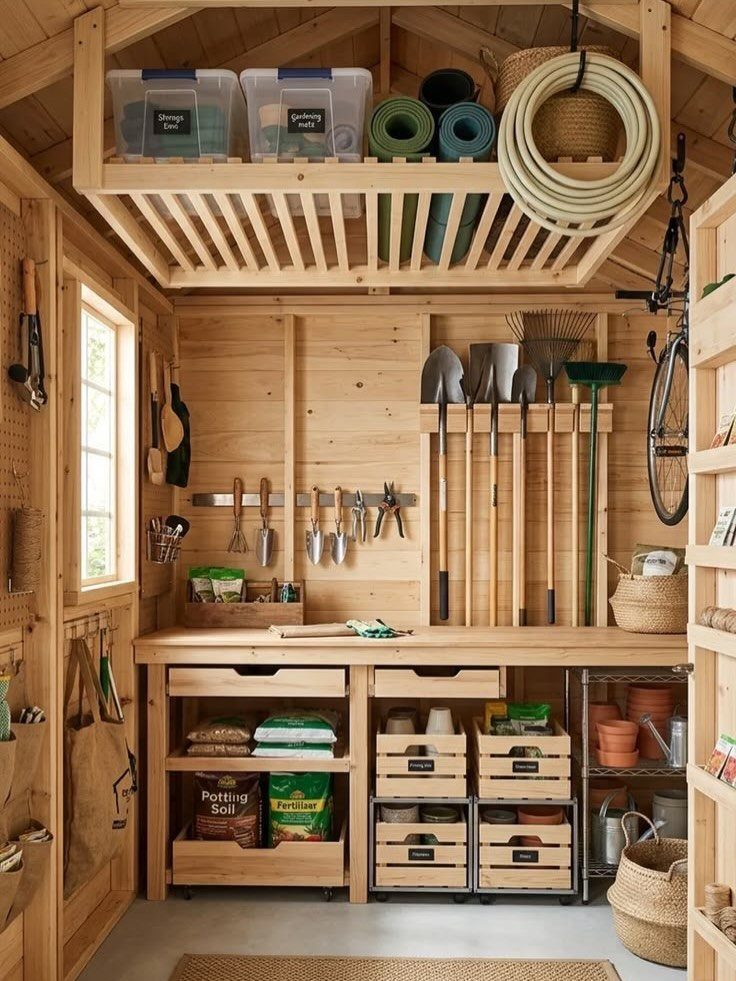
Twelve ideas run from a single screw you already own to a full built-in workbench, and the one that fits your shed depends on whether you own the walls or answer to a landlord.
A pair of pallets wedged into a corner turns dead space into tool storage without touching a drill bit, and PVC pipe cut to length and screwed to studs will carry the weight of rakes and shovels for years.
[link-whisper-related-posts]1. Add Shelves
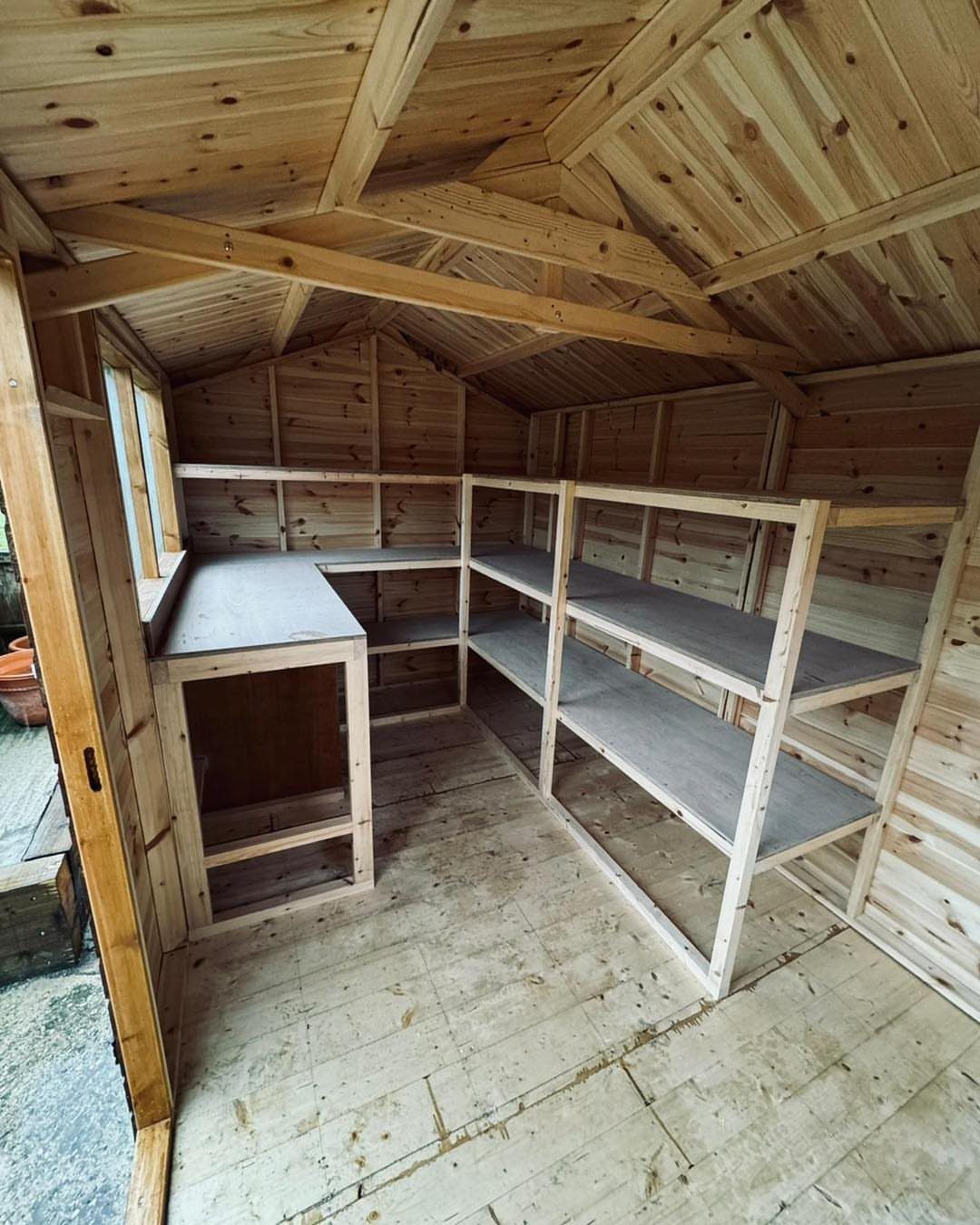
Built-in shelves turn the back and side walls of a shed into usable space that would otherwise sit empty.
For a small shed this matters more, since floor area disappears fast once a mower and a few bags of soil move in.
I would go with wall-mounted rather than free-standing; they do not shift when you bump them carrying a half-full watering can.
Heavy items belong on the lowest shelf, light ones up high. Shelves built from the same wood as the shed itself keep the look simple and avoid fighting the existing finish.
If you want labels that survive summer humidity and winter cold, skip paper stickers. A painted or carved label lasts longer than anything adhesive.

Versatile Suncast Shelf Kit: Designed for Suncast sheds to expand storage space. Wall mounted shelves help organize tools, bins, and gear in garage, shed, and utility areas.

All Metal Material: Our garden tool organizer, both backboard and hooks are made of iron, which makes it more durable and solid.And its load-bearing capacity far exceeds other usual ABS material tool hooks. It is deal for various tools like shovel, rakes, bikes, broom, mop, trust that what you get is what you see,any dissatisfaction please contact our customer service team

Flexible Storage with 5 Adjustable Hooks: Customize your storage to fit your needs. Equipped with 5 heavy-duty adjustable and removable hooks, the garage wall organizer storage system lets you easily slide each hook along the rail to create the perfect layout for tools and equipment of different sizes. The tool hooks are coated with rubber to prevent scratches while resisting water, rust, and everyday wear. Strong enough to securely hold ladders, shovels, rakes, hedge trimmers, leaf blowers, extension cords, folding chairs, sports gear, and more—keeping everything organized, protected, and within easy reach.
2. Use Pegboards
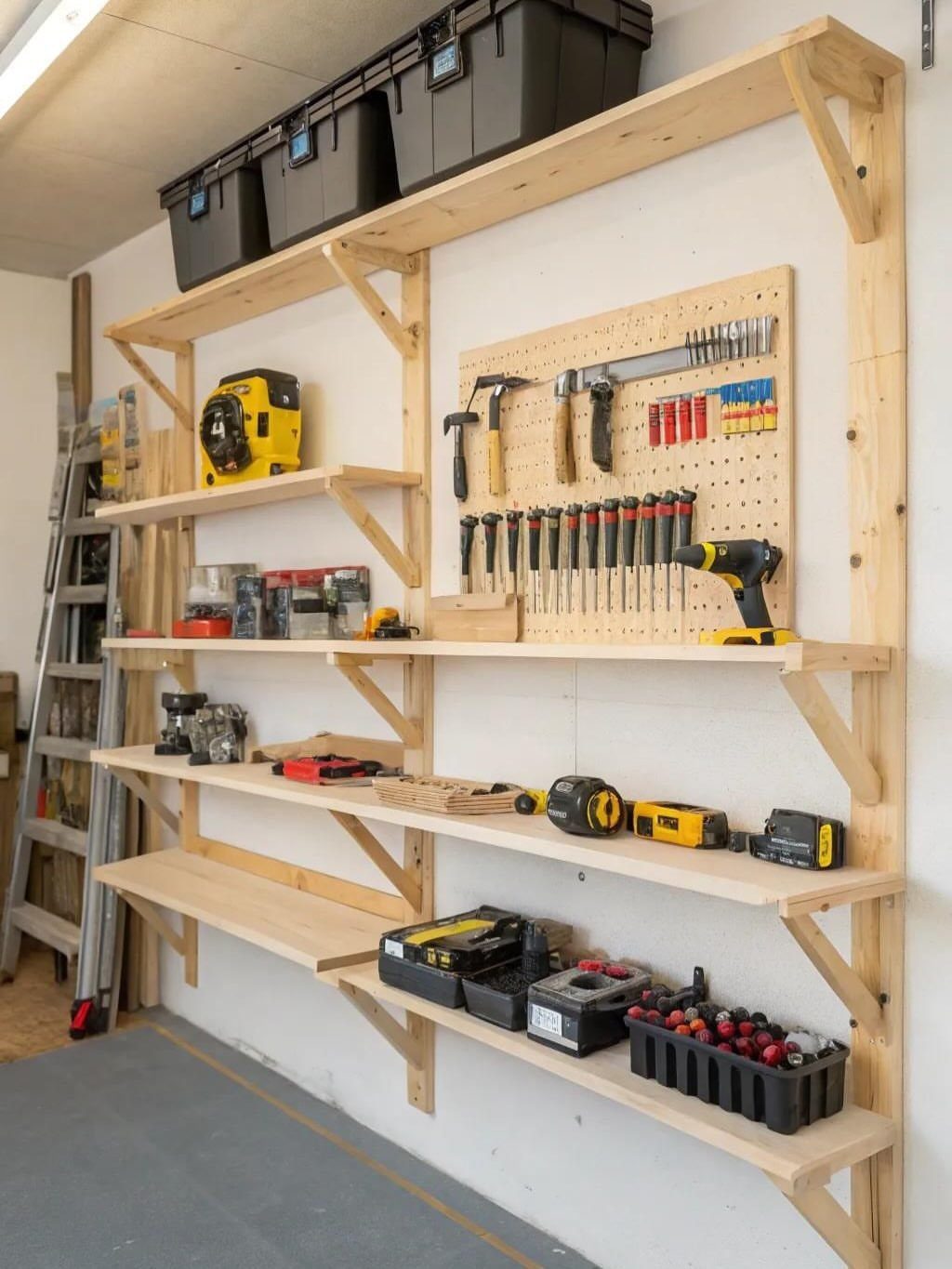
Pegboards organize the small tools that otherwise collect in drawers and disappear: screwdrivers, drill bits, the hex keys that came with your last flat-pack purchase.
A wood pegboard hung beside shelving for power tools and storage boxes keeps small gear off the bench but in reach.
Wood spacers behind the board matter more than I expected.
Without them the hooks sit too flat against the wall to hook properly. Simple lumber strips work fine as spacers, just enough depth for the hook shaft to drop in.
What I like about pegboard is the rearranging. Buy a new tool, move 2 hooks, done.
No drilling new holes, no patching old ones. The hooks come in packs of mixed sizes, and buying more than you think you need saves a second trip.

METAL NAILBOARD: Our peg board panels are made of high quality steel with a powder coated finish that is strong, scratch resistant and easy to clean. Each small pegboard has a weight capacity of up to 50 lbs. This is a favorite product for tool organizers, DIY enthusiasts, store owners and office workers.

Elegant & Durable Construction: Featuring a sleek, arched design crafted from polished solid wood. Its smooth, warp-resistant finish and elegant curves add a touch of modern sophistication to any room.

1.[High-Quality] The pegboard is constructed from high-quality steel, providing strength and durability
3. Storage Bins
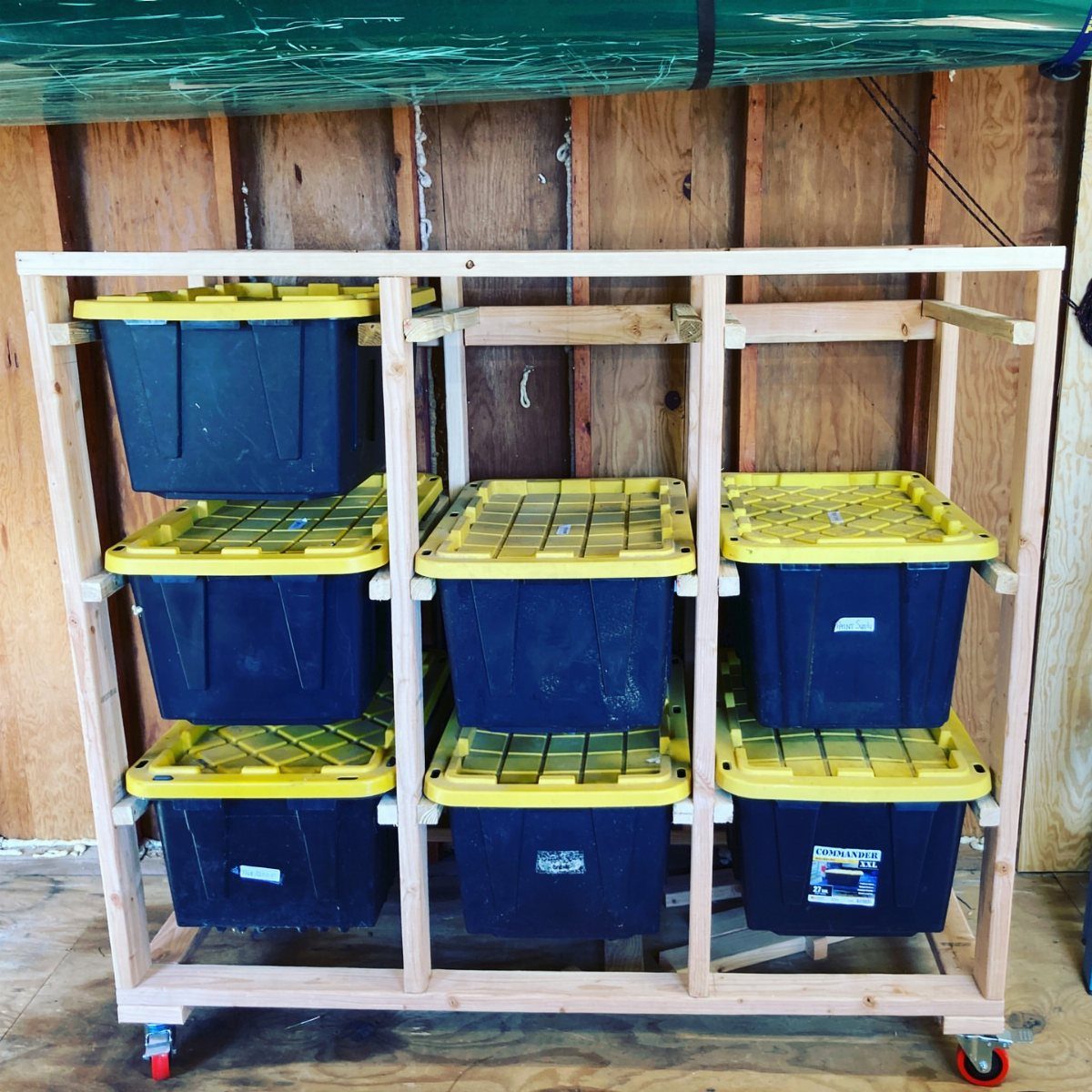
Clear bins beat solid color ones for anything you use less than monthly. Black Commander XXL totes with yellow lids on a wheeled wooden rack keep hardware sorted and roll out when you need them.
Stackable matters in a shed where height usually exceeds floor space.
The notes mention 12-gallon clear bins sorted by project, tiling supplies in one, painting in another. That sorting by task, not by tool type, saves time when you start a job and need everything at once.
Labels help, but clear walls help more.
If you go with opaque bins, label every side, not just the front. Bins get rotated, shuffled, stacked facing sideways.
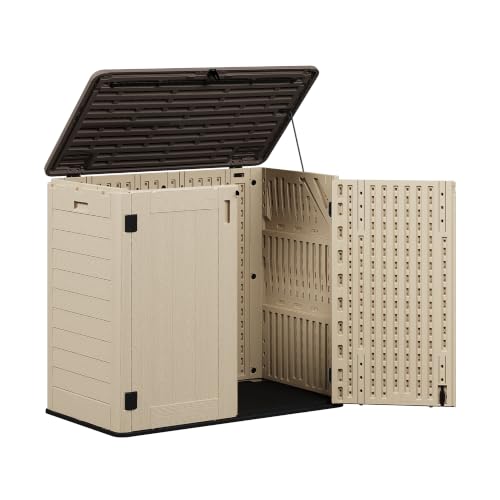
Multi-Functional Horizontal Storage Cabinet: This outdoor storage cabinet offers a large storage space of 31 cu. ft. capacity (47.6"D x 26.8"W x 42.13"H). Easily holds bulky items like lawn mowers, trash cans, and garden tool sets. Double doors make it simple to grab seasonal gear such as patio cushions or sports equipment

Multi-Functional Horizontal Storage Cabinet: This outdoor storage cabinet offers a large storage space of 31 cu. ft. capacity (47.6"D x 26.8"W x 42.13"H). Easily holds bulky items like lawn mowers, trash cans, and garden tool sets. Double doors make it simple to grab seasonal gear such as patio cushions or sports equipment

KEEP LONG-HANDLED TOOLS UPRIGHT AND EASY TO REACH. This vertical resin storage shed or tall outdoor storage cabinet fits long-handled tools, patio umbrellas, and gardening supplies, so yard gear stays organized and off the ground.
4. Hang Tools on Hooks
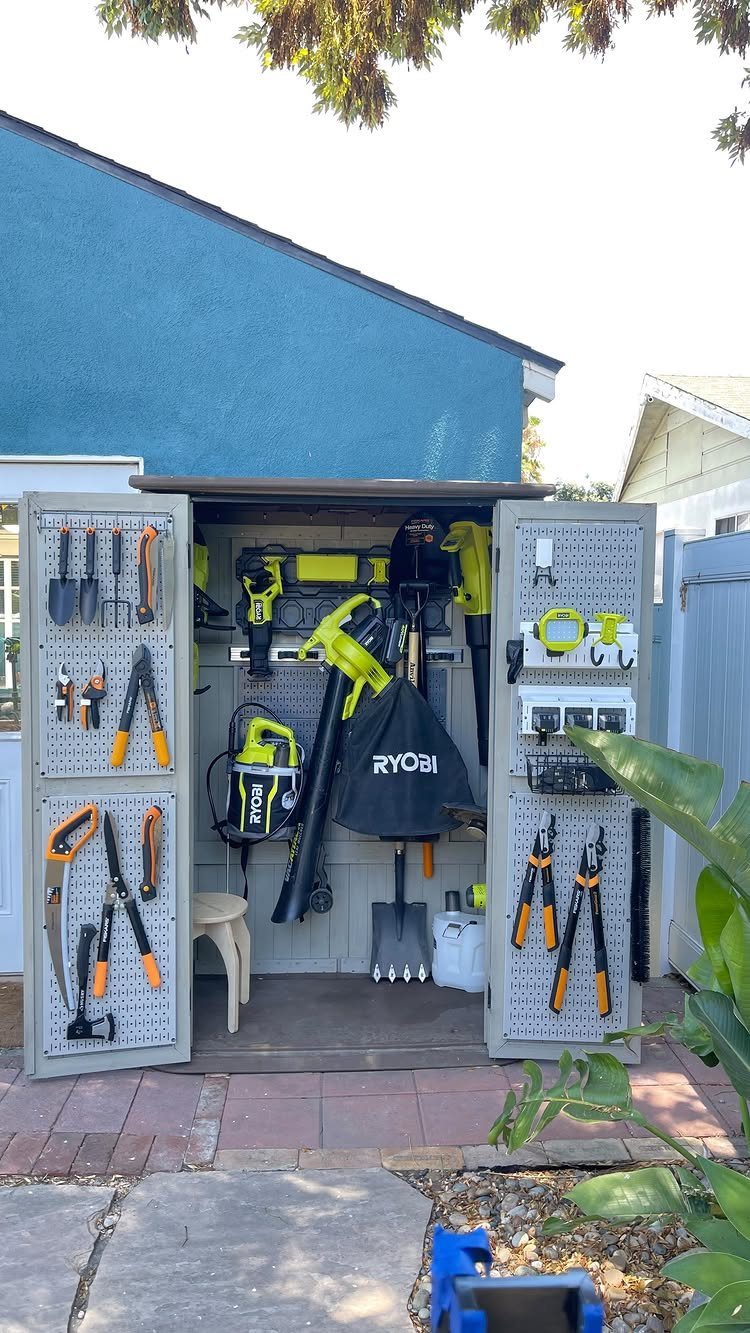
One screw into a stud holds a rake or tree trimmer for years, and costs nothing if you already have the screw.
Pegboard door panels and wall tracks in a blue shed make a more elaborate setup, but the simple version works too.
What I watch for is overlap.
Tools hung too close tangle handles and scrape blades. Lay everything on the lawn first, spacing that feels generous, then transfer those distances to the wall.
The photo’s pegboard doors are smart for the back of a shed where wall space runs out. Doors are already hinged, already framed, already there.

【Smart Garden Tool Holder】: As a smart tool storage and tools organizer, Sttoraboks garden tool holder features 35 tool slots, delivering generous capacity within a compact footprint. Unique storage holes are engineered to accommodate various tool types and sizes, from gardening and lawn equipment to cleaning supplies. Height-adjustable feet ensure stability even on uneven ground. This yard tool organizer for garage simplifies tool classification, keeping your workspace neat and efficient.

【Spacious 40 Gallon Storage Capacity】 Each bin measures 36.75"L x 21.38"W x 18"H with extra-large 40 gallon capacity. Holds clothing, bedding, tools, and bulky items with ease.

Massive 40‑gallon interior delivers abundant room‑space for bulky‑sized belongings, seasonal decorations, hand tools, camping equipment and everyday household supplies, solving large‑item storage troubles.
5. Create a Workbench
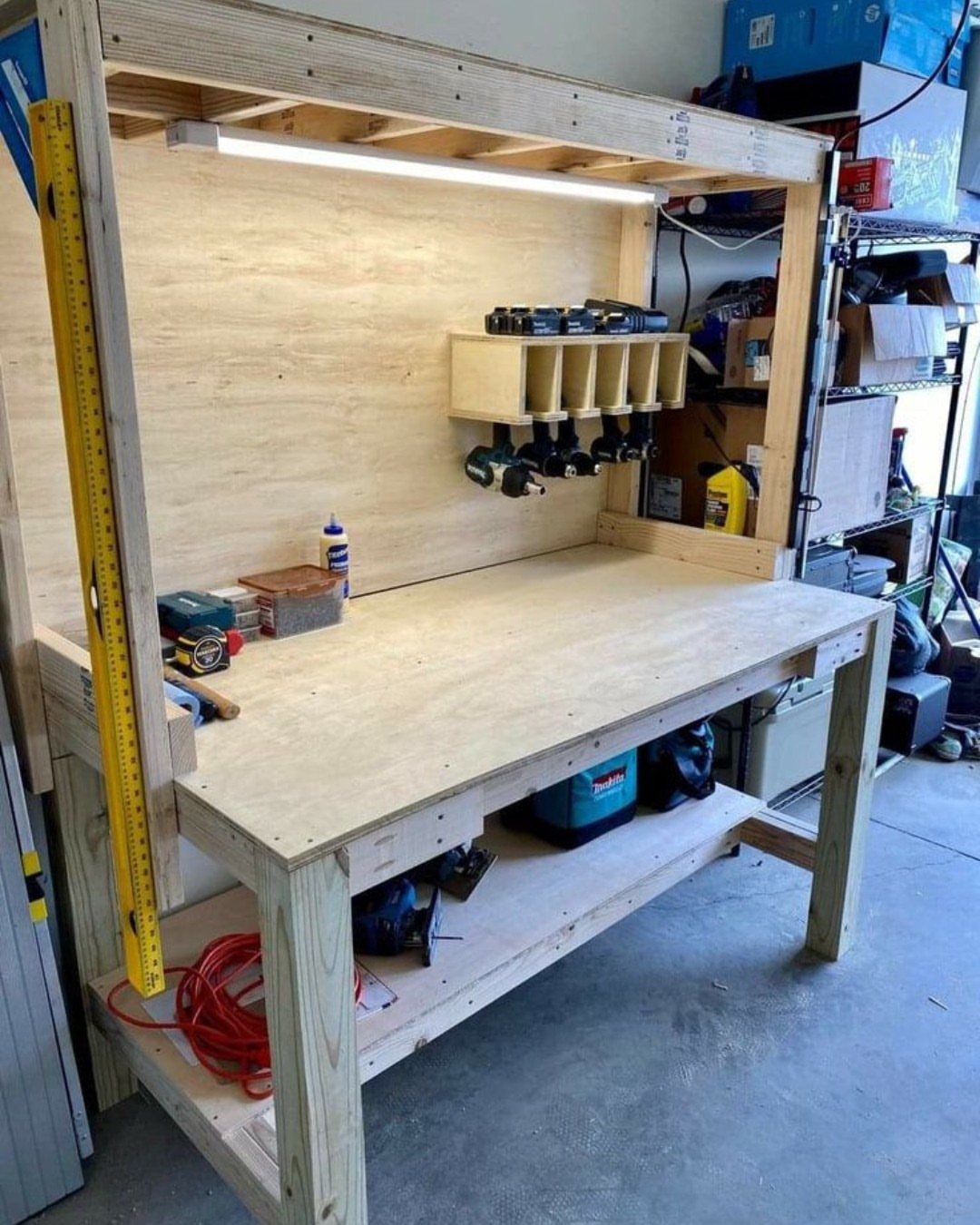
A workbench gives you a surface that is not the mower hood or a bin lid, and a place to leave a project mid-step without clearing dinner dishes.
A plywood-topped bench with overhead lighting, a drill rack, and a lower shelf, built in place in a garage, gives you a dedicated surface that keeps projects from spreading across the floor.
Built-in drawers or shelves keep the tools for that project within reach. Sort by category: hand tools in one drawer, potting supplies in another, seeds in a third.
A collapsible or movable bench lets you reclaim floor space when a project needs it, or when you need to wheel the snowblower in for summer storage.
The lower shelf on a workbench is the right height for power tools and batteries, keeping them off the surface but charged and ready. Weight low keeps the bench stable.

High-Load Steel Construction for Heavy Power Tools: Engineered from thickened alloy steel with a 20lb load capacity per hook, specifically designed to support heavy drills, impact drivers, and sledgehammers without bending or deforming over time.

Great Idea to Display Your Tools: This pegboard-Mounted hand & power tool holder set is ideal for use in the Garage, Kitchen, Workbench, Basement, Craft Room, Workshop or anywhere you can hang a peg board. This tool hanger works in 1/4 in. pegboard.

UNIVERSAL FIT – Designed to fit standard 1/4" pegboards with 1" spacing, these flat pegboard hooks require no peg locks and hold up to 33 lbs, ensuring a secure and reliable hanging solution.
6. Wall Rack
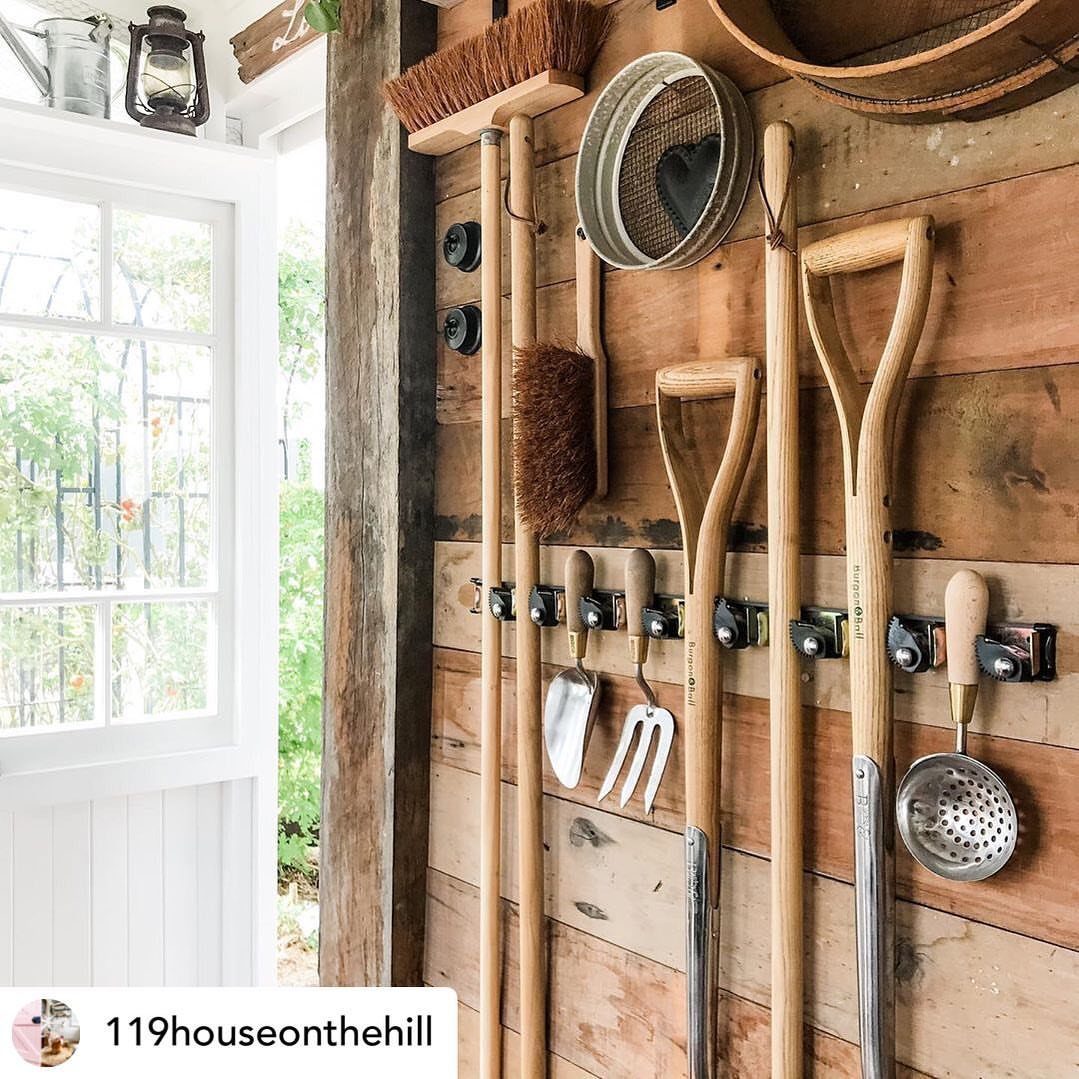
A wall rack takes the long-handled tools you trip over and lines them flat against the wall.
Brooms, shovels, a hand trowel, a sieve, hung on metal against rustic wood planks beside a white door frame, turn wall space into storage without building anything custom.
Floor space in most sheds is rationed between the lawnmower, a wheelbarrow, bags of material that cannot sit outside, and your own path through.
Every tool on the wall is one fewer obstacle to navigate around. A simple metal rack mounted at a height where handles clear the floor but heads stay reachable keeps long tools from becoming a corner pile.
What I would check before buying: the spacing between slots. Too narrow and a wide shovel handle will not fit; too wide and a narrow broom handle rattles and slides.
Mixed tool types fitting together on one rack means the spacing handles the range, from narrow trowel handles to wide broom heads.

DIY INSTALLATION: Our heavy-duty garage shelving can be easily installed in various configurations to suit your specific space requirements, providing you with versatile storage solutions. You have the flexibility to choose whether the baskets are interlocked or separate, and whether they hang on the shelf or the storage frame. Whether you need storage in your garage, workshop, yard, or garden, our DIY installation offers the ideal solution to meet your needs.

Gardening Supplies Storage – The Afton Wall Organizer combines a rock-solid wall shelf and hanging hooks for storage of your outdoor tools and supplies. Perfect for your garden shed or garage.

DIY INSTALLATION: Our heavy-duty garage shelving can be easily installed in various configurations to suit your specific space requirements, providing you with versatile storage solutions. You have the flexibility to choose whether the baskets are interlocked or separate, and whether they hang on the shelf or mounted on a wall. Whether you need storage in your garage, workshop, yard, or garden, our DIY installation offers the ideal solution to meet your needs.
7. Repurposed Pallet Tool Holder
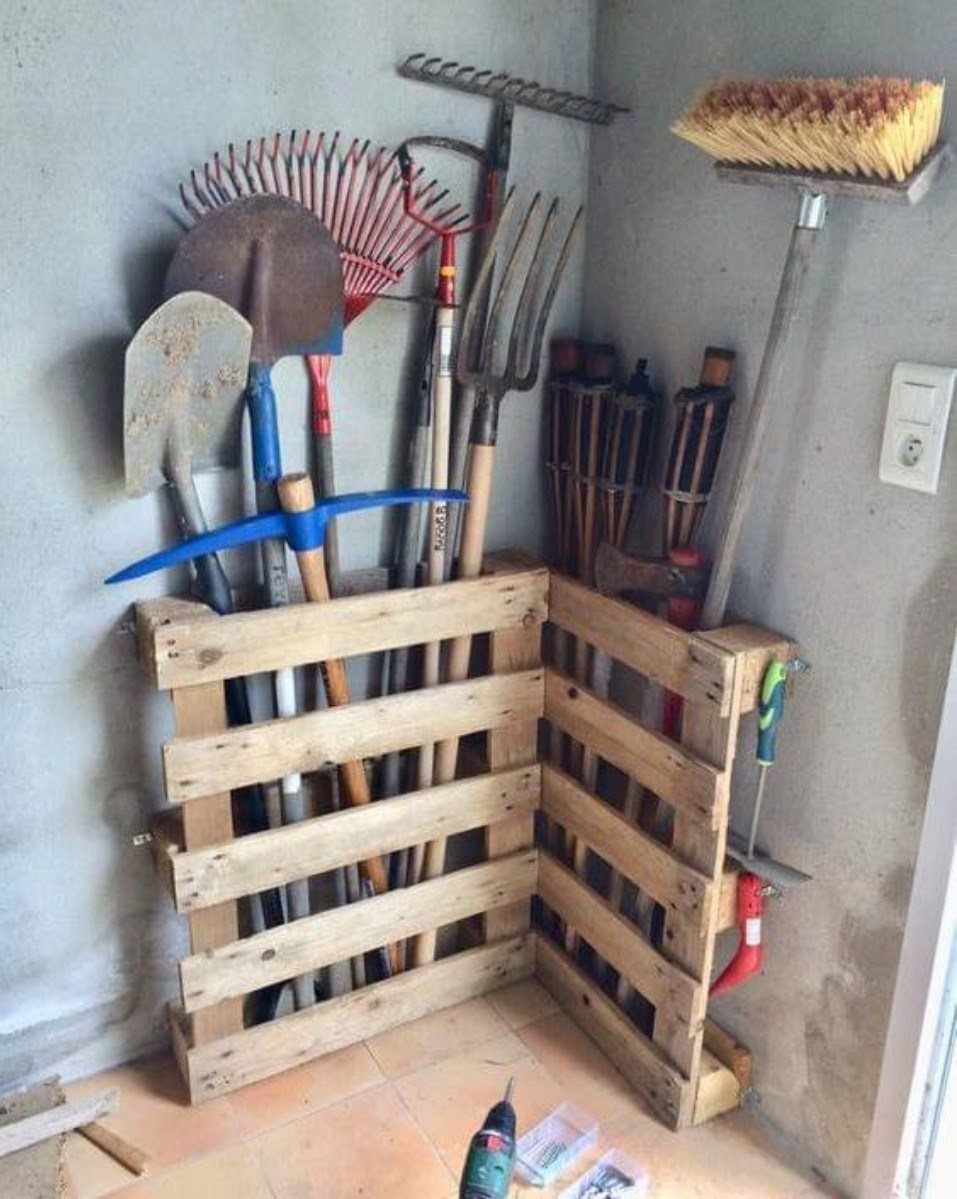
2 pallets leaned into a corner form a freestanding rack that keeps long-handled tools upright without drilling into shed walls. The pallet slats act as dividers; tools slip between them and stand in the gaps.
Check the pallets for rot and protruding nails before bringing them in.
A quick sanding on the outer faces keeps splinters out of your palms. The corner placement uses structure already in the shed; 2 walls brace the pallets so they do not walk across the floor.
What I would add: a board or strap across the top, bolted to both pallets, so they stay married at the angle you set. Without that tie they drift apart and tools lean, then slide, then fall.
This one suits renters and anyone wary of putting holes in a shed they do not own.

𝗖𝘂𝘀𝘁𝗼𝗺𝗶𝘇𝗲 𝗬𝗼𝘂𝗿 𝗦𝗽𝗮𝗰𝗲 𝘄𝗶𝘁𝗵 𝗖𝗿𝗲𝗮𝘁𝗶𝘃𝗶𝘁𝘆: This set includes 2 pegboard panels, 2 shelves, ,8 brass hooks and all mounting accessories. However, you need to prepare your own drill bit with a diameter of 0.25in (0.6cm) for punching holes in the wall. Arrange the pegboards in different ways to make the most of your space. Or try laying them out separately alongside your furniture for unexpected results. With shelves and hooks, the possibilities are endless. Get creative and make your space truly yours!

MODULAR——By tiling multiple pegboard panels, you can easily match and grow your tool storage system as needed. Special size design make this set adjustable to apply most people's space need.

【𝗖𝘂𝘀𝘁𝗼𝗺𝗶𝘇𝗲 𝗬𝗼𝘂𝗿 𝗦𝗽𝗮𝗰𝗲 𝘄𝗶𝘁𝗵 𝗖𝗿𝗲𝗮𝘁𝗶𝘃𝗶𝘁𝘆】: This set includes 2 pegboard panels, 2 shelves, ,8 brass hooks and all mounting accessories. However, you need to prepare your own drill bit with a diameter of 0.25in (0.6cm) for punching holes in the wall. Arrange the pegboards in different ways to make the most of your space. Or try laying them out separately alongside your furniture for unexpected results. With shelves and hooks, the possibilities are endless. Get creative and make your space truly yours!
8. Garden Hose Wall Holder
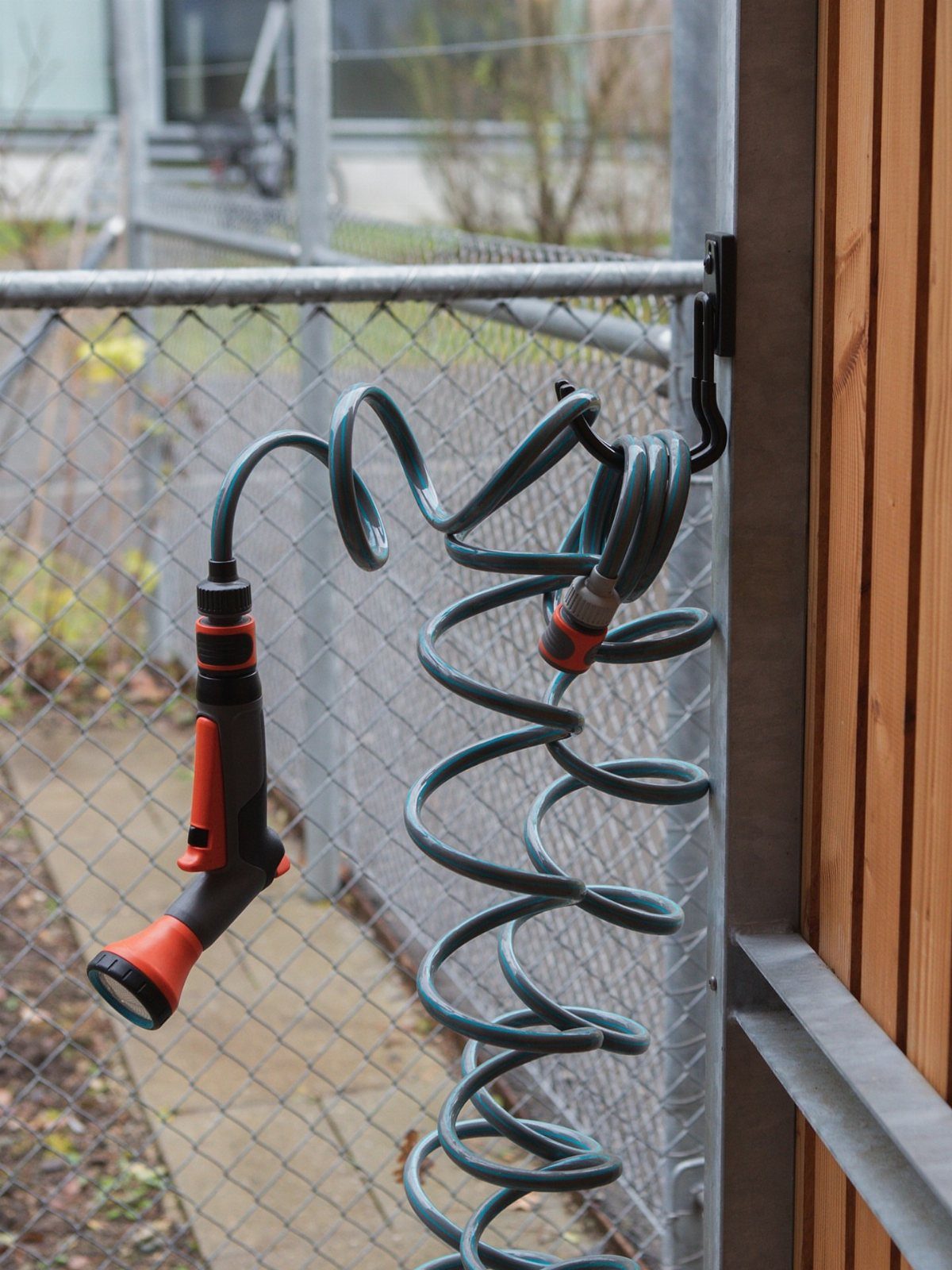
A single heavy hook on the wall keeps a garden hose off the floor and out of the kinks it collects when left in a pile.
Coil the hose before hanging, not after.
A loose coil doubles back on itself and the weight pulls unevenly on the hook. I loop mine in thirds, then lift the whole bundle onto the hook by its curve.
Nozzles crack when they bang against siding or the metal fence frame in cold weather.

AMPLE STORAGE SPACE: Safely store small decorative pillows, patio cushions, pool chemicals and more.
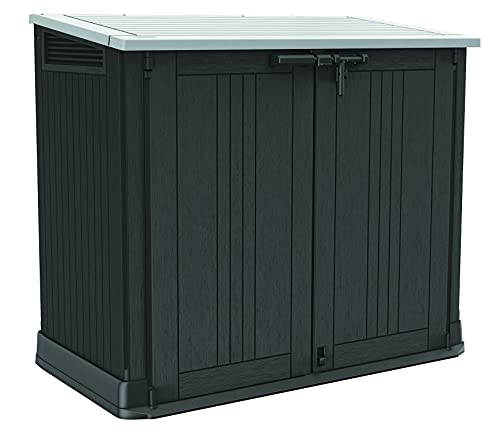
COMPACT OUTDOOR STORAGE SOLUTION – Holds up to two 32-gallon trash cans while organizing garden tools, pool floats, patio accessories, and backyard essentials.

LARGE CAPACITY STORAGE – Stores up to two 63-gallon trash cans while providing organized space for garden tools, pool toys, patio accessories, and lawn equipment.
9. Hardware Compartment Organizer
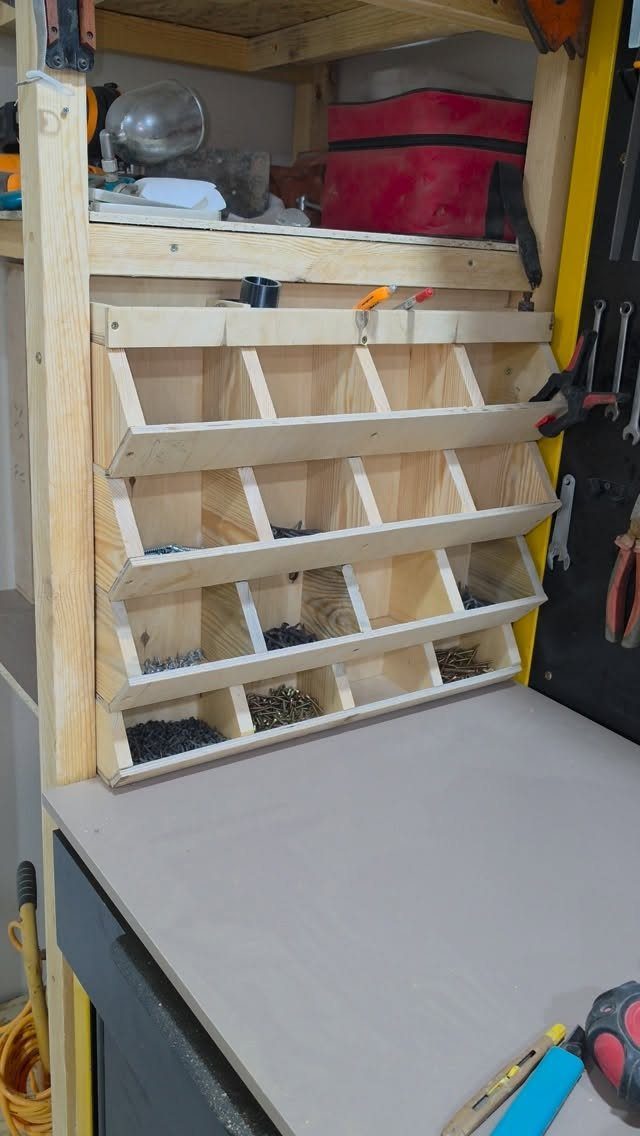
A divided wooden box on the workbench sorts screws, nails, and small fasteners by size so you grab the right one without dumping a coffee can onto plywood. Mounting it above the bench keeps the surface clear for actual work.
What I would build from scrap: a shallow box with fixed dividers, no moving parts to jam with sawdust. The compartments need only be deep enough that a handful of screws lies flat; deeper and you dig.
If you already own a plastic parts cabinet with pull-out drawers, that works too. Drawers need front clearance to open, which the wooden version skips; that matters when the bench sits close to a wall or a mower.
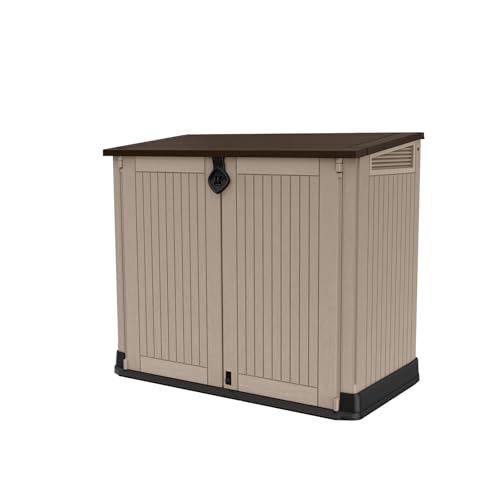
VERSATILE 30 CU. FT. OUTDOOR STORAGE – Spacious interior accommodates up to two 32-gallon trash cans, gardening tools, pool supplies, patio accessories, pet gear, and other outdoor essentials.
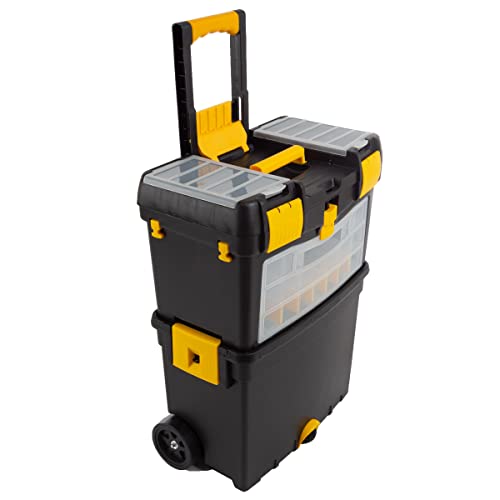
MOBILE TOOL BOX WITH WHEELS - This set of stackable tool boxes includes 24 small parts compartments, 2 removable trays, cable hooks, and a deep bottom compartment with enough room to store all your essential tools and supplies while on the go.
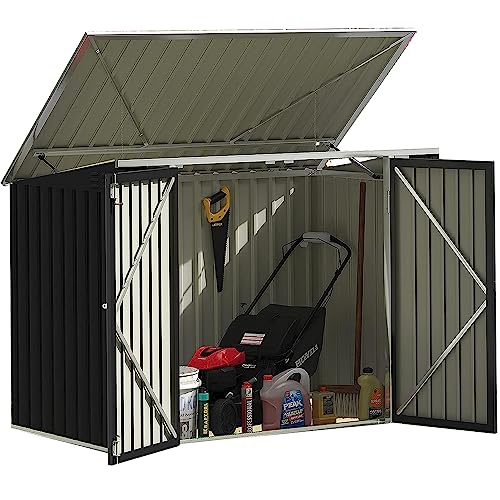
[Reinforced Structure] The storage shed is constructed with a steel frame and is reinforced with additional metal inside the product to ensure stability regardless of wind or rain.In addition, an anti-rust coating is added to the surface
10. PVC Pipe Tool Holders
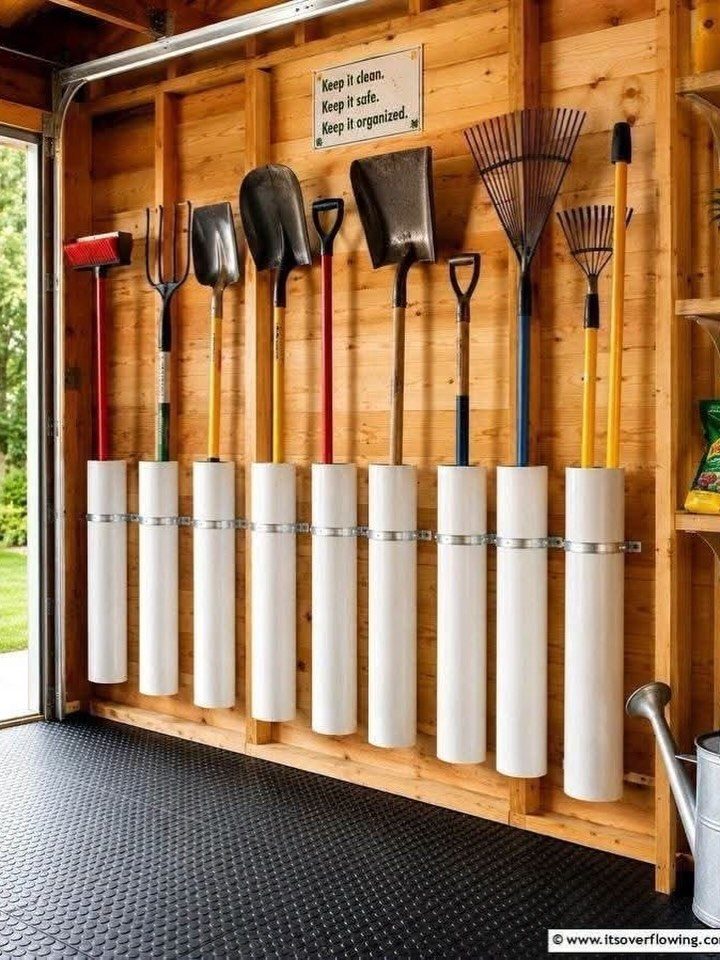
Short sections of PVC pipe strapped to a wall hold tool handles upright and keep them from leaning into each other and tangling.
Most long-handled garden tools suit a pipe that grips the handle without swallowing it; broom handles and narrow rakes need a smaller size or a spacer block behind the pipe to close the gap.
Cut the pipe into 6-inch lengths, enough to cradle the handle without trapping the blade or head against the wall. Strap them with plumber’s tape or U-bolts; screws through the strap into studs carry the weight.
PVC gets brittle in cold and cracks if you over-tighten the strap. Leave the strap snug, not torqued.

PREMIUM MATERIAL - Crafted from thick steel with a vinyl-coated finish, these pegboard hooks offer durability and protection, holding up to 44LB. Perfect for safeguarding tools and maintaining long-lasting organization.

EXTREMELY STURDILY MATERIAL: The garage hooks is made of premium heavy-duty solid steel and the plate are reinforced with three layers, providing superior load capacity, the utility hooks are great for ladders, sports equipment, lawn trimmers, gardening equipment and other bulky items!

INCREDIBLE VALUE PACKAGE (24 PACK) – Our different kinds of pegboard hooks, 6 types, total 24 pcs, should be the proper ones that meet all your needs at many places, such as garages, tool sheds, basements, workshops, offices, kitchens, paint areas, craft rooms, greenhouses and stores etc.
11. Wall-mounted Wire Baskets
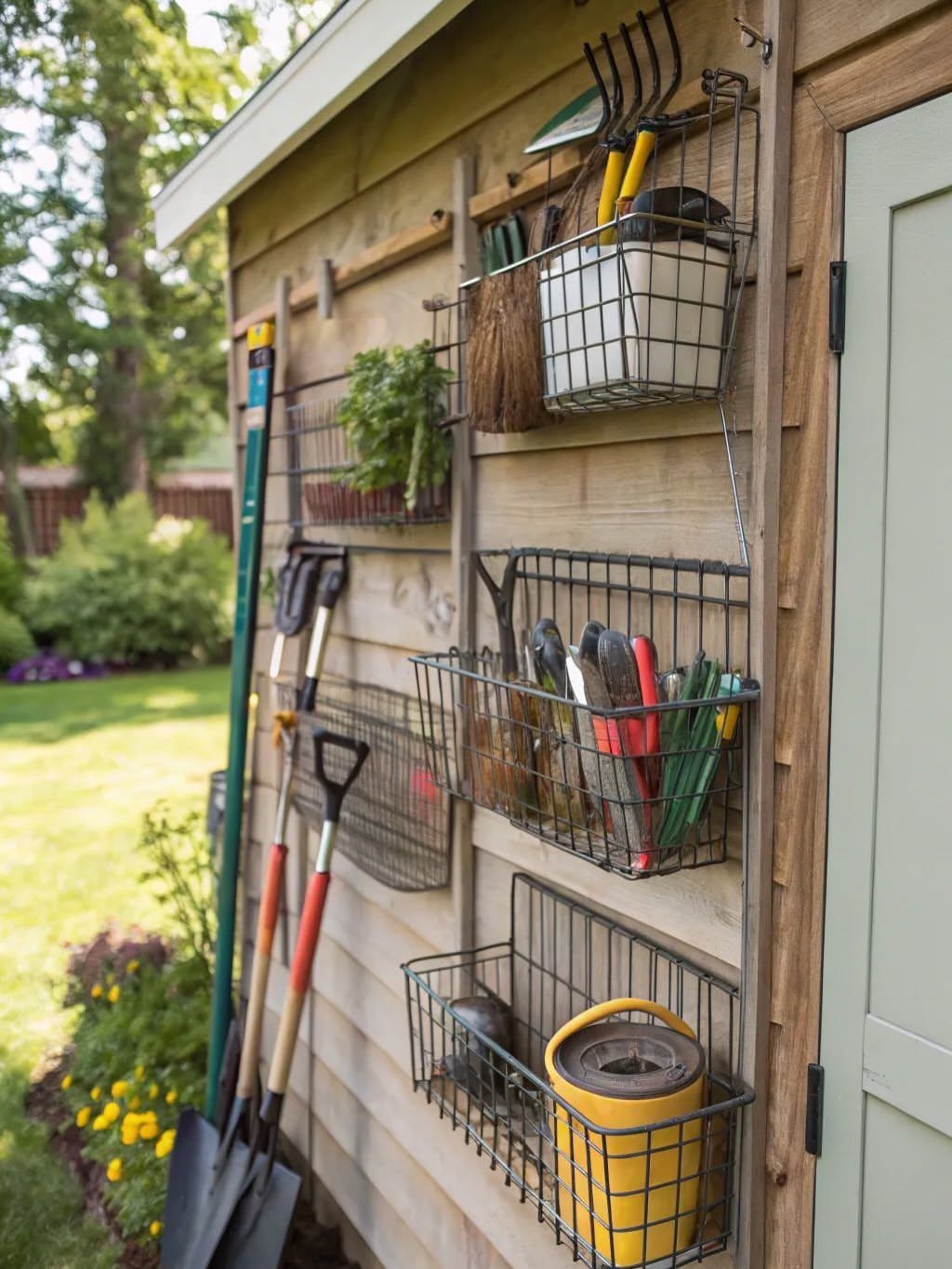
Wire baskets hung on a shed wall store tools you use often and want to grab without unlatching a bin lid. Black wire lets you see contents from below, which matters when the basket sits above eye level.
Mount height is the decision. Too low and the basket blocks the wall beneath it for other storage; too high and long tool handles in the basket scrape the ceiling or the rafters.
I would hold a basket in place with the intended tools inside before driving the first screw.
Wire baskets this size hold shears and small hand tools alongside leaning shovels. That mix works if the long tools lean in a corner or bracket nearby, not if they share the basket; wire sides bow under uneven weight.
What I like about wire over solid bins: damp tools dry instead of rusting in trapped moisture.
Small items can fall through if the mesh is wide. A liner of hardware cloth or an old nursery flat solves that.
Planning Shed Layout
A 12×16-foot shed still forces choices, and writing down the functions, workspace versus overflow storage, tells you which walls matter most.
Group by task, not by object type. The same logic applies to zones: potting soil, seeds, and hand trowels near each other; power tools, chargers, and drill bits on another wall.
The floor plan comes last, after you know the groups. Lay the largest items in place first, the mower, the wheelbarrow, then fit storage around them.
What does not fit stays out. That rule keeps a shed from becoming a garage overflow in thinner walls.