
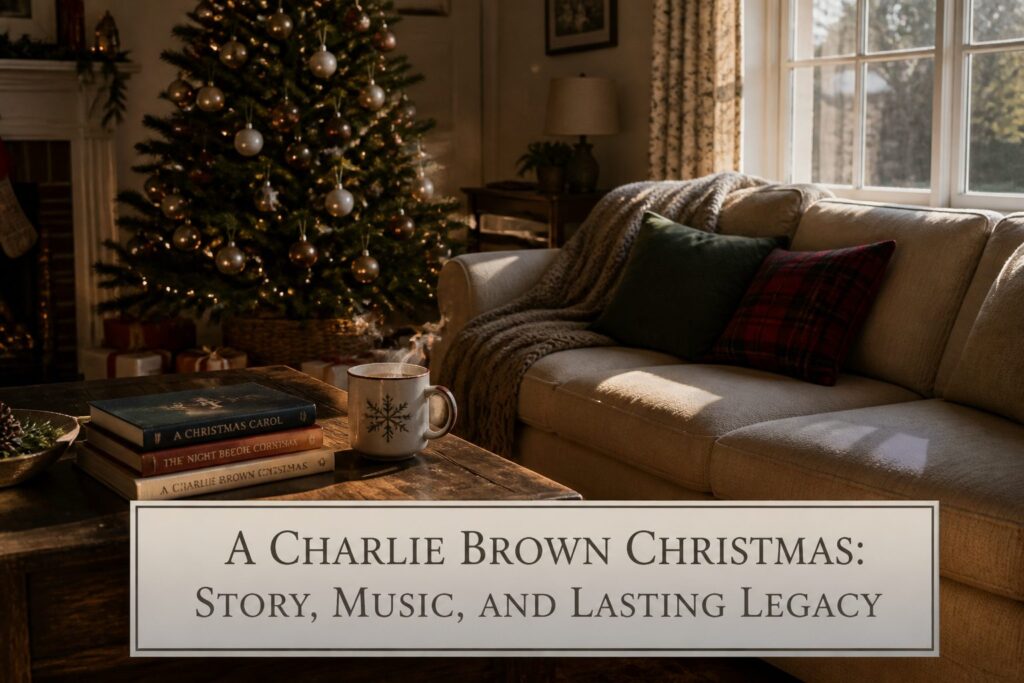
A Charlie Brown Christmas is the 1965 animated special in which a depressed Charlie Brown directs a school Christmas pageant, gets mocked for choosing a scrawny tree, and hears the Nativity story recited from Luke 2.
Half of American TV viewers tuned in for its first CBS broadcast, which aired only because the network had a contractual obligation and no legal way out.
Vince Guaraldi’s spare jazz score, child voice actors with no laugh track, and that unvarnished tree became the template for holiday television.
[link-whisper-related-posts]Background and Production
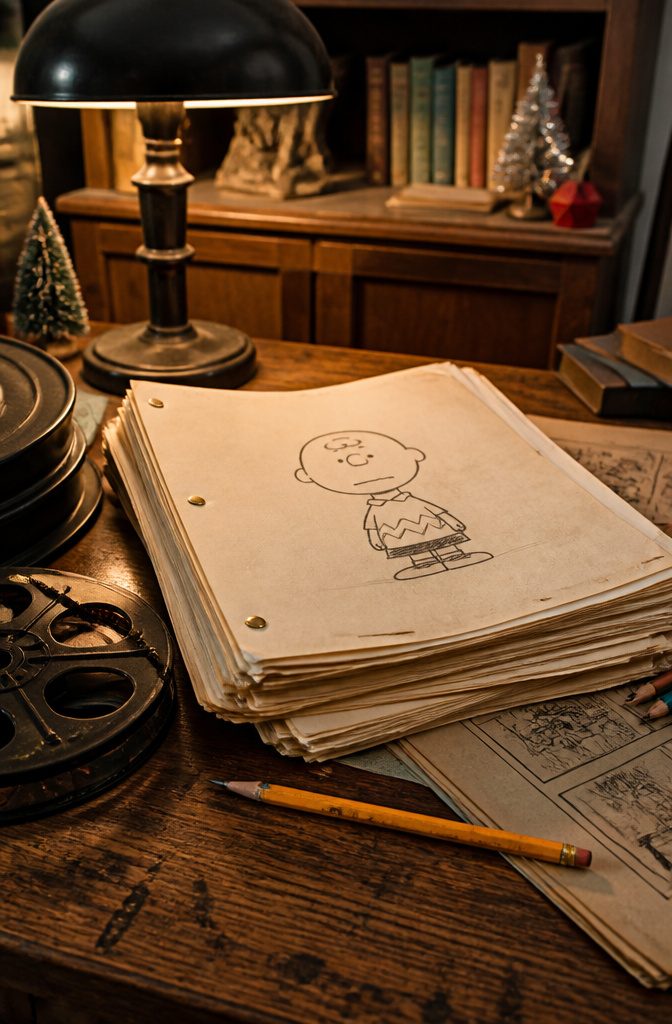
The half-hour special premiered on December 9, 1965, the product of three men working on a tight timeline.
Charles M. Schulz wrote the script, Lee Mendelson produced, and Bill Meléndez directed and animated, the same team that would shape Peanuts on screen for decades to come.
CBS executives were nervous from the start.
The special broke nearly every rule of television animation then: no laugh track, a meandering plot that paused for a full Nativity reading from Luke 2, and a sparse, jazzy score by Vince Guaraldi instead of the usual orchestral bombast.
The network reportedly expected a flop and aired it largely to fulfill contractual obligations.
Schulz held firm on the laugh track, a standard fixture of 1960s television. He argued that audiences did not need to be told when something was funny.
That insistence on authenticity ran through every choice. The special arrived in the middle of heavily commercialized holiday programming, where Christmas specials typically pushed toys and glamour.
A Charlie Brown Christmas offered a scrawny tree, quiet doubt, and Linus reciting scripture to answer Charlie Brown’s despair. The simplicity read as radical sincerity against everything else on the dial that December.


One of the most popular and beloved holiday albums of all-time now available for the very first time on collectible green vinyl!
Plot and Message
Charlie Brown starts this 25-minute special in a familiar rut: the holiday is everywhere, but the joy is missing. His mailbox stays empty, the decorations feel hollow, and the whole season has the sour aftertaste of a sales pitch.
Lucy, doing her five-cent psychiatry routine, tells him he’s the only person who could turn Christmas into a problem. Her prescription is action: direct the school Christmas pageant.
That assignment backfires fast.
Rehearsals collapse into chaos. Sally hijacks her one line into a commercial for cash.
Snoopy decks out his doghouse in electric excess. Lucy wants an aluminum Christmas tree, painted pink; Charlie Brown wants something real.
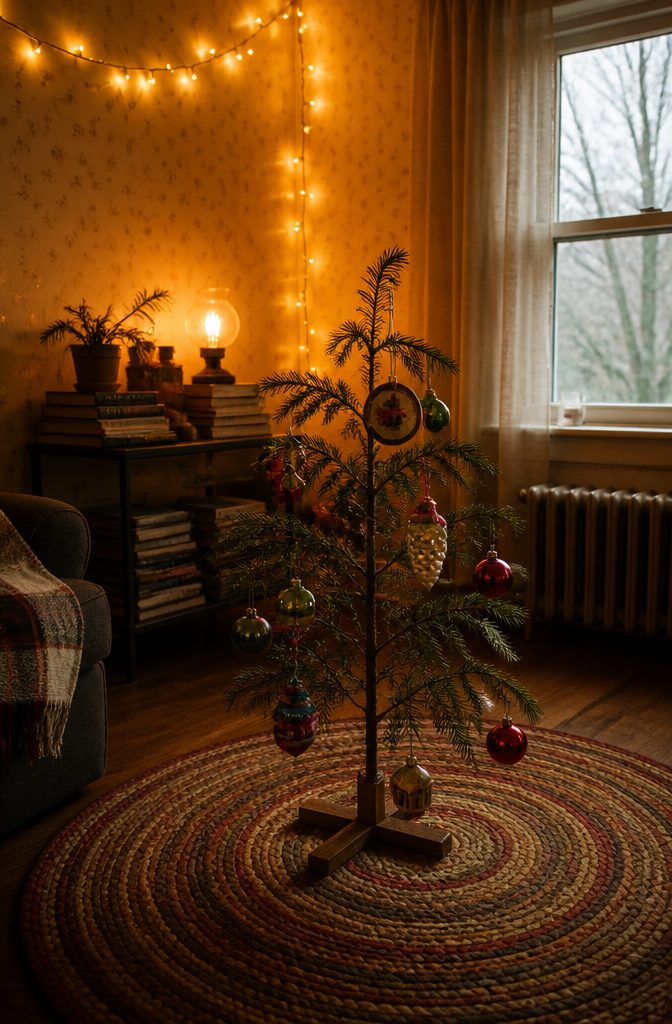
He finds it, barely: a scrawny sapling dropping needles, the one tree on the lot that looks as forgotten as he feels. The kids laugh.
Even Lucy laughs. He snaps, loud enough to cut through the noise: "Isn’t there anyone who knows what Christmas is all about?"
Linus steps into the spotlight, drops his security blanket, and recites the Nativity from Luke 2, the annunciation to the shepherds, open field, bright light, angels.
The room goes still. That’s the whole pivot, 25 minutes in: not the tree, not the pageant, but the story itself, spoken plain in a child’s voice.
Charlie Brown takes his sapling home, hangs a single ornament, and it bends the twig to the ground. He thinks he’s killed it.
He hasn’t; he walks away too soon. The others arrive, decorate it, and when he comes back, the tree looks completely different.
The last shot has them singing "Hark! The Herald Angels Sing," the theology Linus recited now made visible in scrap tinsel and a little wood.

SUPER VALUE SET: The Christmas decorations set comes with 12 pcs peppermint and lollipop candy tree picks in 4 styles. Each candy tree ornament is about 8 inches in diameter. Stand out from your Christmas tree decorations and bring a playful and festive vibe to your Christmas decor.

Red and Green Christmas Decoration: our set comes with 66 Christmas ball ornaments, 6 peppermint candy ornaments, 8 beautiful bows, 1 faux fur Christmas ribbon, 20 glitter Christmas stems, 8 lime green tree picks, offering a wide variety of decoration options

[PACKAGE & SIZE]:Includes 36 pieces Christmas Curly Pick, the length of this candy shape curly pick is about 8.7inch, If you want to achieve a fuller effect as pictured, we recommend that you purchase multiple orders. These glittery faux Christmas tree stems ornaments are adjustable and will not slip off easily when used. The stem is durable and reusable, vivid and not easy to fade.
Vince Guaraldi’s Jazz Score
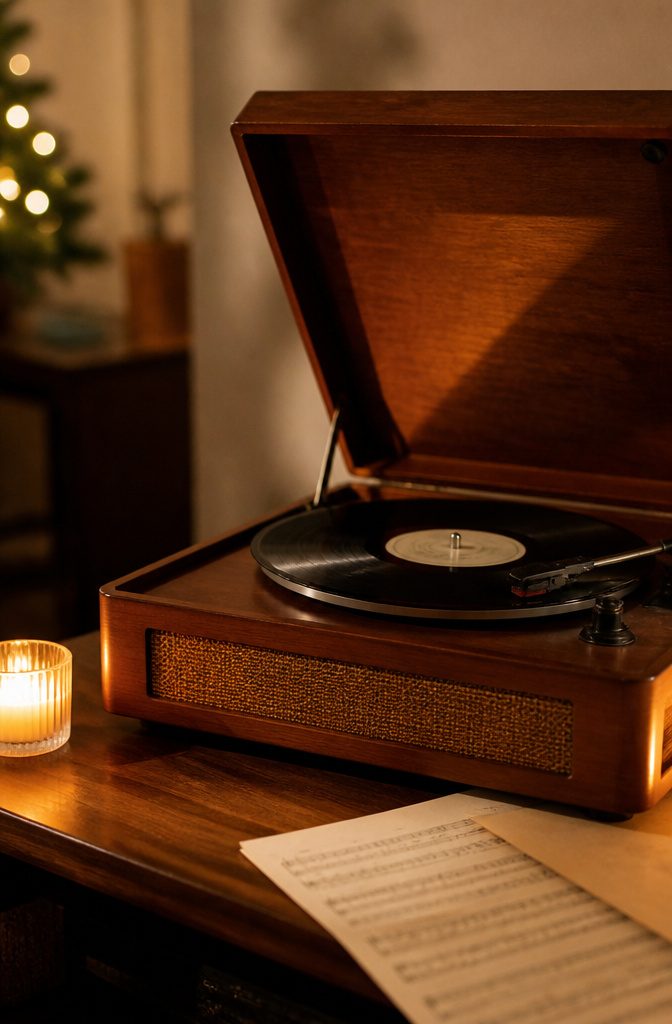
The jazz score in A Charlie Brown Christmas arrived almost by accident.
Producer Lee Mendelson, a San Francisco-based documentary filmmaker, heard Vince Guaraldi’s "Cast Your Fate to the Wind" on the radio and decided this was the sound he wanted. Guaraldi had never written for animation.
He composed without scene-by-scene direction, working from rough outlines of what would happen. The result was jazz in a children’s special at a time when cartoons meant blaring saxophones and pratfall sound effects.
Schulz himself noted how different this approach felt. Guaraldi’s trio recorded loose, improvisational pieces that somehow matched the mood of Charlie Brown’s melancholy search without being written to picture.
"Linus and Lucy," that skipping piano theme now inseparable from the Peanuts gang, became a minor classic almost by accident.
The music works because it respects the audience. Children in 1965 had heard pop and jazz on their parents’ radios; Guaraldi treated them as listeners worth composing for, not as consumers who needed cues for when to laugh.
The sparse animation and sparse score share the same honesty. One without the other would feel incomplete, which is why every annual broadcast since 1965, first on CBS, then ABC, and now through streaming arrangements, has kept the original recordings intact.

Luke 2:11 Nativity Scripturel: Features the powerful verse: "For unto you is born this day... a Savior, which is Christ the Lord." This plaque focuses on the birth of Jesus, keeping Christ the centerpiece of your holiday. A beautiful expression of faith, perfect as jesus christmas decor and religious Christmas decor.

📖 UNIQUE NATIVITY BIBLE ORNAMENT – Celebrate the birth of Jesus with beautifully illustrated nativity ornaments featuring an open Bible design, a heavenly angel, shepherds, and the meaningful scripture Luke 2:10. A special reminder of the joy of Christmas.

Versatile Christmas décor fits seamlessly in any room!
Cultural Impact and Legacy
Half of American TV viewers tuned in when A Charlie Brown Christmas first aired on December 9, 1965, and CBS immediately ordered four more specials.
No holiday program besides Rudolph the Red-Nosed Reindeer has matched its streak of annual December broadcasts, which ran on CBS every year until 2020.
The special’s influence sits in what it refused. Charles Schulz insisted on no laugh track, reasoning that viewers did not need to be told when to laugh.
That quiet confidence let the story breathe, and it set the template for animated Christmas specials that followed: modest animation, sincere storytelling, and a willingness to risk sentiment without irony.
Its migration to Apple TV+ in 2020 ended the broadcast era, but the special keeps surfacing in pop culture because its tension still resolves something people actually feel.
The ragged tree, the failed play, the muted trumpet score: these read as honesty rather than nostalgia.
A special that began by betting against television conventions became the standard itself, and annual viewing turned into generational habit because the awkwardness in it never got polished away.


Production Challenges

CBS executives saw the finished special and concluded it would flop. The network had funded it only because a prior contract required one more Peanuts project, and they reportedly considered burying it in a dead slot rather than promoting it.
What they objected to was nearly everything that now defines the show.
The child actors were one problem. Network preference ran to adult voice performers who could hit marks and enunciate cleanly.
Schulz held out for the slightly wobbled, overlapping delivery of actual children, recorded not in a polished studio session but in a natural, room-tone environment that preserved the halts and the rushed lines.
The jazz soundtrack bothered them more.
Vince Guaraldi had never scored a soundtrack like this. He wrote to mood rather than to frame-by-frame action, and the result was a sparse, melancholy score built around piano trio improvisation.
CBS wanted something closer to the brassy cartoon cues of the era. Schulz refused.
The animation style sealed the network’s pessimism. Bill Meléndez and his crew worked quickly and cheaply, and the visuals showed it: limited motion, simple backgrounds, a tree that was literally a single line drawing with a few needles.
Where other specials reached for spectacle, this one pulled back.
Schulz insisted on every one of these choices. The special aired in 1965 only because CBS had no legal way out, and it went on to win an Emmy and reshape holiday television.

Hand Crafted

Christmas design. Officially Licensed by Peanuts

OFFICIALLY LICENSED: Officially licensed Peanuts decoration
Viewer Reception
Half of all American TV viewers tuned in for the December 9, 1965 premiere of A Charlie Brown Christmas, a figure that stunned CBS executives who had spent weeks nervous about the special’s unconventional choices.
No laugh track, a jazz score, and a ragged little tree were not exactly the formula for holiday programming in that era.
Washington Post TV critic Lawrence Laurent called Charlie Brown "a natural born loser" who had "finally turned up a winner," and the audience clearly agreed.
The special won both a Peabody and an Emmy Award, and that immediate success led CBS to order four more specials right away.
What started as a risky experiment became an annual December broadcast that has now run for over 50 consecutive years, outlasted only by Rudolph the Red-Nosed Reindeer among holiday programs.


Christmas Tree Set: You will receive a Christmas tree, a light, each light with 30 pieces of Led lights, powered by batteries (batteries not included), 2 pieces of red Christmas balls and and Sky blue blanket

A great gift for fans of the beloved 1965 Christmas Peanuts
Why Charlie Brown Still Resonates
Half of American TV viewers watched A Charlie Brown Christmas when it debuted on December 9, 1965, and the reason it still pulls families back every December is that Charlie Brown is not a winner wrapped in a loser costume.
He is actually down on his luck, actually depressed, actually wondering what the point is while everyone else hums along to the season’s glitter.
Charles Schulz refused to let CBS add a laugh track, and that silence lets the discomfort land.
A child feeling inadequate at Christmas is not a setup for a punchline; it is the whole story. The special’s critique of commercialism lands precisely because Charlie Brown does not defeat it with a speech.
He buys the wrong tree, a scraggly thing that thrives on "a little love," and the other kids mock him for it until Linus recites the nativity. The message arrives through failure, not triumph.
That emotional honesty crosses generations because Schulz built it into the comic strip first. The animated special simply let it move at the speed of real childhood: slow, awkward, occasionally rescued by a friend with a blanket.
No adult voice imitating innocence, no talking dog solving the plot. Just a kid who never kicks the football, choosing a tree that looks like him and discovering it was enough.

【Vivid Red Berries】The berries are bright red in color and the stems have a burgundy tone,which add more colorful in Christmas and decor home or public palace. These berries are pretty delicate.

[PACKAGE & SIZE]:Includes 6 pieces Christmas tree decoration, the length of this candy shape curly pick is about 16inch, If you want to achieve a fuller effect as pictured, we recommend that you purchase multiple orders. These candy cane woolen bells are durable and reusable, can be used several festival seasons.

Super Value Set: Christmas tree decorations picks contains 3 styles, including 18pcs berry stems, 12pcs berry-free curly picks and 18pcs candy-shaped stems, 48pcs in total. Add a touch of color to your Christmas
Where to Watch
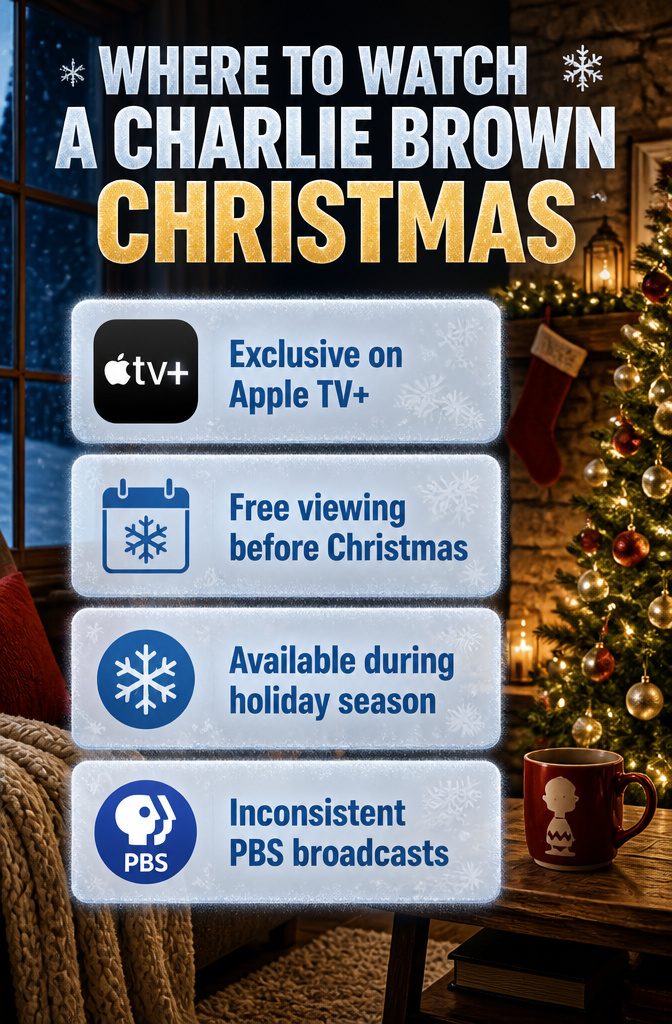
For decades, the only December tradition simpler than watching A Charlie Brown Christmas was knowing where to find it.
CBS aired the special every year from its 1965 premiere until 2020, when Apple TV+ acquired exclusive streaming rights to all Peanuts holiday specials.
That shift broke the streak for anyone who counted on broadcast television, and it still catches people off guard.
The Apple TV+ subscription remains the most reliable path now.
The platform streams the special to subscribers during the full holiday season and typically offers a brief free viewing window around Christmas Eve for non-subscribers, though the exact dates vary year to year.
PBS sometimes fills part of the gap with a holiday broadcast, but that arrangement has run inconsistently since the rights moved.
My own habit died hard. The first year after the switch, I spent an evening clicking through channel guides before accepting that free broadcast was gone.
For anyone else still hunting, the free window on Apple TV+ is worth marking on the calendar when it is announced.

Warm and Elegant Memorial Design: Beautifully crafted with smooth lines and warm wood tones, this tabletop sign brings a touch of grace and warmth to any occasion.

🌟 Faithful Design – “Luke 2:7” scripture with a nativity-inspired Baby Jesus illustration.
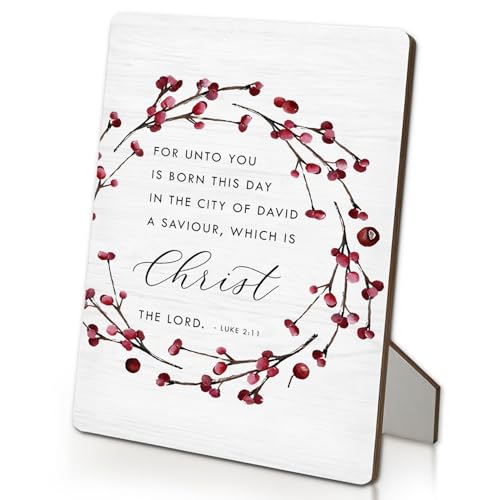
Elegant Craftsmanship: Meticulously crafted with minimalist design, this wooden sign adds refined elegance to any setting.
Charles Schulz’s Creative Limits
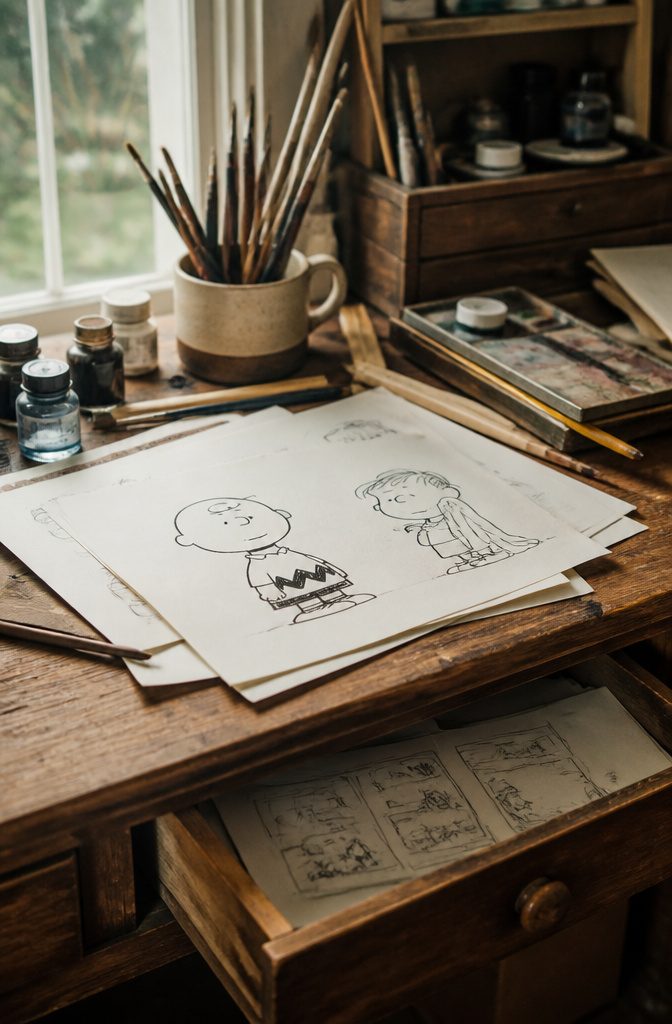
Charles Schulz had three conditions that executives at CBS found almost unworkable.
He would not accept a laugh track, the artificial cue that told audiences when to feel amused. He insisted that actual children voice the characters, not polished adult actors pitching their voices up.
Most alarmingly, he wanted Linus to stand in a spotlight and recite the Nativity story straight from the Gospel of Luke, including the words "unto you is born this day in the city of David a Savior, which is Christ the Lord."
The network’s worry was straightforward: this was commercial television in 1965, and the formula called for broad jokes, familiar voices, and religion kept vague enough not to offend advertisers.
Schulz reportedly answered one objection with the line that if they were going to do the special at all, they would do it right or not do it.
Children’s voices gave the dialogue its halting, sincere rhythm.
The absence of a laugh track left space for Vince Guaraldi’s jazz to breathe underneath the scenes. The Nativity passage, delivered without commentary or cutaway, became the emotional center that no subsequent parody could quite deflate.
What CBS feared would read as amateurish or preachy turned out to be what adults remembered watching as children, and what they sought out again for their own.


Matching Songbook to the Annually Anticipated Holiday Classic:

Bringing the Spirit Home

The small tree Charlie Brown picks out, the one nobody else wanted, works better as a decorating idea than any inflatable lawn figure.
A few years back I set a $40 limit and spent a Saturday collecting fallen branches from the park near my apartment, trimming them to varying heights, and standing them in a heavy glass vase with sand from the dollar store.
The total came to about $12, and the arrangement lasted through New Year’s.
Handmade decorations carry the special’s weight because they show effort rather than budget.
Paper chains cut from grocery bags, strung with twine instead of fishing line, look warmer under lamplight. The popcorn garland takes an evening in front of the TV and costs the price of a bag of kernels.
Resisting the pressure to overproduce the holiday is harder than making the thing itself.
The special’s gathering scene, everyone crowded into the same modest space, suggests the real limit is square footage, not spending. My own place fits six people tightly around a folding table, and that constraint turned out to be useful.
Nobody expects a seated dinner when they are perched on kitchen stools and the arm of the sofa, so the food stays simple and the evening stays loose.
A weekend project that echoes the special without building a themed room: gather every lamp you own into the living room, turn off the overhead fixture, and let the uneven light do the work.
The tree in the special glows because it is the only bright thing in a dim room.

Adorable Peanuts Holiday Set: Includes 6 mini figurines featuring Charlie Brown, Snoopy, and friends reenacting the nativity pageant — a heartwarming tribute to the classic Peanuts Christmas story.

Item Package Dimension: 12.795L x 9.37W x 8.89H inches

Christmas design. Officially Licensed by Peanuts
Frequently Asked Questions
When did A Charlie Brown Christmas premiere?
The half-hour special premiered on December 9, 1965. CBS aired it annually every December from that year until 2020, when Apple TV+ acquired the exclusive streaming rights.
Where can I watch Charlie Brown’s Christmas?
Apple TV+ holds exclusive streaming rights and is the most reliable option; subscribers get full holiday-season access, while non-subscribers usually get a brief free viewing window around Christmas Eve.
PBS sometimes airs it too, but that arrangement has been inconsistent since the rights moved.
What happens at the end of A Charlie Brown Christmas?
Charlie Brown takes his scrawny tree home, hangs a single ornament, and the twig bends to the ground; thinking he has killed it, he walks away.
The other kids arrive, decorate it, and when he returns the tree looks completely different.
They close by singing "Hark! The Herald Angels Sing."
What is the plot of A Charlie Brown Christmas?
Charlie Brown, depressed by the commercialism surrounding him, directs the school Christmas pageant to find meaning.
Rehearsals collapse into chaos until he snaps and asks if anyone knows what Christmas is about. Linus recites the Nativity from Luke 2, shifting the mood, and Charlie Brown’s rejected little tree becomes beautiful when the others add their decorations.
Why is A Charlie Brown Christmas so popular?
Its popularity rests on emotional honesty rather than polish: a genuinely depressed protagonist, no laugh track, actual children’s voices, and a sparse jazz score that respects young viewers as real listeners.
The special critiques commercialism without preaching victory, resolving through failure and community rather than triumph.
Where can I watch free Charlie Brown movies?
Apple TV+ typically offers a short free viewing window for A Charlie Brown Christmas around Christmas Eve each year, though exact dates vary. Consistent free broadcast television ended when Apple acquired exclusive rights in 2020.
What is the number one Christmas movie of all time?
That depends on the metric used, but among television specials, only Rudolph the Red-Nosed Reindeer has matched A Charlie Brown Christmas’s streak of annual December broadcasts, which ran over 50 consecutive years on CBS.