A car enthusiast garage can mean a pegboard install and a few hand tools or a four-post lift that needs professional anchoring before you ever turn a wrench.
What separates the projects worth your weekend is whether you need storage for tires and fluids, a lift for underbody work, or just a better place to wash and detail.
The 5000K–6000K LEDs that keep you from confusing a blue wire for a black one matter to the first group; a single bucket and garden hose still suit the second.
[link-whisper-related-posts]1. Epoxy Flooring
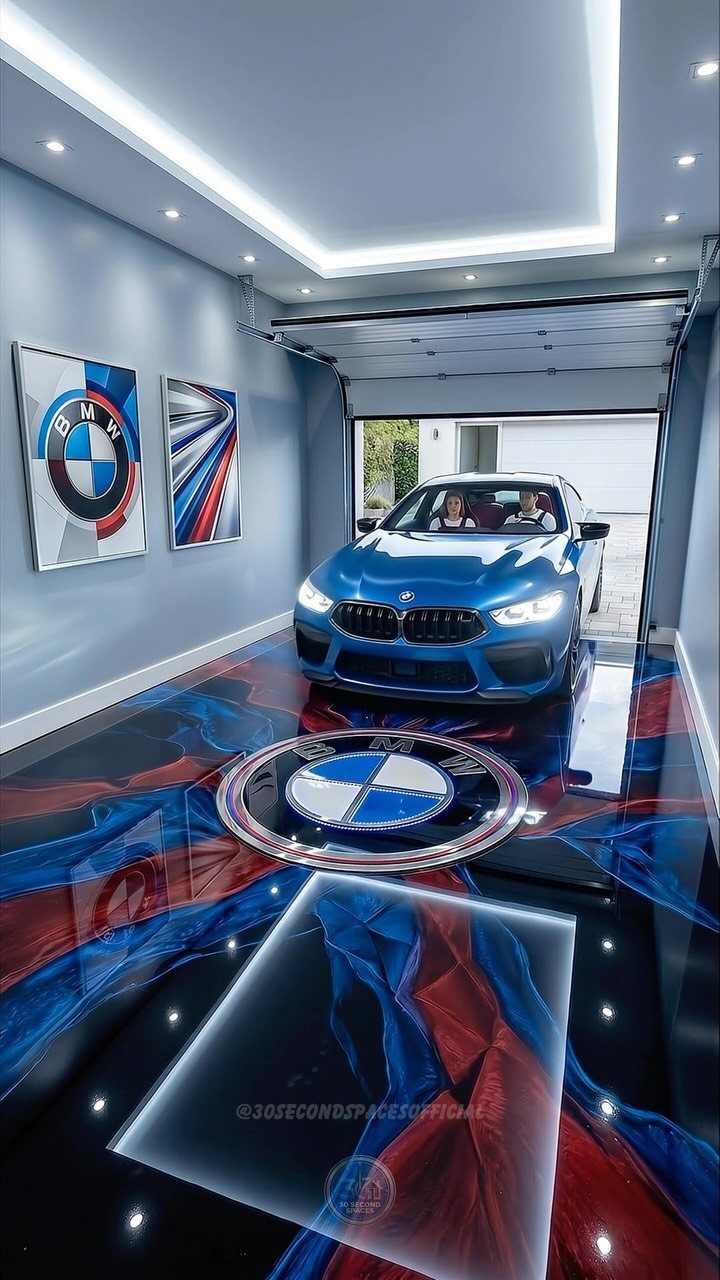
Epoxy flooring turns a stained concrete slab into something you actually want to look at while you work.
Metallic epoxy looks great on camera because it hides the concrete underneath, but the finish is only as good as the prep you put in first.
Surface prep is what makes or breaks epoxy. Concrete has to be clean, slightly rough, and fully cured, at least 60 days old.
Splash water on it: if it beads, strip the sealer first or the epoxy will lift within a year. I would budget a full weekend for grinding and patching before you even open the resin kit.
Oil and chemical resistance matters more here than in a standard garage. Wipe spills fast anyway; the coating buys you time, not invincibility.
Concrete must be at least 60 days old and not sealed for the epoxy to adhere.

✔Epoxy Spike Shoes: In self-flowing flat paint construction, wearing epoxy resin nail shoes will prevent tracks and ensure your design remains intact. Epoxy nail shoes are essential for self-leveling, epoxy flooring, and overlay construction.

BRILLIANT BRILLIANT BLUE METALLIC FINISH: Polycuramine formula creates a dimensional, opaque metallic look on garage and basement floors

Matches Gorilla Garage Floor Coating Kits: Same flake blend included in High-Gloss Black Gorilla Garage Floor Coating Kits.
2. LED Fixtures and Task Lighting
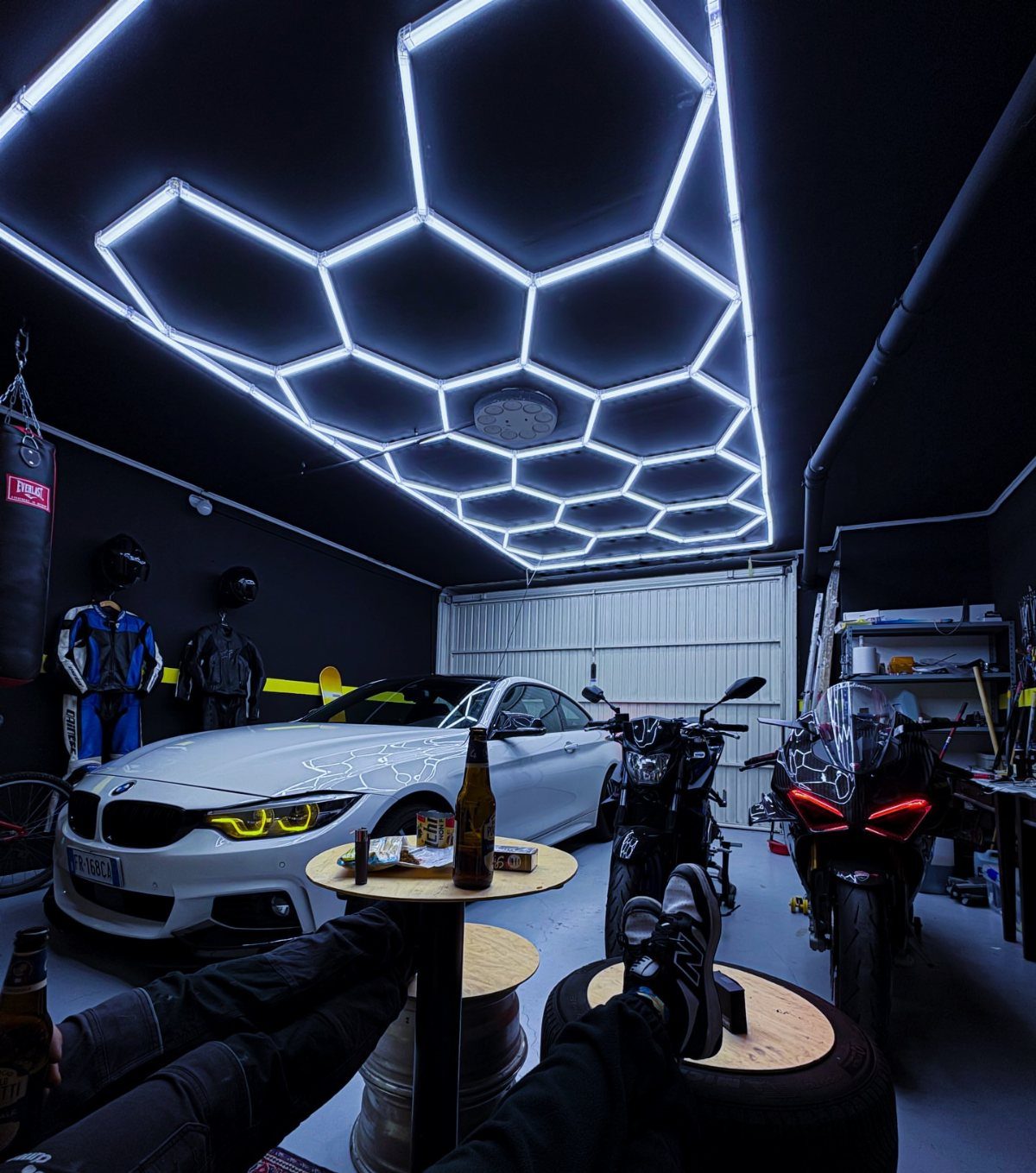
Hexagonal ceiling fixtures give general illumination that actually reaches the corners of a deep garage. The real work happens under the hood, though, and that is where task lighting earns its place.
I would aim for 5000K–6000K daylight LEDs for anything involving paint matching or detail work. Color accuracy at that temperature keeps you from guessing whether a wire is blue or black.
Overhead fluorescents with electronic ballasts work fine in cold weather; space them about 4 feet apart and add a portable LED work light you can position under the chassis.
Motion sensors on the main switches save you fumbling for a wall plate with greasy hands.
Layer it: general, task, portable. One alone leaves you working by phone flashlight sooner than you think.

Double Row + Turbo Row: Our Concrete Diamond Grinding Cup Wheel set comes with 2Pcs 115mm (4-1/2 Inch) grinding wheels, with 22mm (7/8 Inch) arbor hole and 5mm diamond segment thickness, fit for 4-1/2" Angle Grinder. Package Included: 1 x turbo row segment diamond grinding wheel, 1 x double row segment diamond grinding wheel.

Diameter: 4-1/2 inch(115), thread: 5/8-11 threaded, segment: 14, diamond grit: 30/40. Max.r.p.m:12200. Use wet or dry - recommended to use with angle grinders

MULTIPURPOSE - designed for grinding, cleaning, leveling or coating removal for concrete and masonry
3. Garage Vehicle Lift
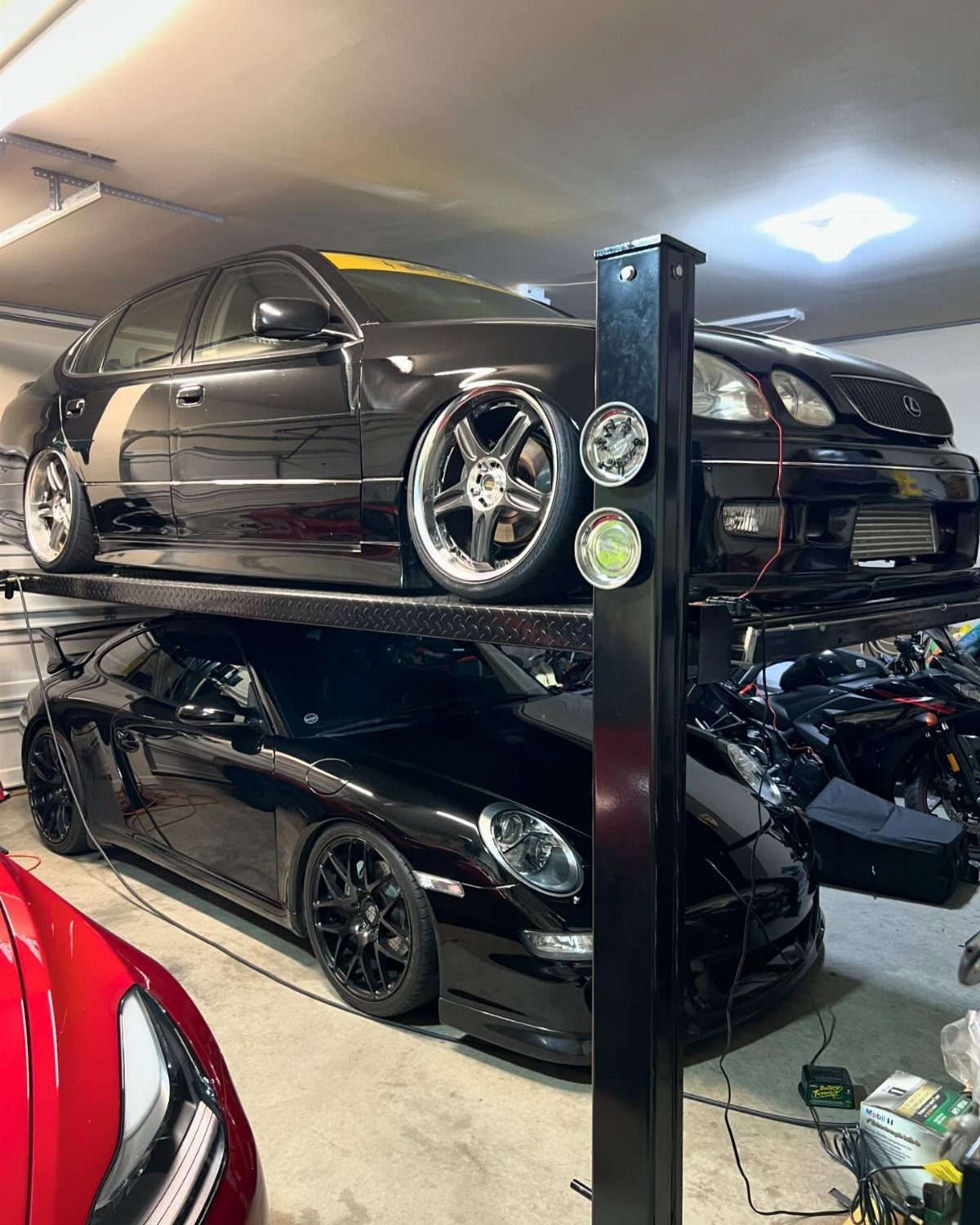
A four-post lift lets you park one car under another, which matters when square footage is fixed and the collection keeps growing. Two-post lifts cost less and give cleaner access to the undercarriage, but they need more precision on placement.
Ceiling height is the dealbreaker: 11–12 feet minimum for most units, and you need 4–6 inches of solid concrete to bolt into.
Factor in $500–$1,000 for installation unless you have rigging experience. I would measure twice before ordering; a lift that hits your garage door track is an expensive lesson.
This upgrade suits someone working under cars monthly, not annually. For occasional oil changes, ramps and jack stands still work.

【Ultra Bright LED Garage Light】POLARPRA 160W LED garage light comes with 312PCS top quality LED diodes with new designed as 6+1 panels ultra-bright adjustable LED panels support 16000 lumens, CRI80+, 6500K daylight natural light. Turn a dark garage into noon-time sunny with no dark spaces, flicker or glare.


5CCT Recessed Light: This 5CCT recessed light offers 5 selectable color temperatures—2700K Warm White, 3000K Soft White, 4000K Neutral White, 5000K Daylight White, and 6000K Cool White. This LED recessed light allows you to choose the ideal tone for kitchens, makeup areas, offices, garages, study rooms, and gatherings, helping avoid returns caused by incorrect color temperature selection
4. Storage Wall
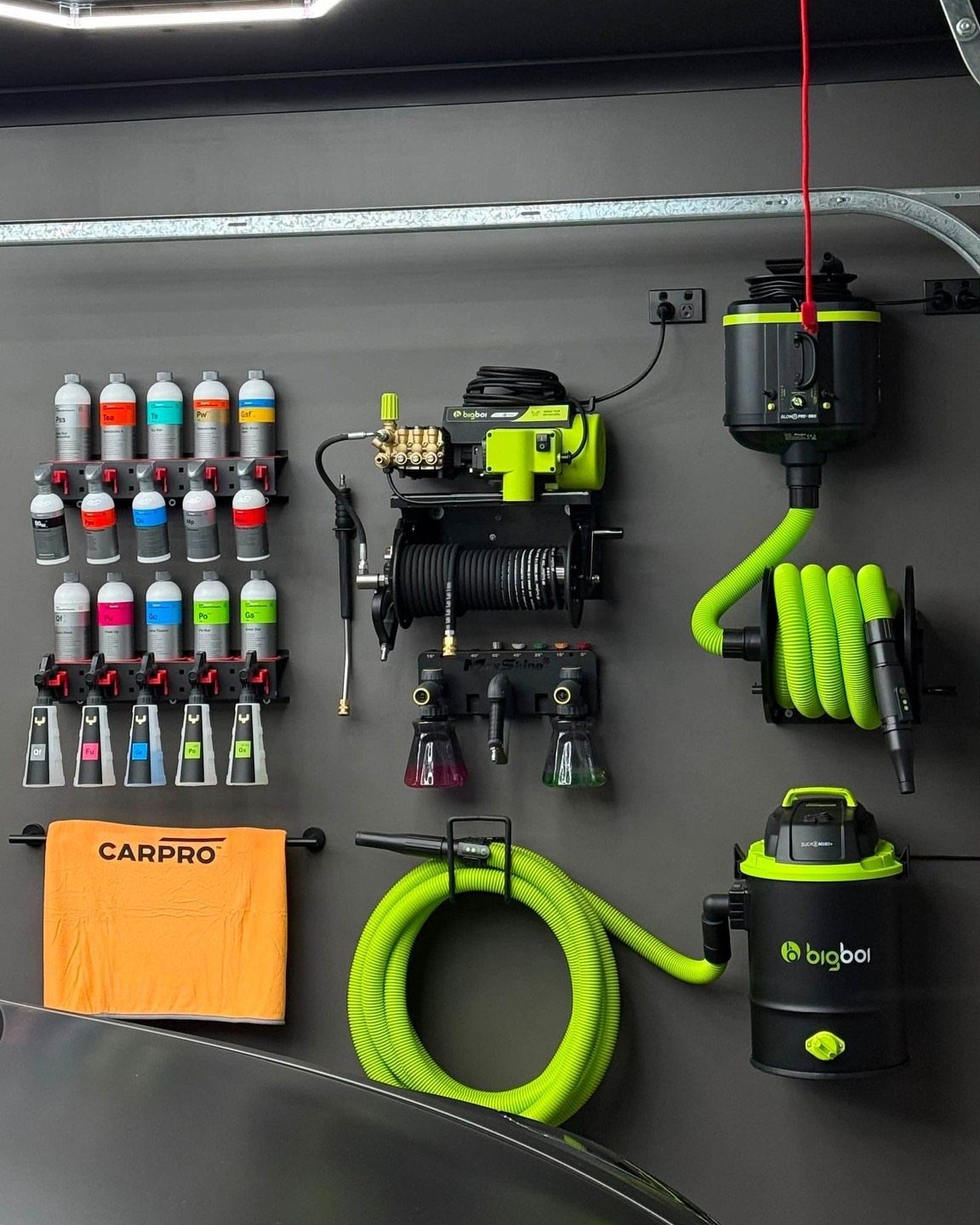
Slat wall and pegboard systems turn the vertical real estate between studs into something functional.
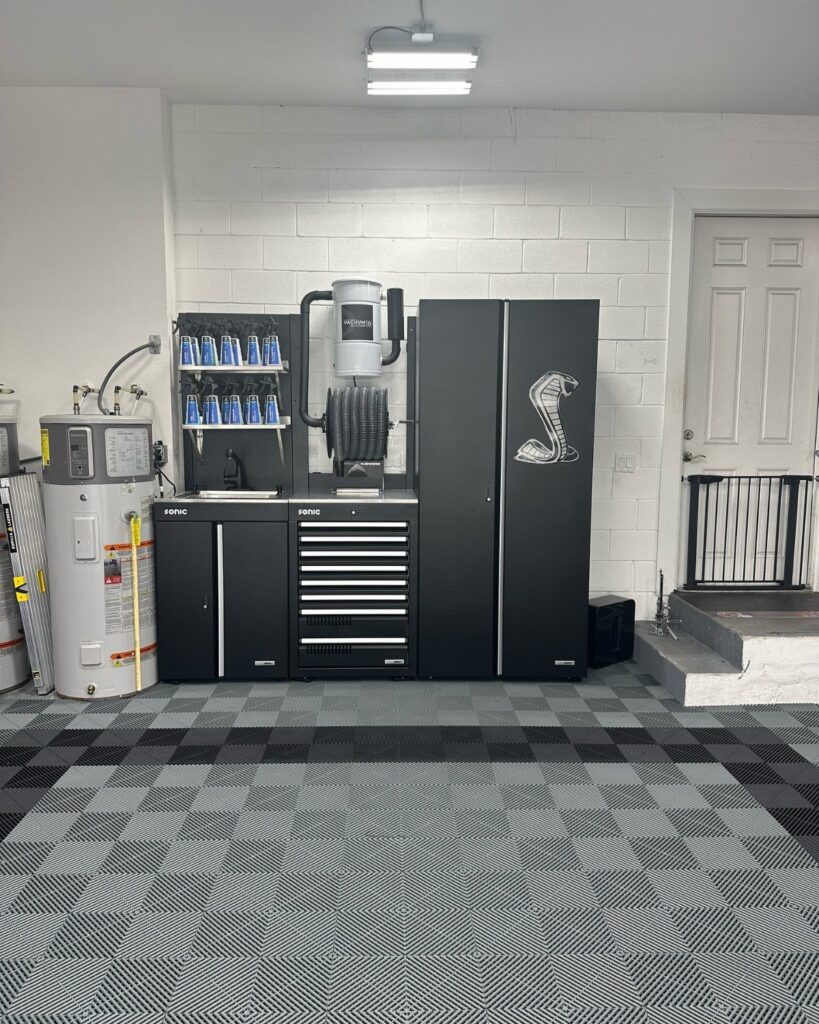
Slat wall handles heavier items if you mount it to studs, pressure washer and vacuum right where the hose reaches the car, bottles racked by reach frequency.
I would start with what you grab every wash: towels, quick detailer, your most-used pads.
Pegboard works for lighter hand tools; slat wall handles the weight of a mounted machine. Gear arranged by workflow, wash left to dry right, is what a storage wall should do: follow your sequence, not a catalog layout.
Leave floor space clear. A detailing cart is useful until it becomes another thing to roll around.

Flexible and Versatile: Our rechargeable work light fixture boasts a dual functionality, allowing it to be used as two independent handheld lights or connected together via the top male-female lock for higher brightness. Ideal choice for various work scenarios.

3-in-1 Modular LED Work Light – Transform any workspace with this rechargeable work light. Use the main lamp and two detachable side lights together for powerful wide-area illumination, or separately as portable work lights for precise tasks. Perfect for workshops, garages, jobsites, car repair, or camping.

BRIGHTEN DARK SPACES with 1,700 lm of light output
5. Overhead Racks
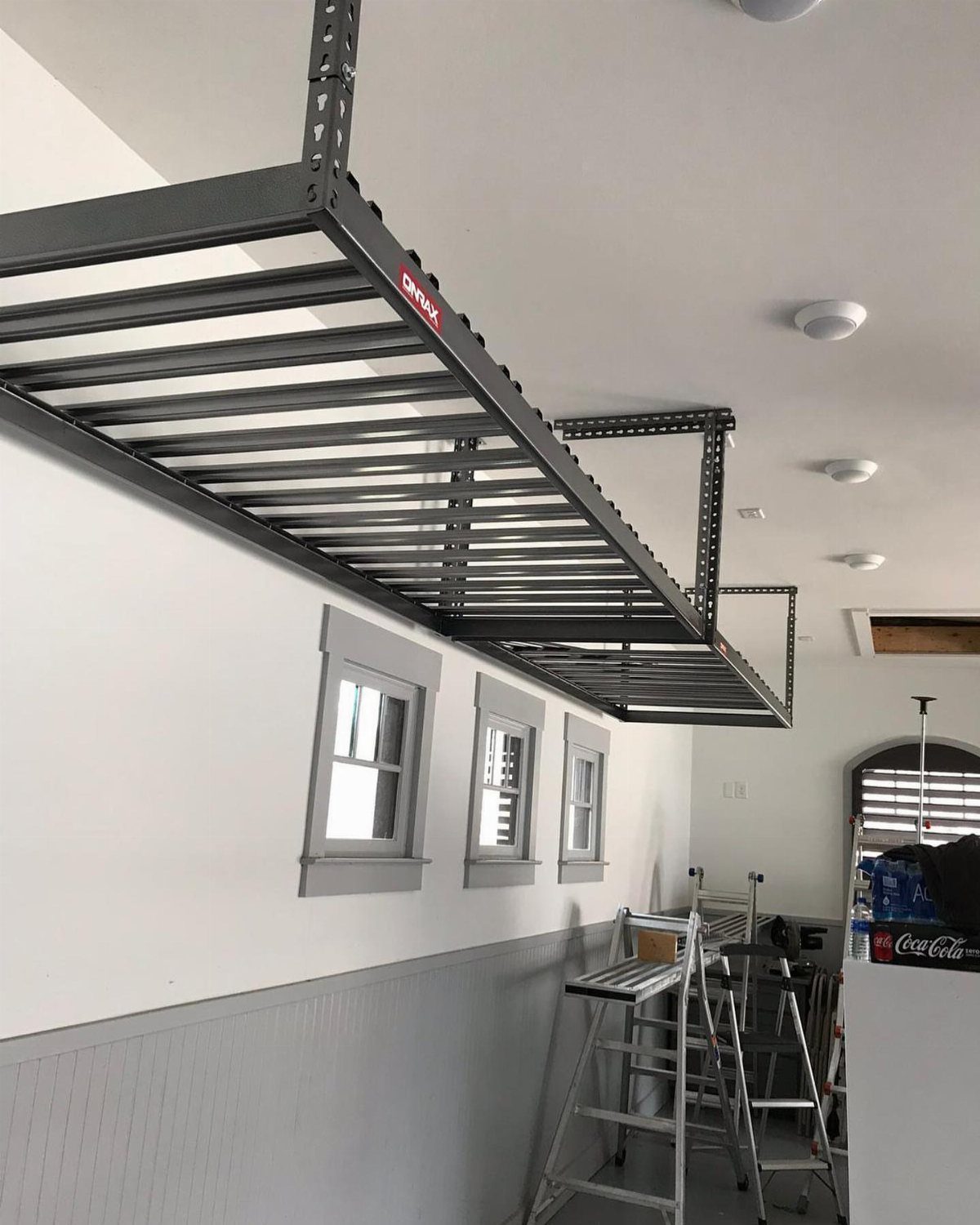
Rafter-mounted racks store what you need but not right now: spare sets of wheels, seasonal covers, the specialty tools that come out twice a year. Ceiling-mounted racks bolt to joists and keep the floor line clean.
I would check garage door travel path before installing anything; the rack has to clear the raised door and anything tall you drive in.
Pulley systems help for heavy items, though I would still ask for a second set of hands rather than trust a rope alone.
Weight capacity varies by joist spacing and hardware; if your ceiling is finished, you are guessing at structure unless you open it up. Worth doing before you load it with winter tires.

Quantity and Durability: Emphasizing both quality and quantity, our car lift kit consists of 16 robust wedge anchor bolts and 30 installation shims, made from quality material to ensure longevity; Meet your lift installation needs with this extensively equipped kit that ensures quick, efficient, and effortless installation

CE Certified Quality and Warranty: MEMMAREX 4 post parking lift holds CE certified. This car lift is suitable for home garage with capacity 9000lbs, which comes with 12-month warranty. Any self‑modification of the equipment will void the warranty.

Quantity and Durability: emphasizing both quality and quantity, our car lift kit consists of 8 robust wedge anchor bolts and 15 installation shims, made from quality material to ensure longevity; Meet your lift installation needs with this extensively equipped kit that ensures quick, efficient, and effortless installation
6. Insulated Garage Doors
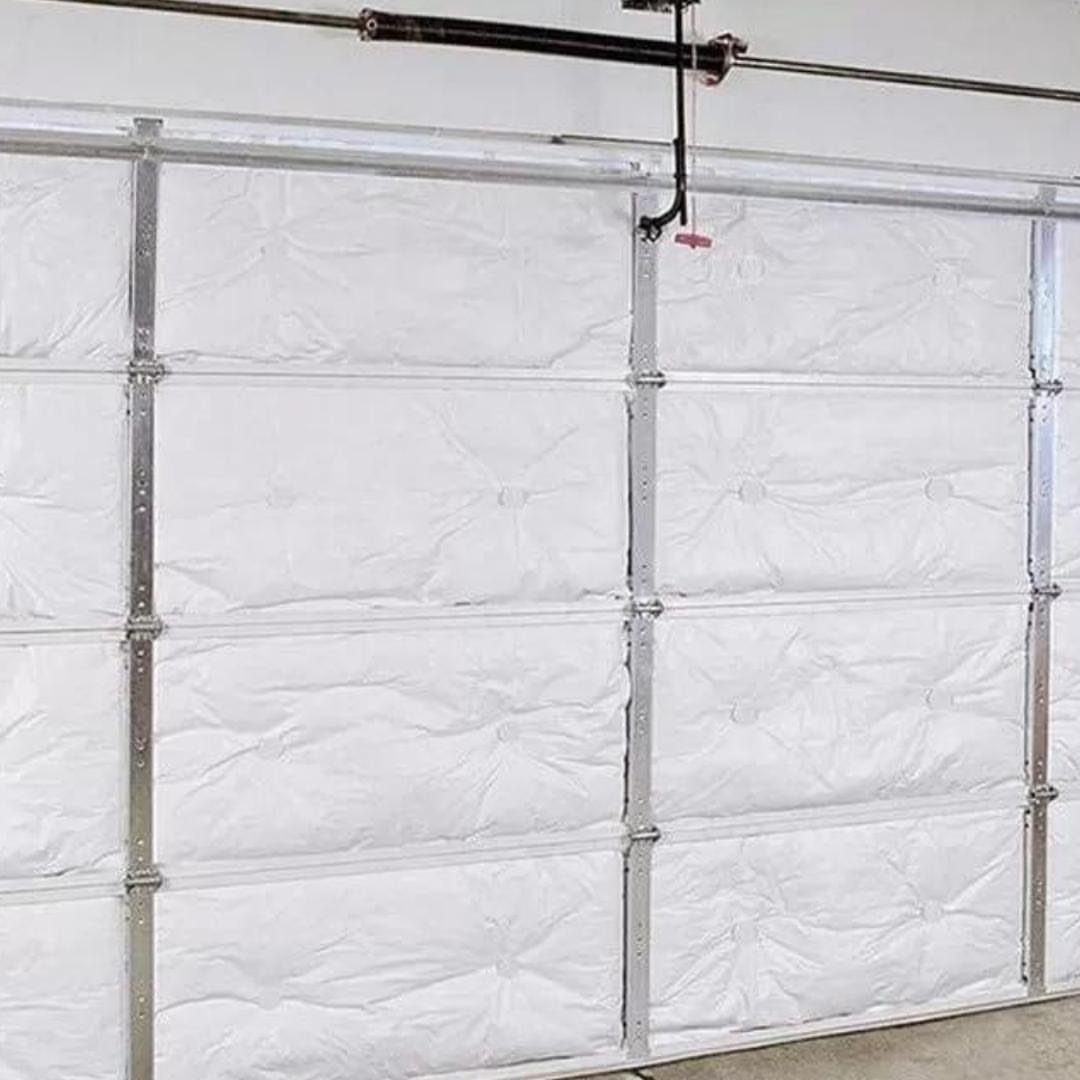
Quilted insulation panels pin to the interior of a standard sectional door and cut heat transfer enough to make the space usable year-round. Retention pins compress the batting without tearing it when the door flexes.
I would pair this with weatherstripping on the stop molding and threshold, since a door that leaks around the edges makes the panel investment half as effective.
Shared walls with the house matter most for energy loss; if your garage is detached, the door is less critical than walls and ceiling.
Reinforced designs handle wind load and help if you are adding a heavier opener or insulation kit to an old track. Check spring sizing; the extra weight needs matching hardware or the motor strains and the door drifts.

BRILLIANT GUNMETAL METALLIC FINISH: Polycuramine formula creates a dimensional, opaque metallic look on garage and basement floors

BRILLIANT COPPER METALLIC FINISH: Polycuramine formula creates a dimensional, opaque metallic look on garage and basement floors

BRILLIANT BROWN METALLIC FINISH: Polycuramine formula creates a dimensional, opaque metallic look on garage and basement floors
7. Mobile Workbench
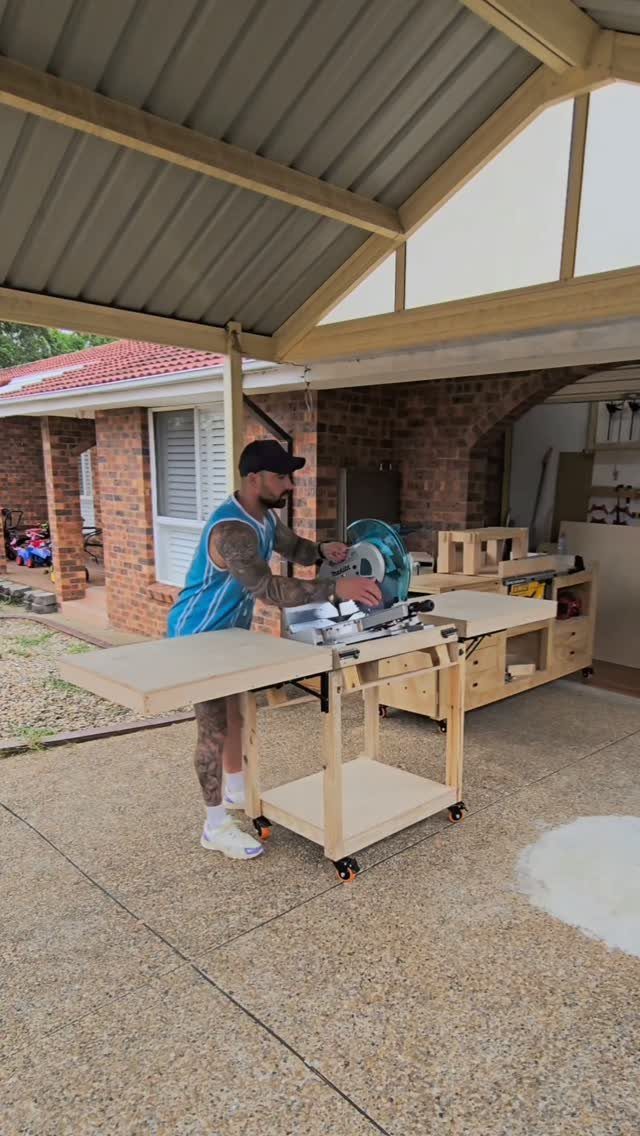
A mobile workbench on casters lets you roll the project to the light, not the other way around. Fold-out wings double the surface when you need it and tuck back when you do not.
I would build the top from 3/4-inch plywood layered with hardboard if you want a replaceable sacrificial face. Drawers at working height beat stooping to a floor cabinet; a vise mounted to one end keeps both hands free for cuts.
Norm Abram’s point holds here: clamped work is safer work, and a bench you can position where you need it removes the excuse to cut on the ground.
Check wheel locks. A bench that drifts while you plane is a broken finger waiting.

MULTIPURPOSE - designed for grinding, cleaning, leveling or coating removal for concrete and masonry

3 Pieces 4 Inch Diamond Cup Grinding Wheel.

Large grinding segments with heat treated cup design.
8. Interlocking Garage Floor Tiles
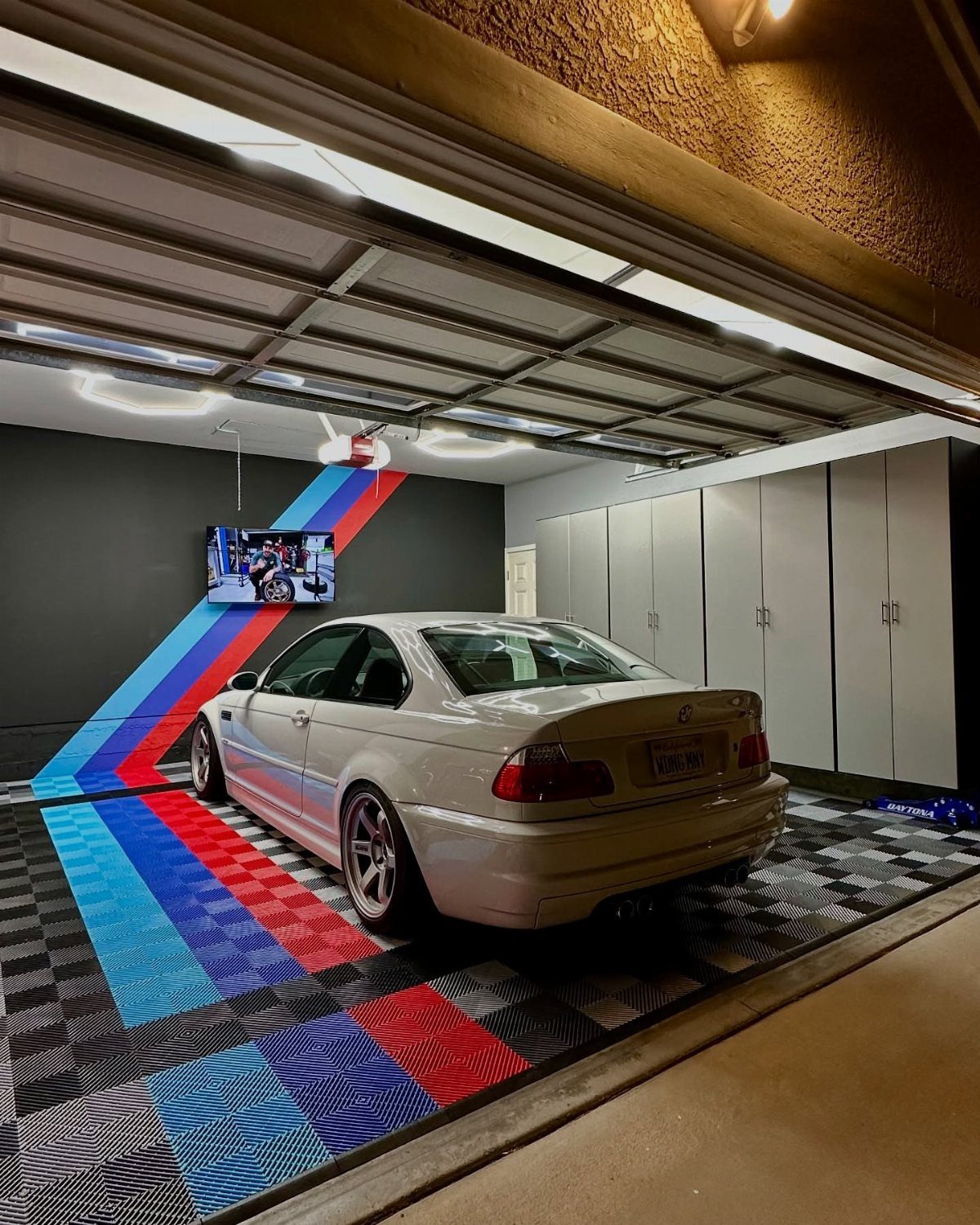
Interlocking tiles snap together without adhesive, which means you can pull one up if oil gets underneath or you change your mind about the pattern.
Rubber and vinyl both hold up to chemicals; vinyl tends toward brighter colors if you want the racing stripes visible.
I would start from the garage door and work backward, cutting border pieces with a jigsaw where they meet the wall.
The slight cushion matters if you are on your feet for hours, and the air gap underneath helps with condensation on a damp slab. A bare floor shows every stain; tiles hide them until you lift the piece.
Cost runs higher than epoxy for the same square footage. The trade is time: no cure cycle, no grinding, drive on it the same afternoon.

【Bright 600W Equivalent & Energy Saving】Experience super bright 6500 lumens of 5000K daylight, equivalent to a 600W incandescent bulb while using only 60W. Based on 3 hours of daily use, save up to 90% on your electricity bill. ETL certified for safety and efficiency.
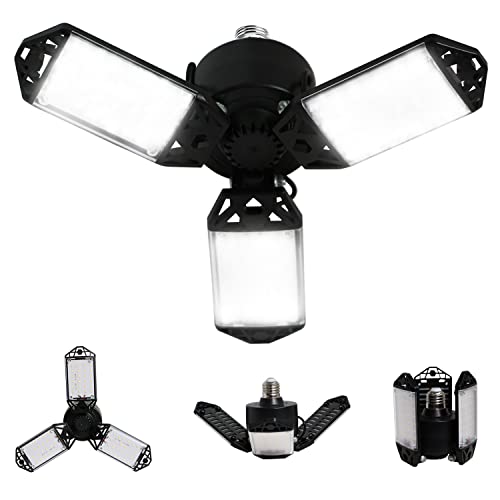
☀【Upgrade Garage Light -- 80W Super Bright】: MeiqiLS deformable led garage lights with 3 adjustable LED panels, high brightness 8000 lumen output in 6500K daylight, CRI80+. It features LED technology, really shine without dead ends.

【Deformable Design With 5 Light Sources】 Each Garage Light has 5 light sources with more uniform and soft light, Four LED panel heads can be adjusted, each light head can be folded up to 90°. The coverage angle can reach 360°, The deformable led garage lights will make the light cover a wider area. The garage led lights are adjustable, so you can shine the LED lights where you want.
9. Dedicated Car Detailing Station
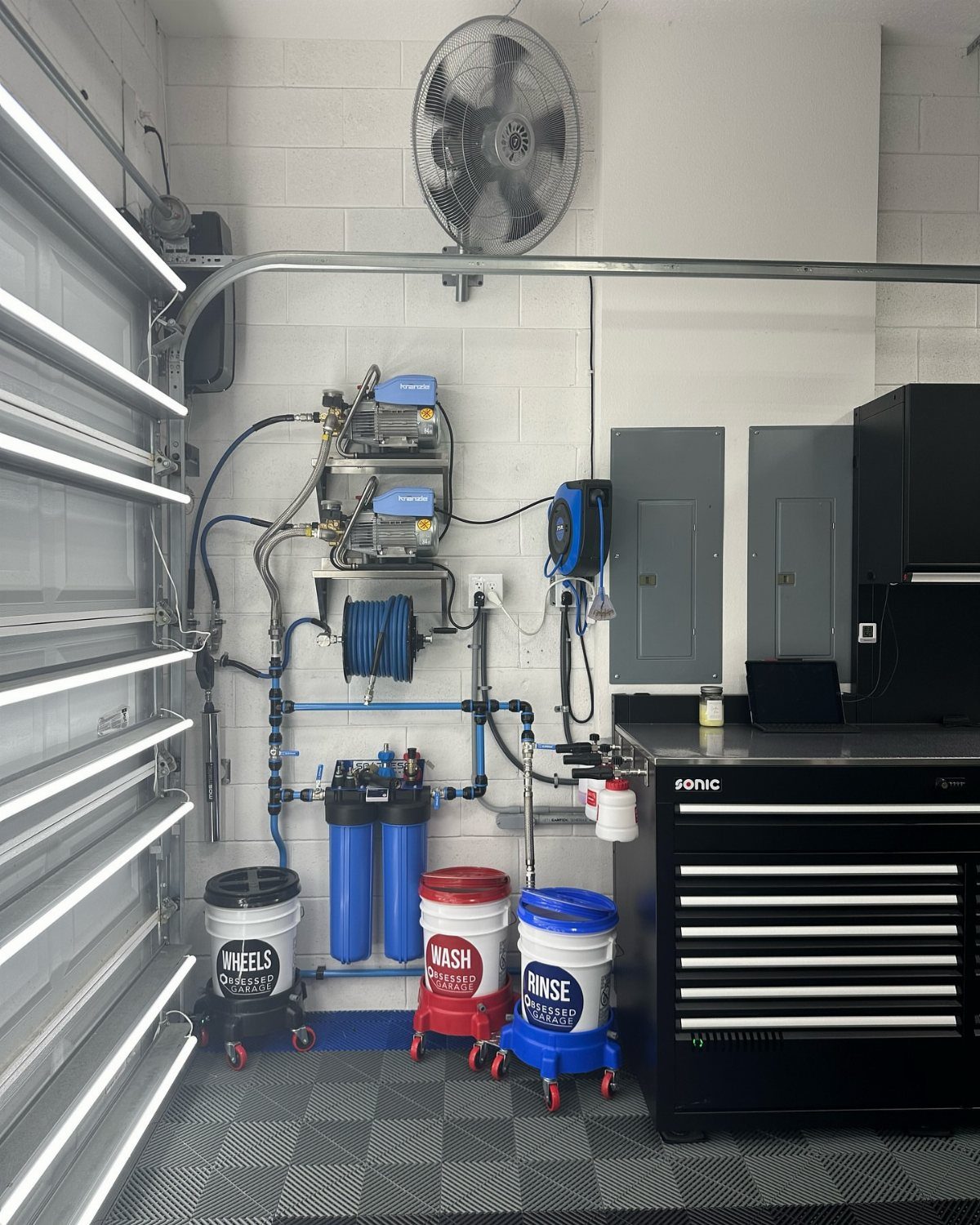
Rolling buckets labeled by stage keep you from dunking a wheel mitt in the rinse water and scratching paint.
The wall-mounted hose reel and filtration cylinders above them mean you are not dragging a pressure washer across the floor or guessing at water quality.
I would set the station near the garage door for drainage and so you are not carrying buckets past the car.
Soft-close drawers on the tool chest protect both the finish and your knuckles. A cart that moves lets you circle the vehicle without walking back to the wall; fixed plumbing saves the setup time if you wash weekly.
This suits someone who details monthly or more. For twice-a-year waxing, a single bucket and a garden hose still work fine.

3000LM Super Bright & Wide Illumination: Cut through engine bay darkness! MechaniLite under hood light with 81-LED COB board delivers intense, penetrating light to spot every nut and bolt during repairs.

3000LM COB Super Bright Magnetic Work Light: Mechanic under hood light delivers up to 3000lm brightness. Its 17.2-inch COB board offers wider, even coverage. With 3-level brightness and color temp options, it fits scenarios: low-bright warm light for car engine inspection, medium-bright natural light for workshop work, high-bright cool light (6500K) for outdoor emergencies. Keep one in home, basement, job site, workshop, garage or vehicle trunk for unexpected needs.

【3000 LUMENS COB LED + 525MM PRO-FIT LIGHT BAR】 Engineered with an upgraded 3000-lumen COB strip, this 20.67-inch (525mm) extra-long light bar delivers up to 30% wider beam coverage than standard work lights. It floods the entire engine bay, vehicle hood, or workbench with daylight-bright illumination in a single placement, eliminating the need to reposition the device every few minutes during complex mechanical repairs or detailed inspections.
Planning the Garage Layout
Measure the bay before you buy anything.
A full-size truck with the doors open needs about 11 feet of width to climb out without dinging the fender; two cars parked nose-to-tail need depth, not width, and that changes where the storage wall goes.
I would walk through a typical Saturday before finalizing the layout: wash sequence from left to right, mechanical work in the zone with the lift or jack stands, detail station near the door for drainage.
Cross-contamination is real; buffing compound in the rinse bucket ruins the pad and the paint. If the garage shares a wall with the house, keep chemical storage on the far side and ventilate that end.
Workflow beats square footage. A 400-square-foot garage with the tools where your hands reach them works faster than a 600-square-foot space where you walk across oil spots to find the 10-millimeter socket.

Unmatched Safety with Dual-Lock Protection: Safety is our top priority in any automotive repair environment. This robust 4 post lift features four mechanical locking devices, with each post equipped with both primary and secondary safety locks. This dual-lock system on our car lift ensures your vehicle is securely held at any height. The Single-Point Manual Safety Lock Release allows for quick and easy lowering, enhancing operational safety for this heavy-duty equipment

COMPATIBILITY CHECK: Designed for 2-post and select 4-post automotive lifts that specify 3/4 x 5.5 in wedge anchors. Before ordering, verify the lift baseplate openings, required anchor size and installation instructions.

【80-Piece Value Pack】 Includes 80pcs shims for 2 post car lift leveling: 20 pcs each in 1/16", 1/8", 3/64", and 1/4" thicknesses. Color-coded for instant identification.
Safety and Security Measures
Garage door security starts with the opener; unplug the motor or lock the release when you are away for more than a day.
A zip tie on the emergency release cord slows a coat-hanger reach, though it does not stop a determined break-in.
I would store flammables in a dedicated metal cabinet, not on the pegboard next to the electrical panel.
Brake cleaner and starting fluid both flash below room temperature; a sealed cabinet buys time if a rag smolders. Propane for the shop heater lives outside, period.
Motion sensors on the LED fixtures give you light when you walk in with arms full, but they also show you whether someone else triggered them.
A camera covering the door and the workbench covers the 2 reasons someone breaks into a garage: the car and the tools.
Climate Control Considerations
I would check whether the garage shares a wall with conditioned space before spending on the door alone. That shared surface is where your heat walks out in January and where summer attic temperature radiates in.
A mini-split mounted high on the wall handles heating and cooling without eating floor space. Size it for the volume, not the footprint; 10-foot ceilings add cubic feet that a standard garage-load calculation misses.
If you are running a lift and tools, the unit needs to offset the heat the motors throw, not just the outdoor temperature.
Frequently Asked Questions
What are some creative ideas for a garage for my car?
Stacking two cars in one bay takes a four-post lift and a ceiling tall enough to clear the top vehicle; the floor underneath still needs protection from drips, which is where epoxy or interlocking tile pays off over raw concrete.
A dedicated detailing station with labeled buckets and a wall-mounted hose reel keeps wash supplies organized, while slat wall or pegboard turns the vertical space between studs into storage for tools and equipment.
What are the latest garage trends?
Smart garage door openers with remote monitoring through smartphone apps are showing up in more builds, along with motion-activated cameras and sensors that tie into home security systems.
LED fixtures, especially hexagonal ceiling units and 5000K–6000K daylight task lighting, are replacing fluorescents for better color accuracy under the hood.
I would still pair any tech upgrade with the basics: weatherstripping on the door edges and a metal cabinet for flammables, since a smart opener does not fix a draft or a rag that starts smoldering.