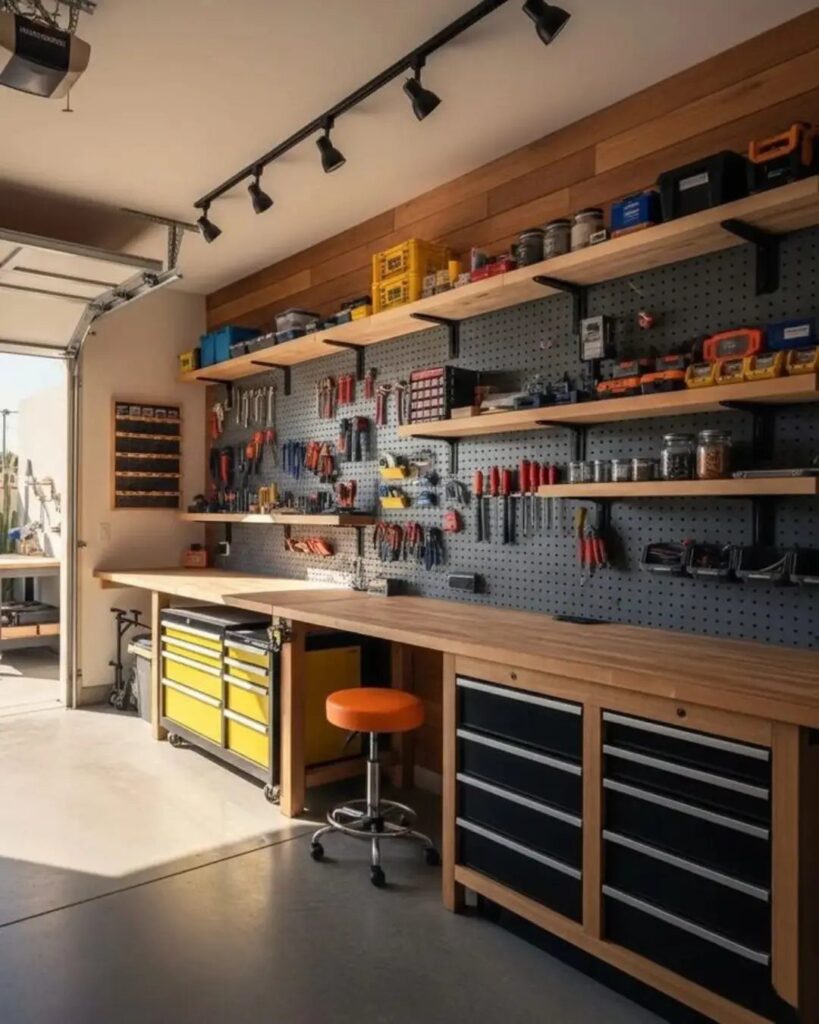
A garage workbench can be two rolling tool chests with a board across the top or a full-length built-in station with base cabinets underneath.
Some benches fold down or roll away so the car fits back in at night; others stay put and claim the space full-time.
The 36-inch height that matches kitchen counters is only a starting point; detailed hand work wants lower, assembly wants higher, and the right number depends on what your body does at that bench.
[link-whisper-related-posts]1. IKEA Hack Workbench
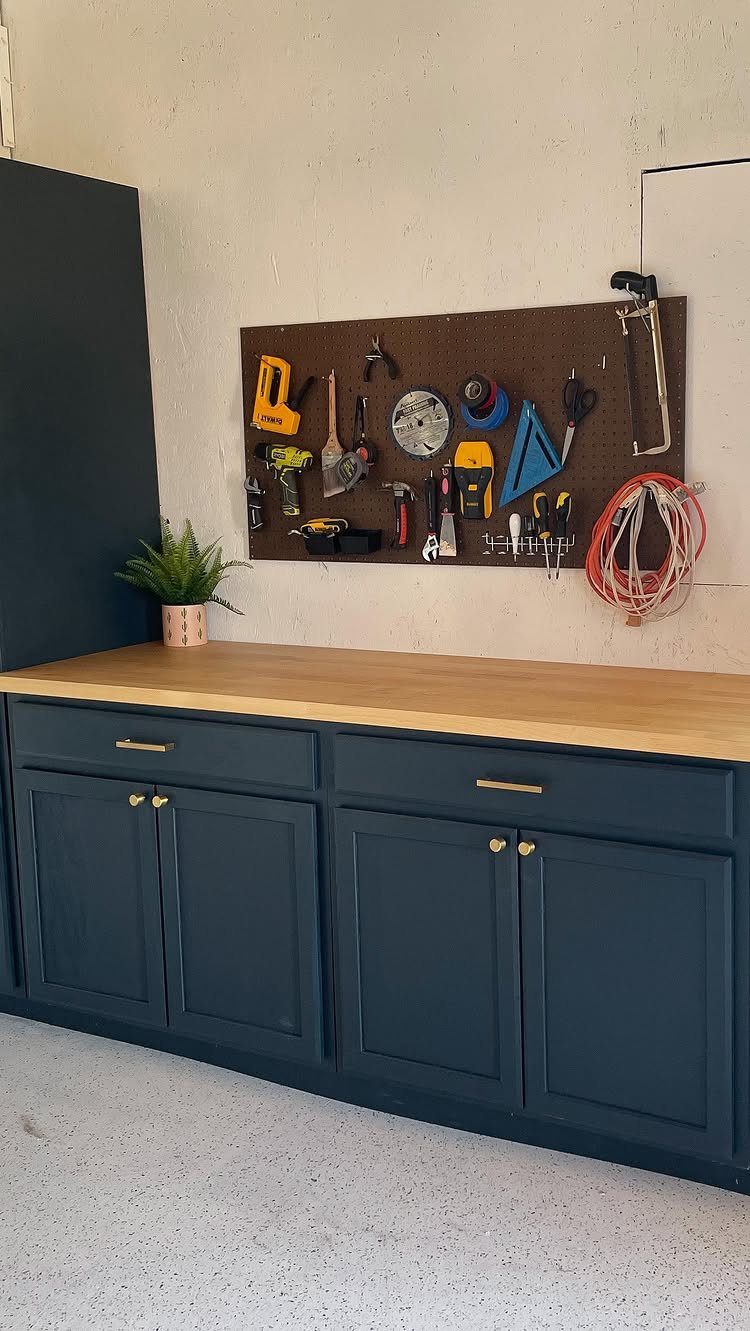
IKEA furniture in a garage sounds like a mismatch until you see it done right.
The RAST dressers become base cabinets with real storage, and a butcher block countertop gives you a flat work surface that holds up to real use.
Paint changes everything: the same pieces that look dorm-room in birch or white take on a workshop personality in a darker color with a tougher finish.
Pegboard hung above the bench keeps hand tools off the surface and in reach.
Hand tools hang at eye level, drills and blades within arm’s reach, and the whole wall becomes part of the bench rather than dead space behind it.
This works best if you want a workbench that looks intentional without the price of custom cabinetry. The dressers are light enough to move but solid enough to stay put once loaded.
Check that the top is rated for the weight you will put on it, and add a harder wearing surface if you plan to beat on it regularly.

【Heavy-Duty Garage Work Bench 】Constructed with thickened steel and reinforced side beams, this workbench boasts a load capacity of up to 2000 lbs. Measuring 15.8"D x 47.2"W x 47.2"H its sturdy frame ensures long-term use without deformation, perfectly meeting heavy-duty storage needs in garages, workshops, or home studios

[Save time] Pre-installed and structures without driling save your installation time easily. Detailed instructions come with the package. We also provide a detailed assembly video on this page. Customize your workbenches for garage, office, home, commercial, and Woodworking Shop.

Strong Durability:The double-layered solid rubberwood has a 2000lbs max load on the tabletop and 500 lbs shelf maximum load.Heavy-duty carbon steel makes for the table legs, and stability is improved by the solid wood shelf and H-shaped design. The adjustable glides base is thicker and more stable on a variety of ground conditions and has an adjustable range of 0-1.4 inches.
2. Full-Length Garage Workbench
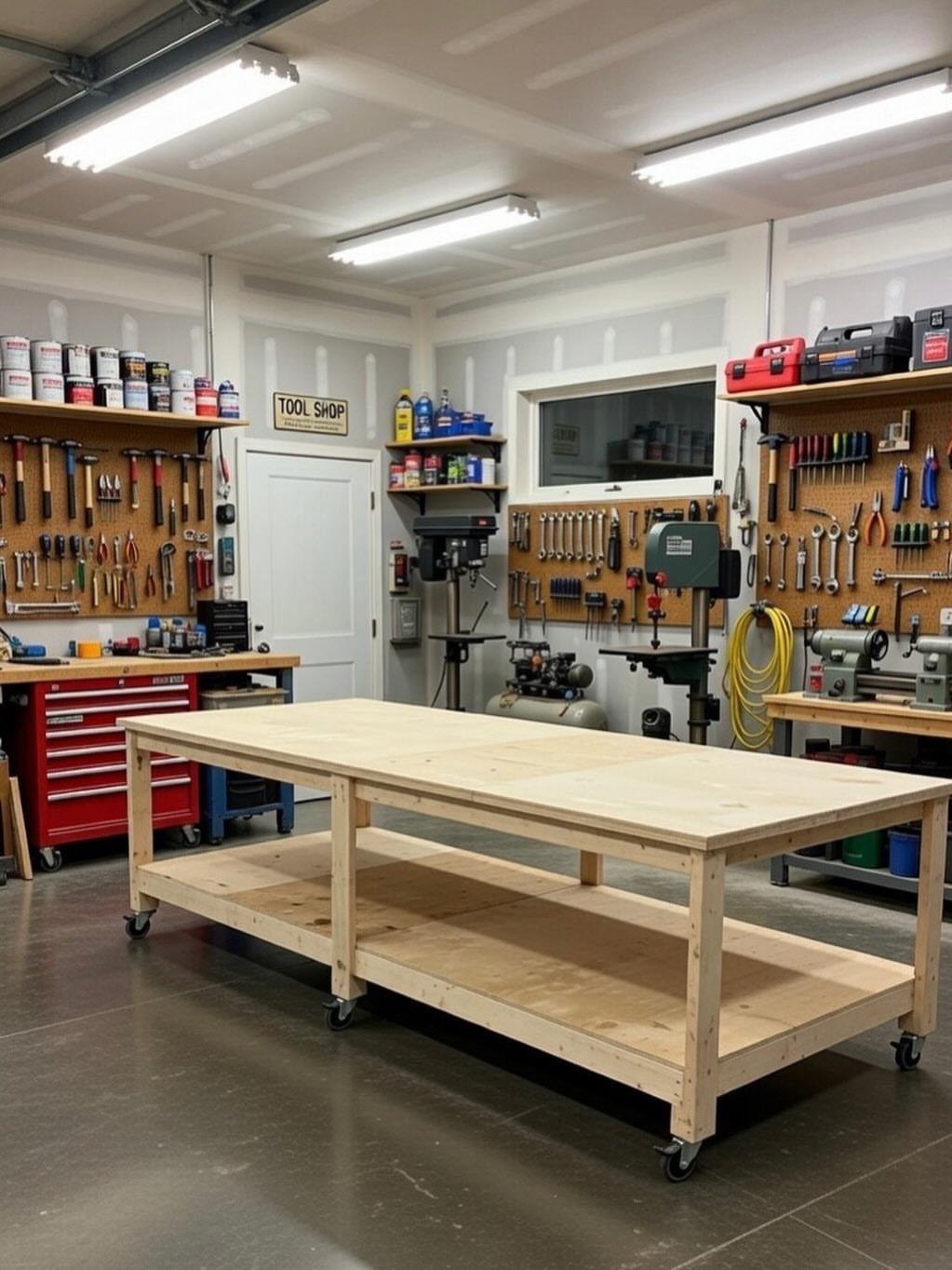
A single long bench across one wall turns a garage into a shop you can actually work in.
A full-length top lets you spread out a project without stacking pieces on top of each other. Casters underneath mean you can roll it to the center for assembly, then back against the wall when the car needs its spot.
In a two- or three-car garage, the wall opposite the vehicles is usually the place for this.
Measure your available length against door swing, cabinet depth, and the space you need to walk around a parked car. A continuous surface uses that wall efficiently without eating the floor space you need for storage or movement.
A solid wood top will take dings and eventually look like a bench that has seen use, which is the point.
A harder surface or replaceable sacrificial layer is worth considering if you work with metal or do a lot of cutting.

Premium 21-gauge powder-coated steel construction provides maximum durability

Massive Tiered Storage Space: This 72-inch rolling tool chest comes with 11 drawers of 5 different sizes, 3 upper cabinets, a 2-door cabinet and a pegboard, which provides a decent amount of storage space to keep a variety of tools organized. The 18-inch deep wood top also provides a spacious working surface.

【Rugged Steel Build】 Thick steel plates with a powder-coated finish form a dependable tool chest that resists rust and daily wear. Ideal for keeping wrenches, sockets, and hand tools organized in any garage or workshop.
3. Base Cabinets with Workbench
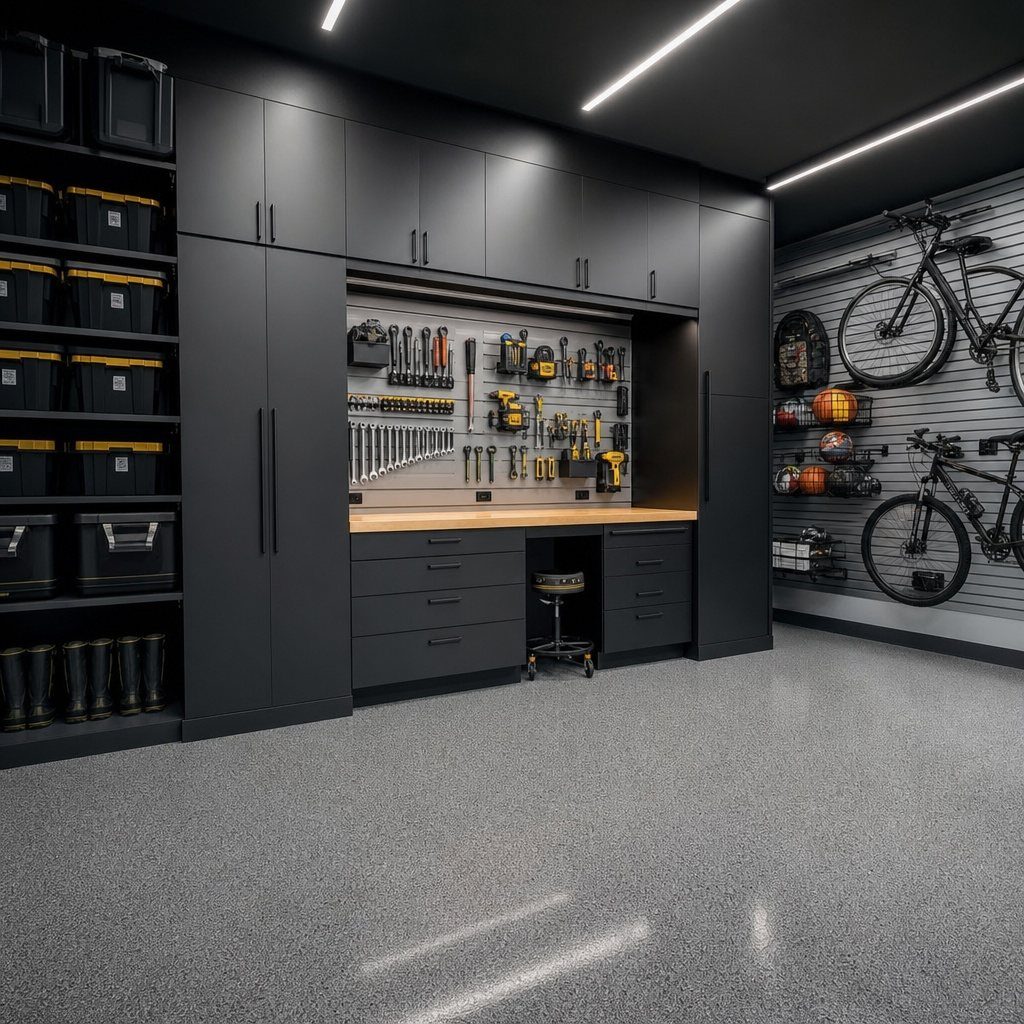
Base cabinets underneath a workbench hide the visual noise that makes a garage feel chaotic.
Drawers organize hand tools and hardware where you can find them, and larger cabinet bays swallow bulky equipment that does not need to be on display.
The result reads as finished rather than improvised, which matters if your garage doubles as entry storage or a space the family uses.
Base cabinets with a work surface on top anchor the room’s storage and give you a place to work without buying a separate bench.
The bench itself becomes a countertop in that system, a place to work that is also a place to put things away.
This approach trades some flexibility for that finished look.
Cabinets are fixed in place, so plan your layout before you commit. Deep drawers cost more than open shelves but protect tools from dust and keep small parts from walking away.

SOLID HEVEA WOOD – STRONG & DURABLE: Crafted from Hevea wood, a sturdy hardwood known for its strength and durability; Offers exceptional resistance to warping, high load-bearing capacity, and a smooth surface; Ideal for various applications, including desk table top, kitchen countertops, and DIY projects

60 x 25 Inch Butcher Block Countertop - Designed as a 5 ft solid birch countertop slab for kitchen islands, laundry rooms, washer and dryer tops, DIY desks, tabletops, workbenches, and home improvement projects
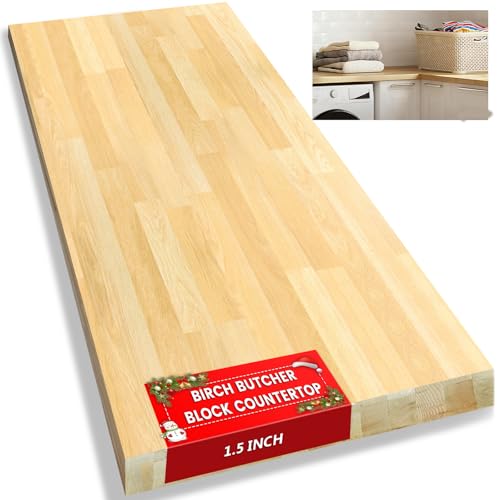
Warm & Tough Solid Birch -- Enjoy the authentic beauty of 100% solid birch. Its light golden hue and consistent grain add timeless warmth. Beyond looks, this dense hardwood is naturally durable, perfect for your kitchen, office, or workbench and demanding DIY projects.
4. Dedicated Tool Wall
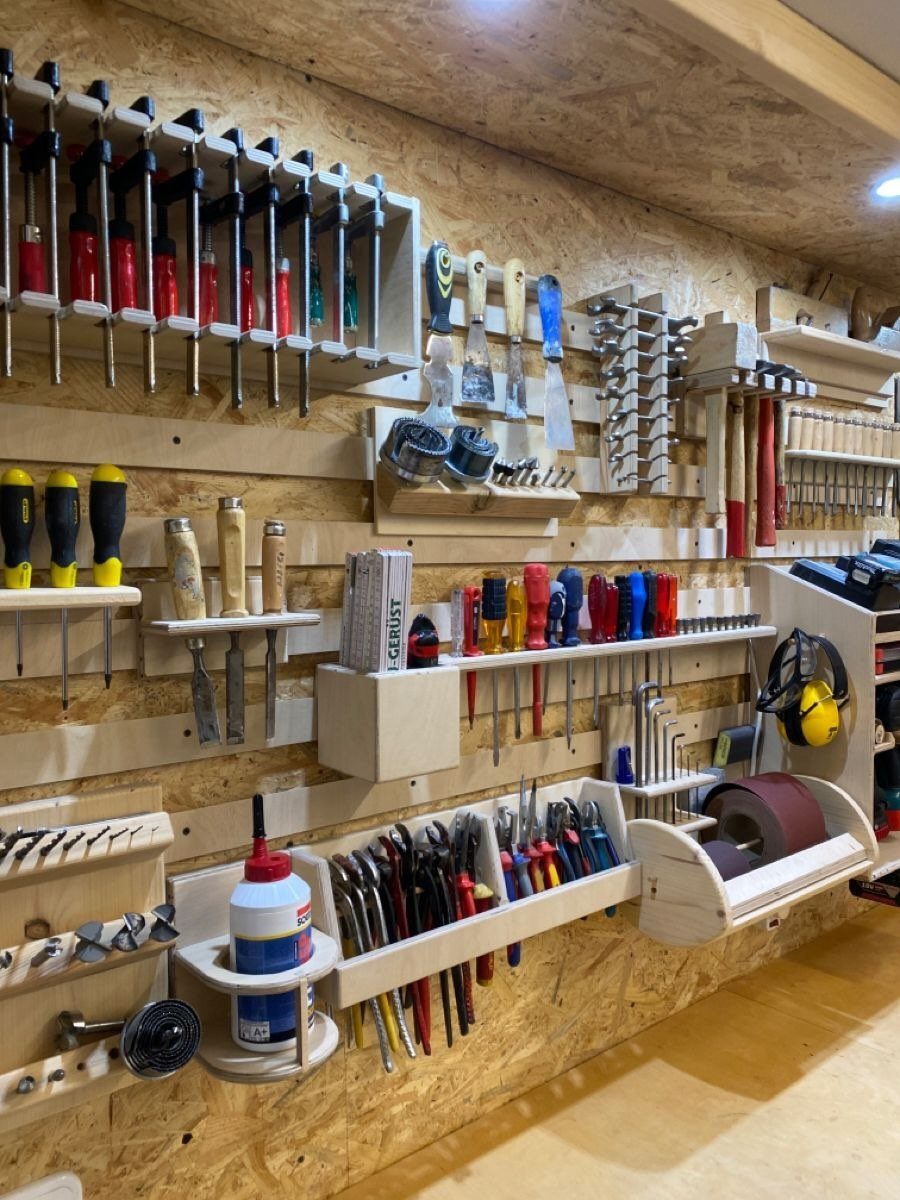
A tool wall above the bench puts everything in view and gives every tool a home.
A French cleat system uses wooden holders shaped to specific items: clamps in slots, chisels in angled rests, screwdrivers standing upright where you can grab the one you need without reading labels.
The cleat itself is a strip of wood cut at an angle, and matching angles on the back of each holder let them hook securely and lift off when you need them elsewhere.
This setup suits anyone tired of digging through drawers for the right screwdriver. It also makes cleanup automatic: a glance tells you what is out of place, and each tool has a spot rather than a general area.
Everything is out in the open, so dust settles and you have to keep the wall neat or it looks like clutter.
Dust, moisture, and the risk of knocking something loose are real, so this works best in a dry garage and with tools you use often enough that they do not sit still long enough to corrode.

WORKSPACE: The perfect way to unclutter your garage and work on your projects while keeping everything in place
5. Bright Task Lighting
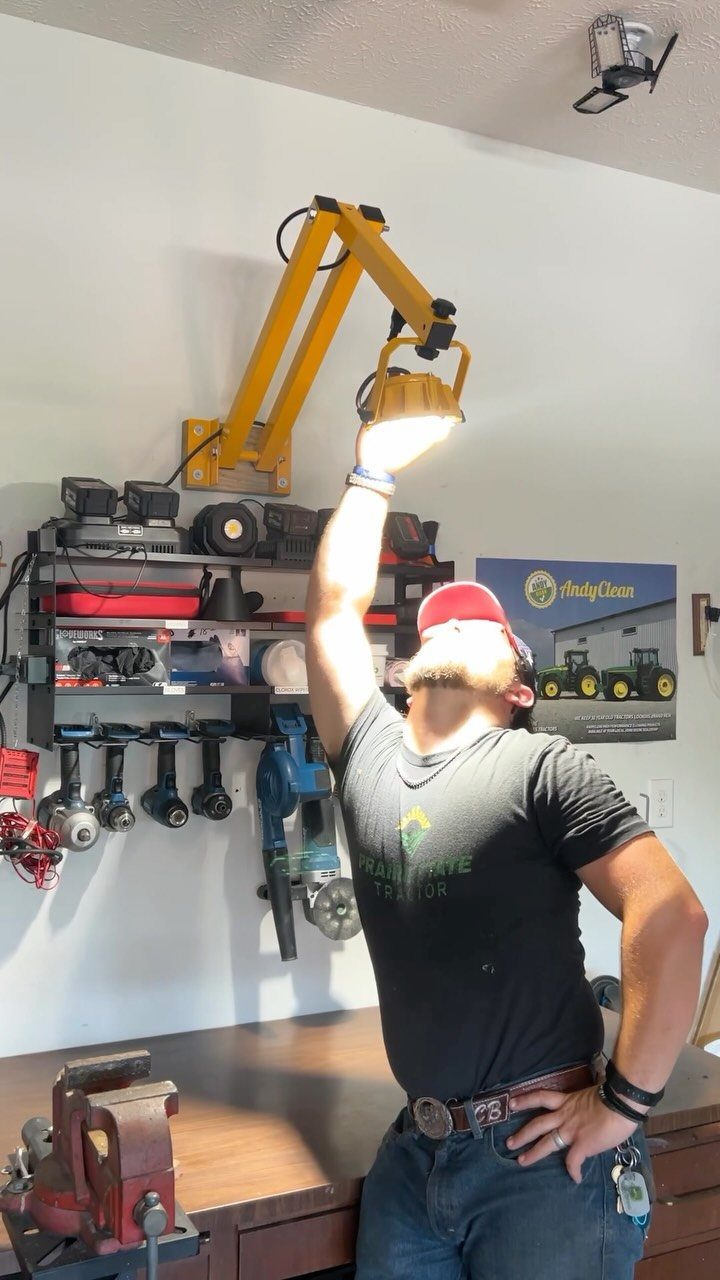
Overhead garage lighting leaves shadows where you need to see most. A task light on an articulated arm lets you pull illumination directly over the work and angle it to eliminate glare on metal or wet finishes.
Precision work, evening hours, and aging eyes all make this worth the small cost and installation time.
The arm should reach every corner of the bench surface without you having to move the mount, and the bulb should be bright enough to read markings by but not so harsh it reflects off pale wood or metal.
Wired installation is cleaner than plugging into an extension, but it requires comfort with basic electrical work or a call to an electrician.
Battery-powered alternatives exist but need charging discipline, and that is one more thing to forget when you are in the middle of a project.
6. Rolling Workbench
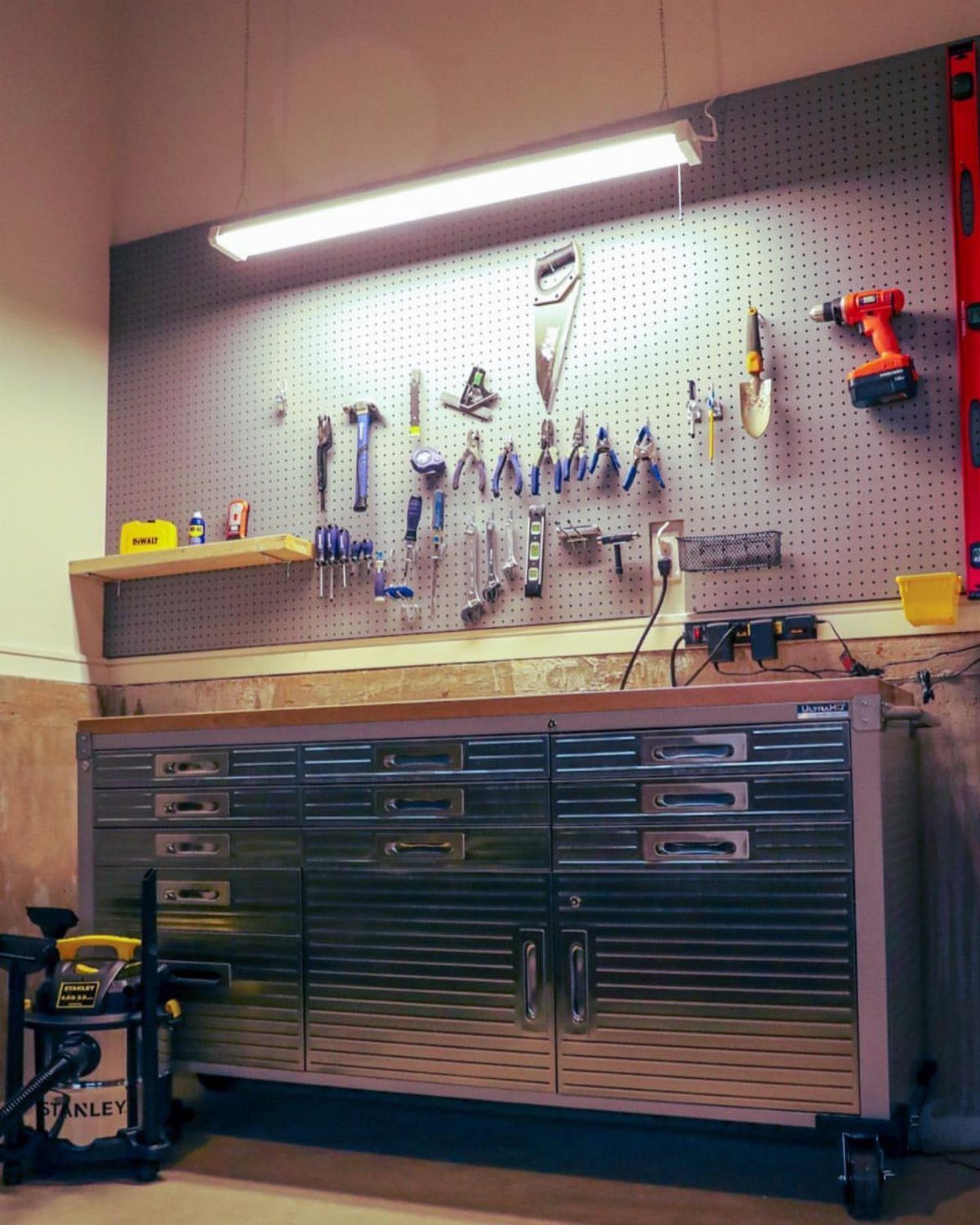
A bench on casters reconfigures around the project instead of the project bending to fit the bench.
A rolling cabinet tucks under its pegboard when needed, then rolls out to clear floor space or let a vehicle in. The top surface is steel, which takes abuse and wipes clean of grease and adhesives without staining.
This is the answer to a garage that serves multiple masters: workshop, parking, storage, maybe a home gym corner.
One person can move a loaded rolling bench where two would struggle with a fixed one, and solo work becomes less frustrating when you can position your surface instead of reaching across it.
The wheels need locking casters, and they need to lock well.
A bench that drifts while you are hand-planing or driving screws is dangerous, not flexible. Check the weight rating and test the locks before you trust them with a project in progress.
7. Heavy-Duty Work Surface
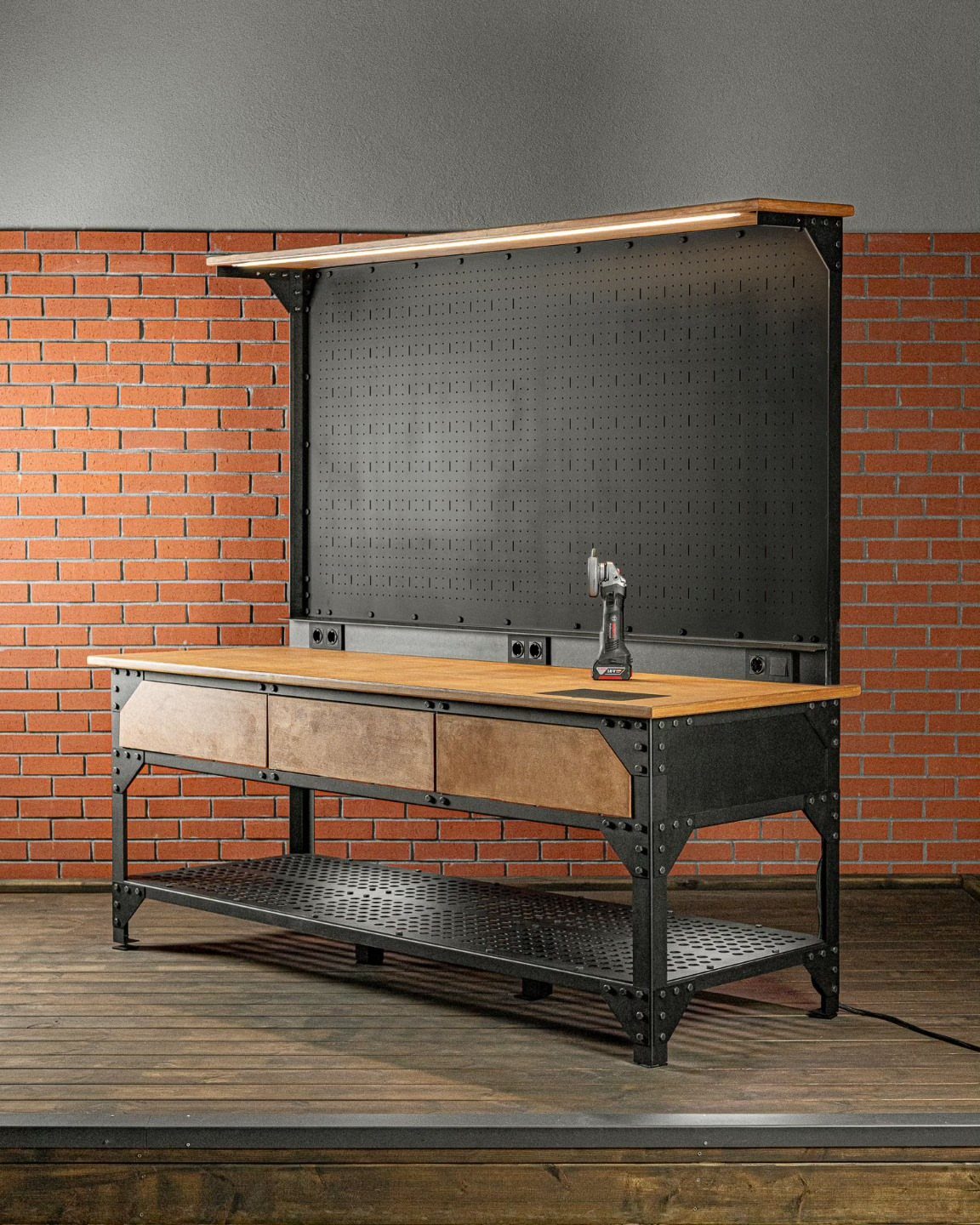
Metal and wood together handle the kind of abuse that ruins a standard countertop in a month. The steel frame carries weight without flexing, and a thick wood top takes direct hits from hammers and accepts clamps without complaint.
A surface that resists scratches and stains saves cleanup time and keeps the bench looking like a tool rather than a casualty. Wipe it down after glue, oil, or paint, and it is ready for the next project.
This is where you spend once instead of replacing every few years. Particle board and thin plywood cost less at checkout but dent and sag fast once you are actually hammering and clamping on them.
Match the material to your actual work: metal fabrication wants a different surface than woodworking, and a sacrificial hardboard layer can protect the permanent top beneath it.
8. Drawers for Small Parts
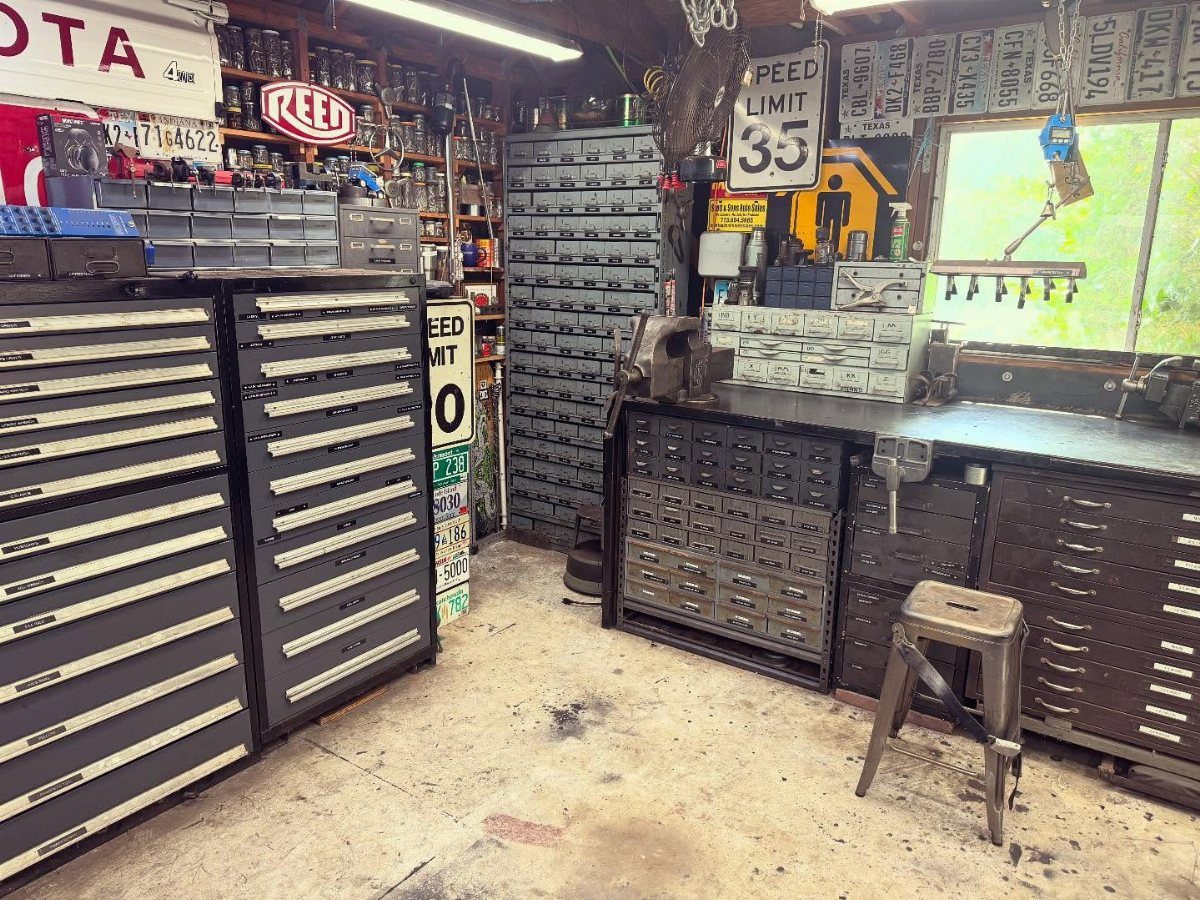
Loose hardware has a way of migrating to the bottom of mixed bins, where it becomes invisible and effectively lost.
Shallow drawers with dividers give every size of screw, anchor, and battery its own compartment, and labels keep family members from dropping fasteners into the nearest open slot.
Sorting hardware into labeled drawers pays back every time a project stalls because a bolt or fitting has gone missing.
Organized parts mean fewer duplicate purchases, and the search for that one fitting stops being a reason to put off a project. Dividers that adjust let you reconfigure as your project types change.
This suits anyone who has ever abandoned a repair because the right fastener was somewhere in a coffee can. Deep drawers for power tools are common; it is the shallow ones, a couple of inches, that solve the small-parts problem.
9. Integrated Power Tool Station
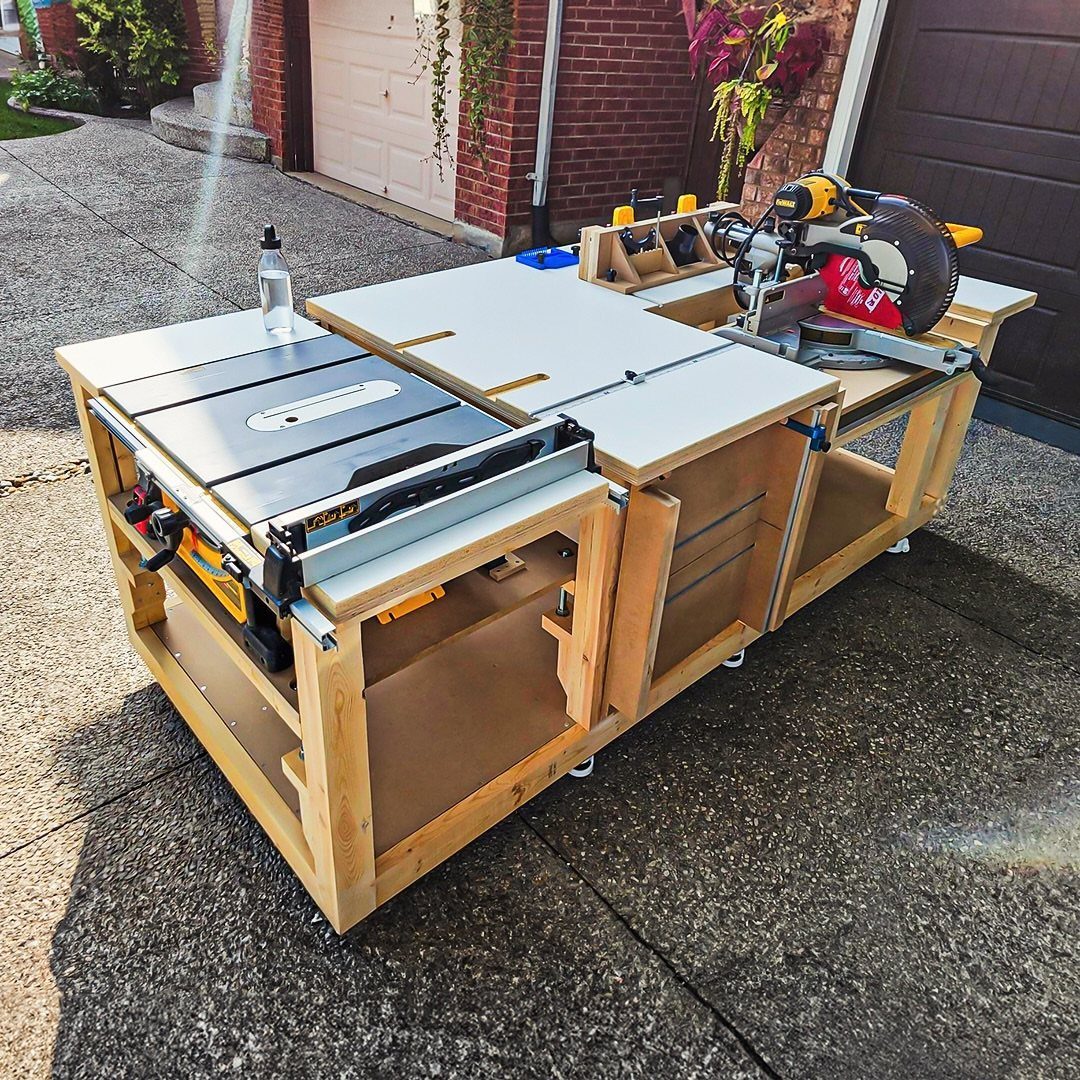
A table saw and miter saw set flush with the work surface turn a bench into a cutting station without the footprint of separate stands.
The bench becomes the outfeed support, and long boards slide across a continuous plane instead of catching on edges.
Built-in placement demands precision: the saw deck must sit dead level with the surrounding top, or material tilts and binds. Measure your saws before you build, and leave room to remove them for maintenance.
This trades portability for stability.
Folding saw stands tuck against a wall when the car comes in; an integrated station stays put. It suits a garage with dedicated workshop space rather than one that converts nightly to parking.
10. Workbench with Storage Bin Cubbies
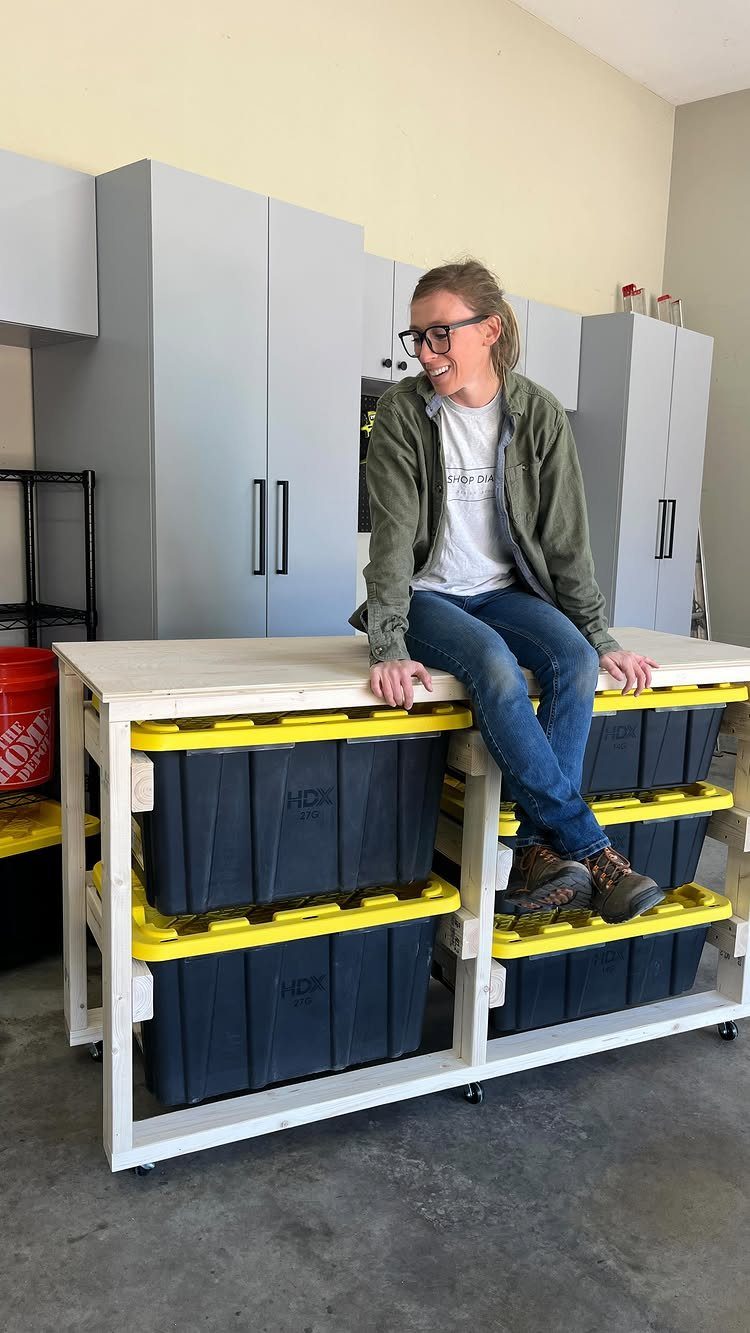
Open cubbies sized to standard plastic totes put bulk storage at hip height, where you can see contents without lifting lids. The bins slide out for transport to a project site and slide back when done, no shelving unit required.
HDX totes or similar heavy-duty bins take abuse that would crack household storage. Label the ends, and the system works for seasonal items, project materials, or tools you use monthly rather than daily.
This approach keeps large items accessible but visually contained.
Closed cabinets hide more completely; cubbies ask for neat stacking and some tolerance for seeing what you own. Open cubbies underneath keep bins of fasteners and fittings within reach without crowding the surface you are working on.
11. Tool Chest Base Workbench
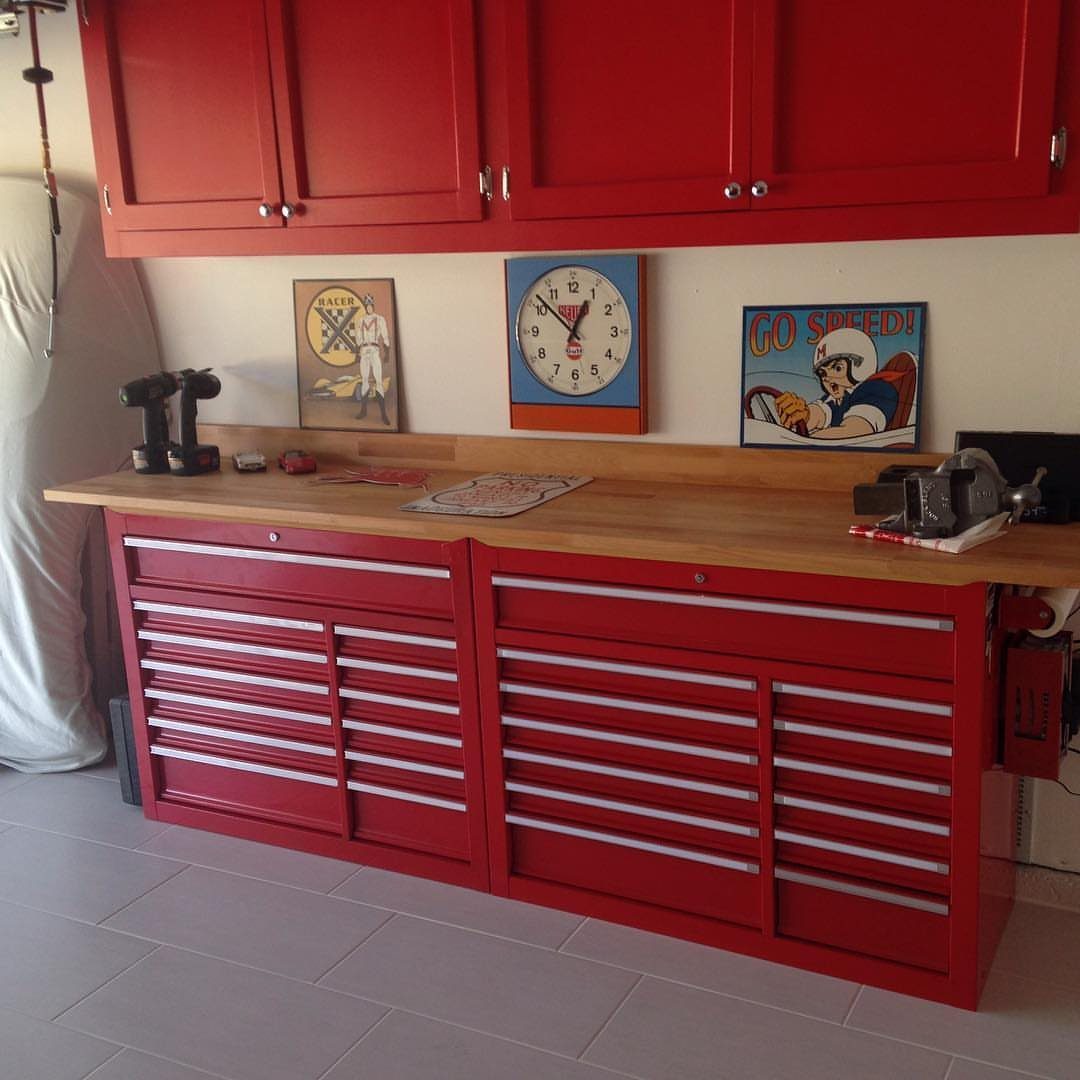
Two rolling tool chests with a solid wood top spanning between them give you drawer storage on both sides and a work surface that does not depend on shop-built cabinets.
The chests arrive ready to use, drawers already smooth and labeled if you choose.
Red metal cabinets against a white wall read as intentional rather than improvised, and the color is honest: these are workshop pieces, not kitchen castoffs. A wall-mounted chest above extends the same system vertically.
The chests lock, which matters for expensive hand tools and for households where children pass through.
Check that your chosen chests share a surface height within 1/8 inch, or shim to level before you trust a glue-up or a cut to that top.
Workbench Height
Standard workbench height runs about 36 inches, which matches most kitchen counters and suits standing work for average-height adults. That number is a starting point, not a rule.
Detailed hand work benefits from a lower surface that lets your arms rest while your hands control the piece. Assembly and layout want more height so you are not bent over a long board.
Leave clearance for drawers to open fully past any cabinet or vehicle beside the bench. Hip height or a contorted reach makes a bench you will avoid using.
Building vs Buying
Building puts the dimensions and drawer count in your hands, and plywood with a hard top costs less at checkout than finished cabinetry. The trade is time and the finish quality your tools and patience allow.
Buying delivers level drawers and a surface already sealed against glue and oil, which matters if you want the garage to look finished the day it is installed.
A store-bought bench or cabinet system also carries weight ratings and hardware tested by use, not by hope. A harder surface costs more once, but swollen or scarred tops are what you replace when the budget was already spent.
Space Efficiency
Vertical storage keeps the bench surface clear for the project at hand. The principle is simple: if it hangs, it does not sit.
Rolling benches and bins add flexibility in a garage that still parks vehicles. Surfaces stay open enough to work on, with storage close enough that putting things away is faster than leaving them out.
Material Choices
Garage air carries moisture, dust, and temperature swings that test materials harder than indoor rooms.
The surface choice should follow your work type.
Woodworking tolerates a sacrificial hardboard layer you replace when scarred. Metal fabrication wants a surface that hot sparks and sharp edges will not ruin.
Whatever the top, it should wipe clean of glue, oil, and paint; a porous or delicate finish turns every spill into permanent character you did not choose.
Frequently Asked Questions
Is it cheaper to buy or build a workbench?
A sheet of plywood and a solid top, even butcher block from the lumberyard, usually ring up lower than a finished cabinet of the same size.
Buying gives you level drawers, sealed surfaces, and tested weight ratings the day it is installed.
What’s a good height for a workbench in a garage?
Most benches land at 36 inches, the same as a kitchen counter, which puts the work at belt height for someone around 5’9" standing straight.
Carving or soldering feels better a few inches down where your forearms can take weight; ripping long stock or sorting cut pieces needs the extra height so you are not folded in half over the table.