The projects below range from a weekend job with plywood strips to a full build with real planks, and the right choice depends on whether you need the shed to read as architecture or just to hold tools.
[link-whisper-related-posts]1. White Board and Batten Shed
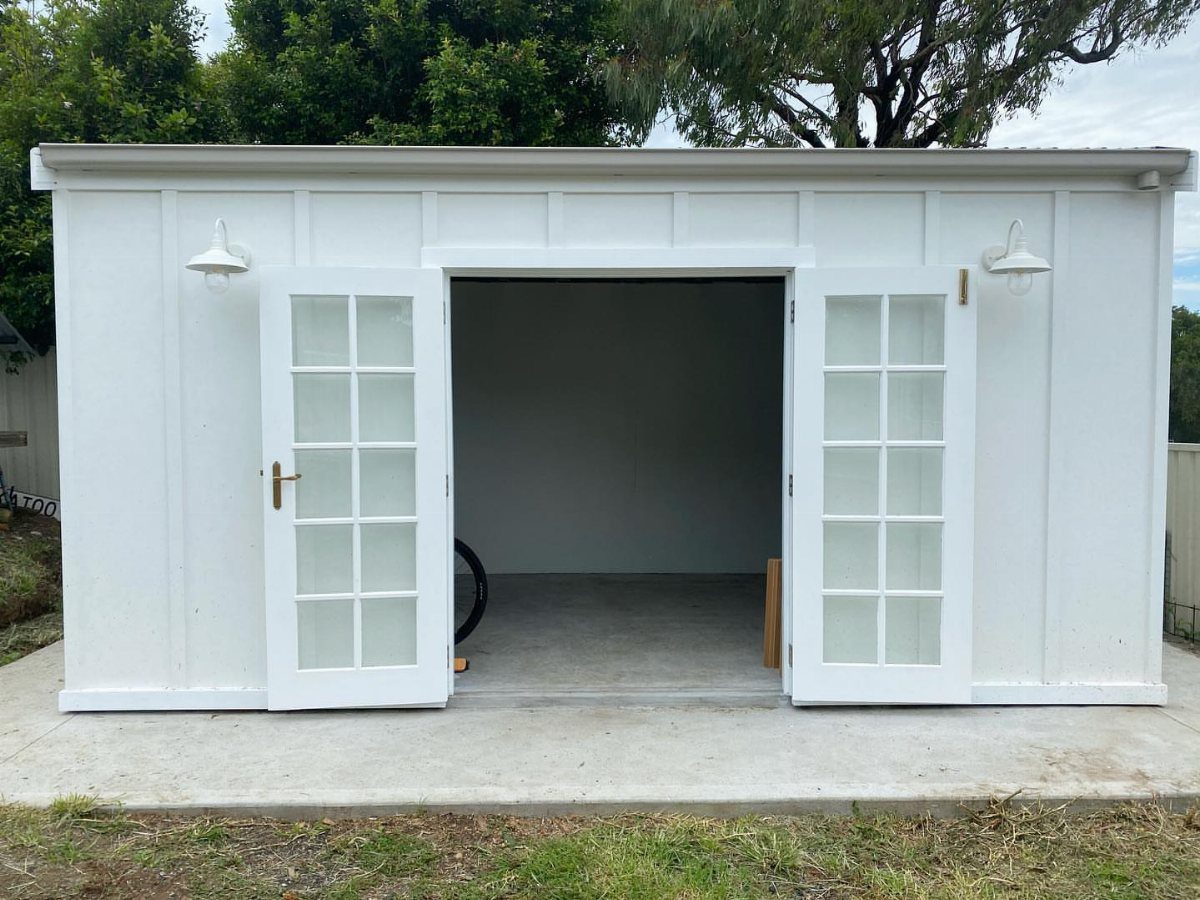
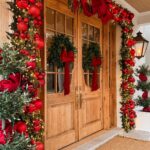
A white board and batten shed reads as a small cottage extension rather than a storage box, which makes it the safest choice if you share a fence line with picky neighbors.
French doors and flanking sconces push a shed toward guest-room territory; that wiring means burying conduit or running an exterior line from the house, so check your local code for burial depth before you price the job.
If you skip the lights, the blank wall space between battens takes a hanging planter well.
2. Black Board and Batten Shed
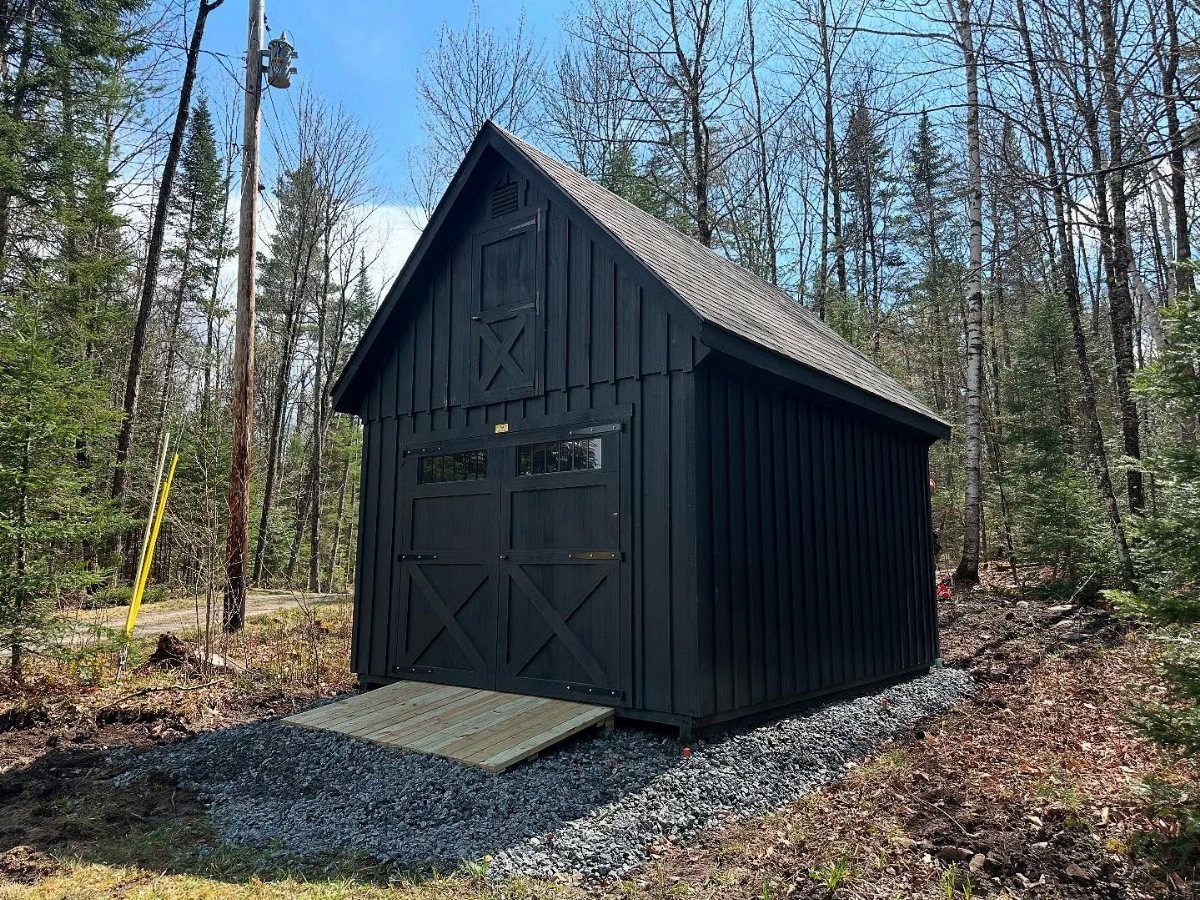
Black siding hides dirt and water streaks better than any light color, which matters on a shed you will not wash often.
The X-bracing on those double doors is doing real work against racking; do not swap it for flat Z-bracing if you are building from a kit.
A wooden ramp is shown, but pressure-treated 5/4 decking laid on edge will splinter faster than plywood with a grit coat; I would build the ramp as a separate replaceable frame.
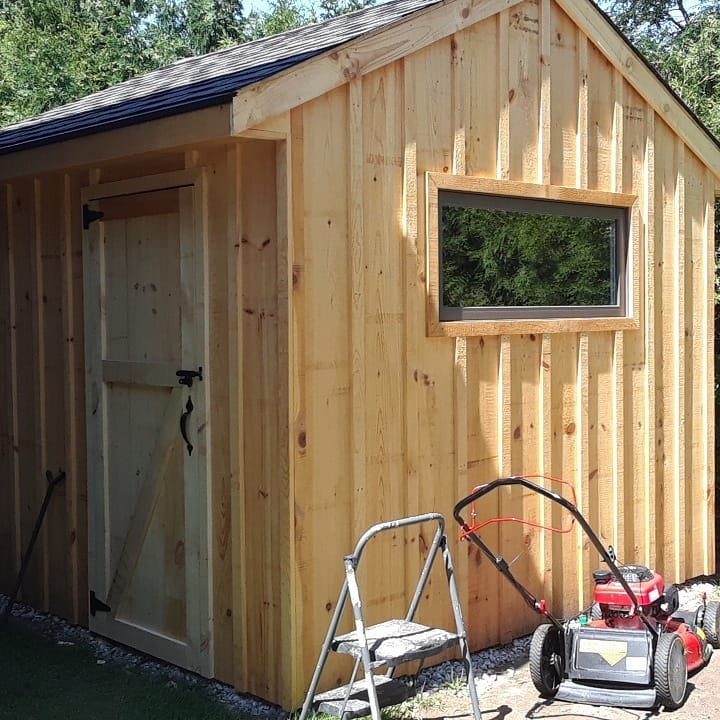
3. Natural Wood Garden Shed
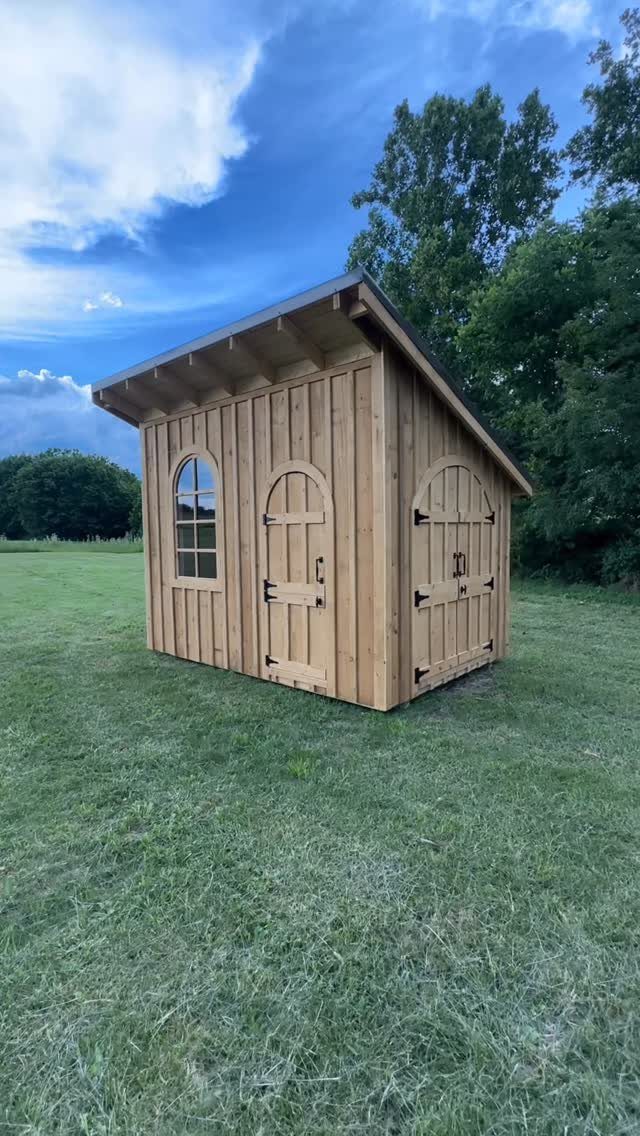
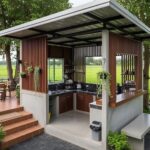
Arched doors and windows in a shed this size mean either buying a pre-hung unit or building a curved jamb yourself; the second route eats a weekend and a router table.
Natural wood left unfinished goes grey fast and black in spots where water sits. A semi-transparent stain in a cedar tone keeps the grain visible and buys you more time before recoating than a water-repellent preservative.

Keep your items off the ground and you building square with this Base Kit for 8 x 6, 10 x 6, and 4 x 10 ft Sheds. (Plywood Not Included) This is just the metal frame. Fits 5'...
4. Grey Board and Batten Shed
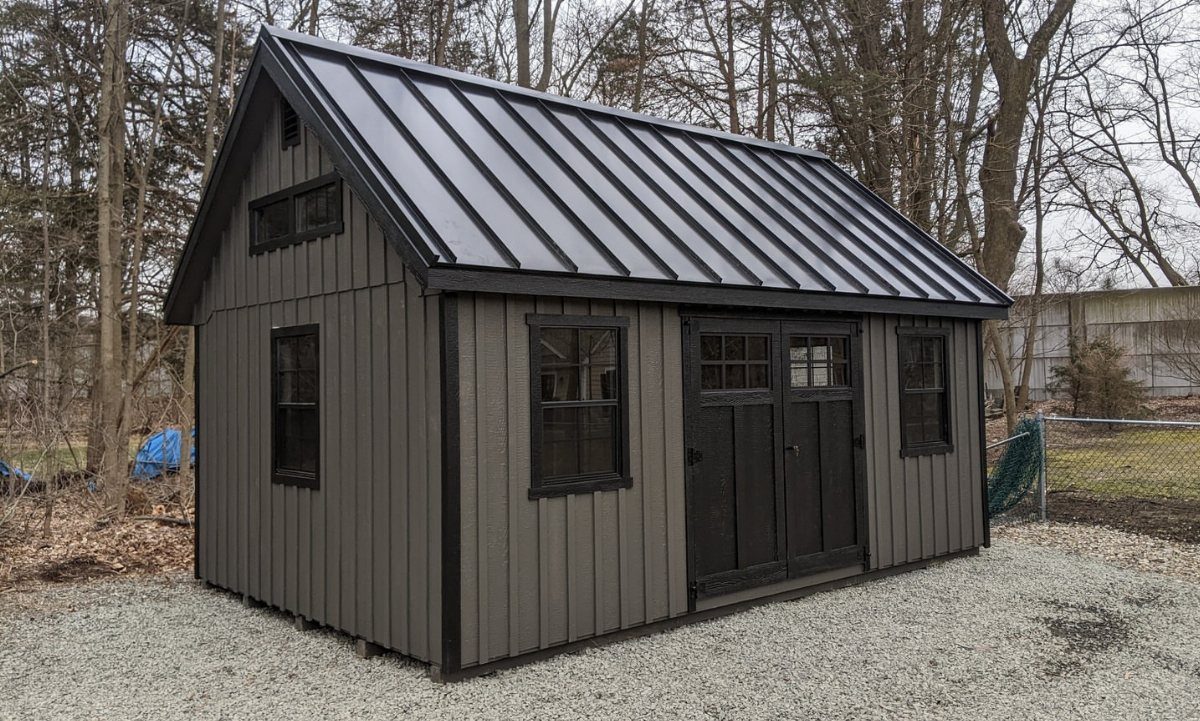
Grey with black trim is the combination I would pick for a shed visible from the street; it quiets down without disappearing.
Standing-seam metal roofs outlast asphalt shingles by decades, but the panels need a minimum 3/12 pitch to seal at the seams; verify your wall height and ridge elevation before you order.
Black trim means black caulk, not white, at the battens; the gap shows from across the yard.
5. Rustic Pine Forest Shed
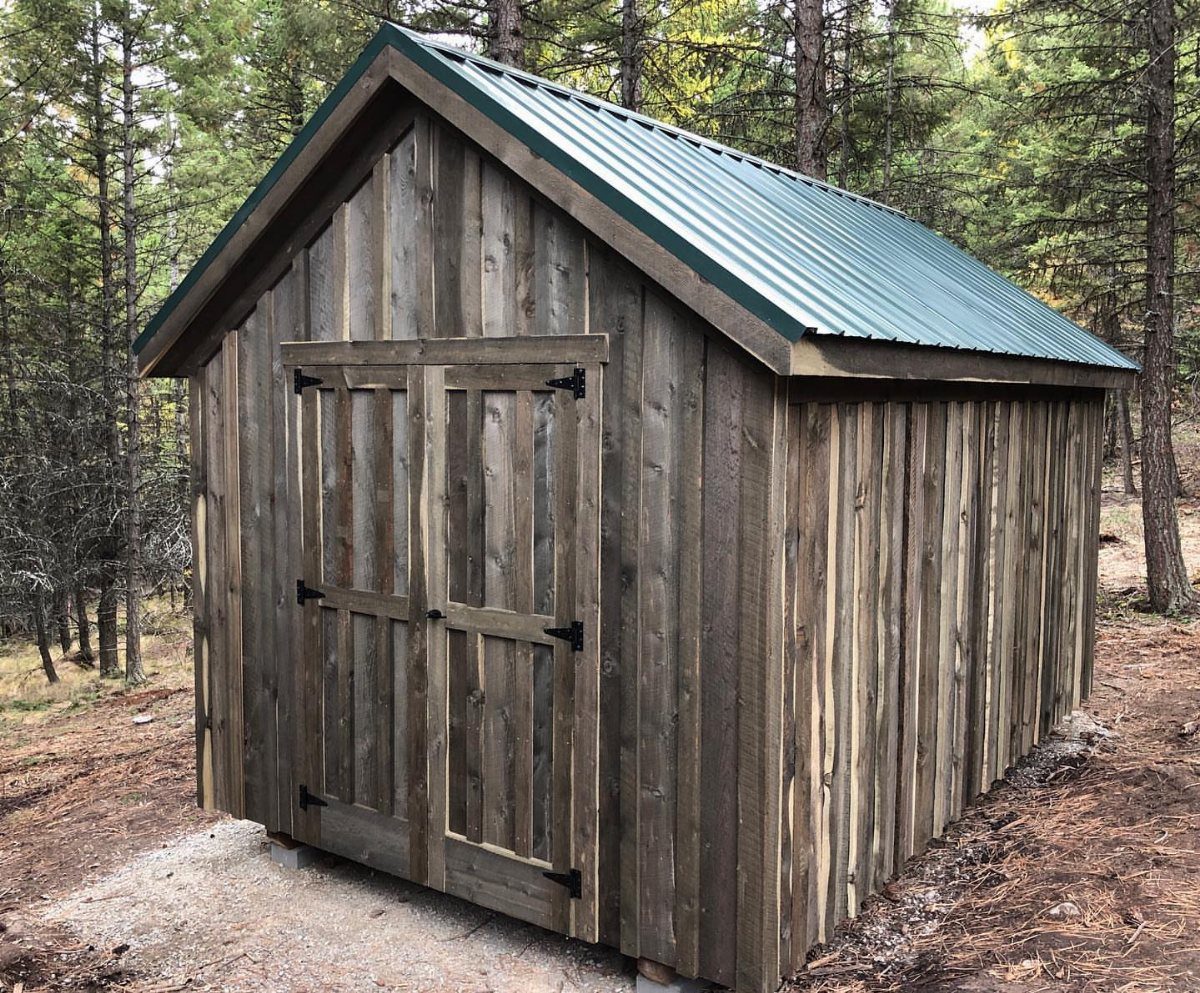
A green corrugated roof against pine needles is camouflage that still looks intentional, which is hard to pull off with brighter colors.
Corrugated metal needs purlins, not solid sheathing, so your roof framing changes; 1×4 strapping across the rafters carries the sheets and leaves air space that helps in summer.
A gravel pad drains well but shifts; crushed stone compacted in lifts beats pea gravel for keeping the shed level.
Cost-effective Solutions
Real board and batten uses 1×10 or 1×12 boards with 1×2 or 1×3 battens covering the seams.
Plywood ripped into planks and faced with narrow strips gives the same shadow lines for less, though the grain reads flat and the edges feather instead of staying crisp.
T1-11 siding run horizontally, then battened over the grooves, skips the plank step entirely.
The sheet goods cost less per square foot and go up faster, but the repeating groove spacing looks like what it is: plywood pretending to be boards.
If you go the plywood route, ACX or BCX grades hold paint; OSB swells at the edges no matter how many coats you stack.
Battens on plywood should land over studs, not just over grooves, or they telegraph movement through the paint in 2 seasons.

Metal Frame And Wooden Structure: The front side is reinforced with a robust metal frame, our outdoor garden shed offers unparalleled stability, ensuring it withstands various weather conditions for long lasting durability
Frequently Asked Questions
Are board and batten sheds good?
The vertical lines and shadow gaps read more like a garden cottage than a utility box, which matters when the shed sits close to a property line.
The vertical lines hide the boxy shape better than horizontal siding, and the shadow lines stay interesting even in a single color.
Durability depends on what you build it from: real 1×10 or 1×12 boards with narrow battens last longer than plywood strips, which feather at the edges and read flat.
What are the disadvantages of board and batten?
The seams between boards are a weak point if the battens do not seal tight. Gaps let pests and moisture in, and on a shed you rarely inspect, that damage can run deep before you notice.
Plywood substitutes make it worse: OSB swells at every edge no matter how much paint you stack on, and battens that miss the studs behind them will telegraph every shift through the paint inside 2 seasons.
What is cheaper, board and batten or siding?
Ripping plywood into planks and facing the seams with narrow strips runs less per square foot than real boards while keeping the same shadow lines.
Both cheat the eye from a distance, though the repeating groove spacing on T1-11 reads as sheet goods pretending to be boards, and plywood grain stays flat next to real lumber.
What is the lifespan of a batten board?
Painted or stained real boards last decades, but leave natural wood unfinished and it goes grey within a year, black wherever water pools.
On the roof, standing-seam metal outlasts asphalt shingles by decades, though that is a separate decision from the wall siding.