These brick BBQ ideas run from a dry-stack cinder block cook station you can move out with you to a plumbed outdoor kitchen under a pavilion roof, so the deciding factor is how permanent your yard situation is.
Renters and first-timers leaning toward dry-stack builds that move when they do will find the same starting point as homeowners pouring concrete for a chimneyed pit that outlasts store-bought grills.
A half-inch slot cut into the stovetop plate for airflow on the dual station shows up in the details below.
[link-whisper-related-posts]1. Multi-Level Brick BBQ Pit
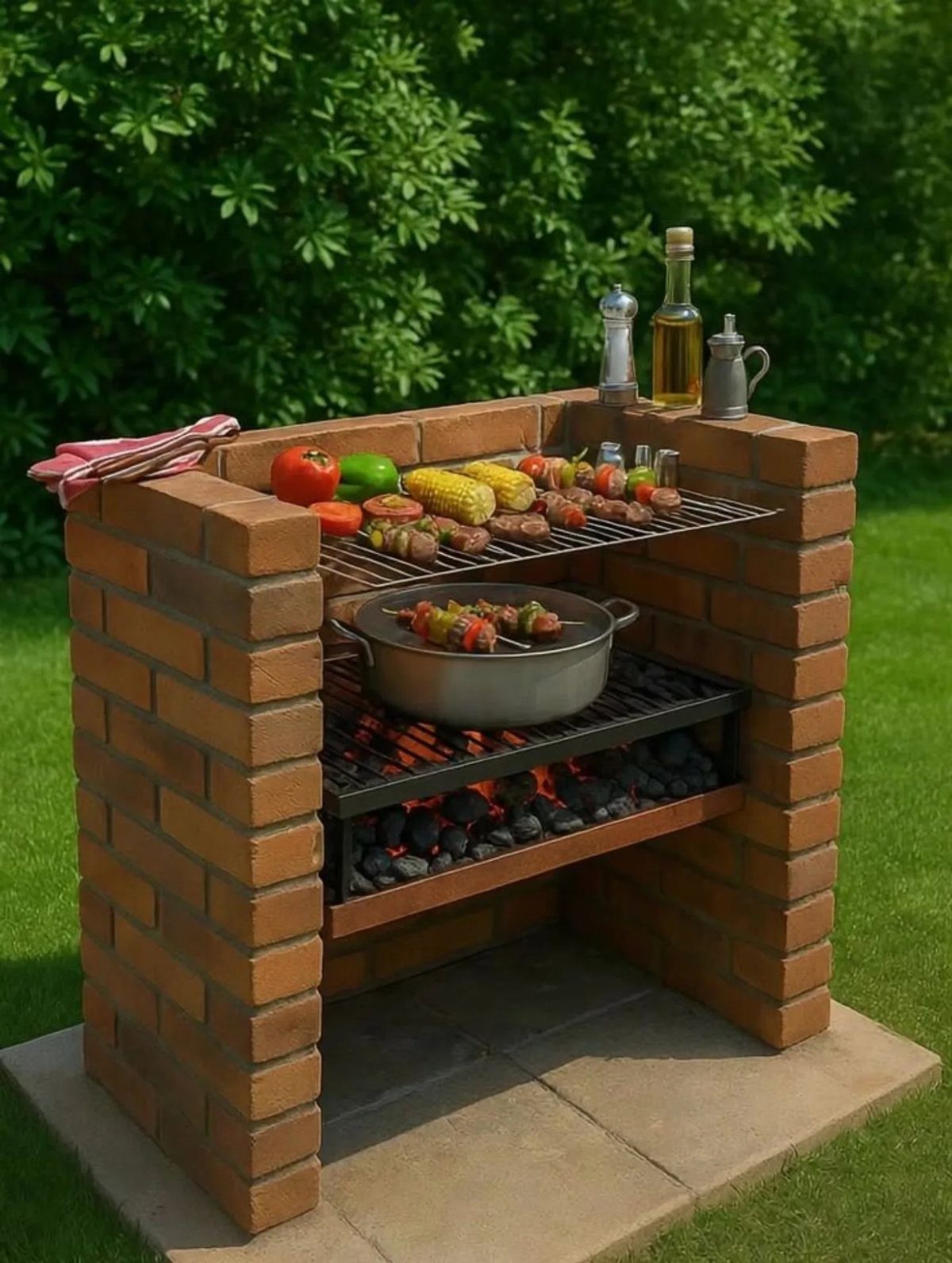
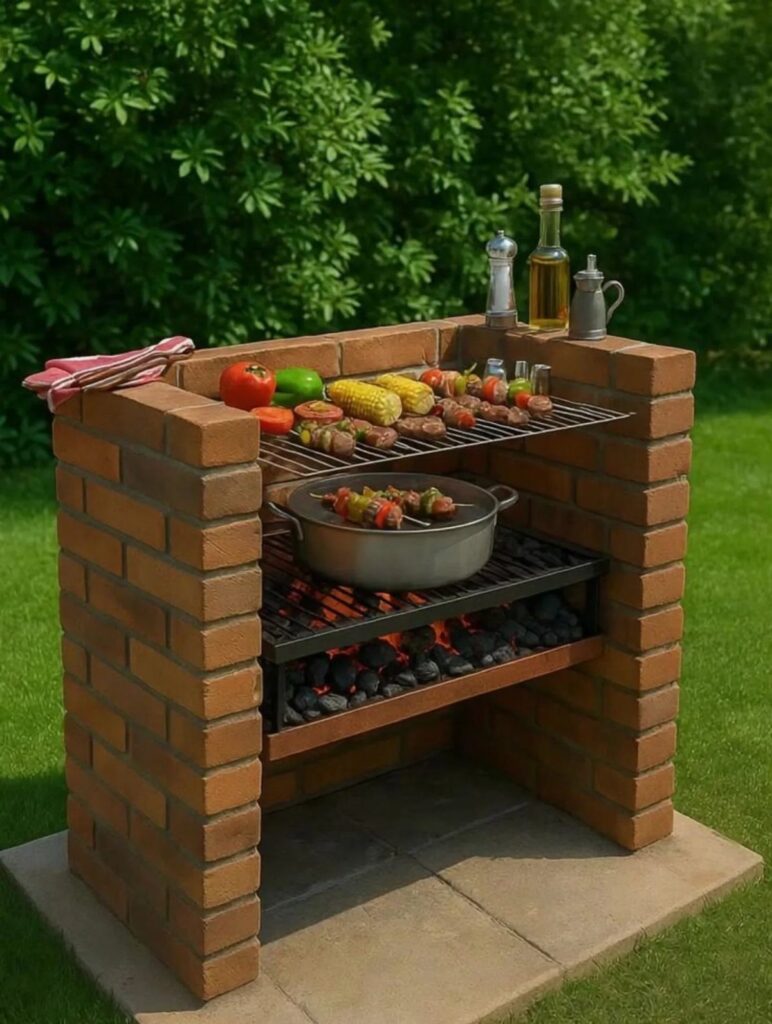
A multi-level brick BBQ pit gives you 2 cooking zones from the same fire. The lower grate sits close to the coals for searing, while an upper rack slows things down for warming or smoking.
Build this without mortar on a level surface; the weight of the bricks holds it together, but any wobble will crack your setup over time.
Fireproof bricks are the right choice here since standard bricks can spall or crack from repeated heating.
This design eats space. You need room for the footprint plus safe clearance around it, so it suits larger backyards better than narrow patios.
Cooking for a crowd gets easier when you can run burgers on one level and vegetables on another without swapping grates.

【Extra Large Size】This grill mat's size is 76 x 52 inches, serving as a robust shield against stray embers or flames. It effectively collects spills, splashes, and other debris, safeguarding your floors from oil, sauce, charcoal, and heat. This minimizes the cleaning effort, enabling you to fully relish your outdoor experience. Unlike other sizes of grill mats, it can accommodate any size of large grill, perfect for large gatherings

READY TO USE: Preblended, just add water and go!

Double-Sided Fireproof and Waterproof: 60 inch round Fireproof fire pit mat is made of four layered non-itchy silicone coated fiberglass which stands up the temperature up to 2000℉. It has passed the UL94 -V0/5VA flame retardant test. Fire pit mat is not only fireproof but also waterproof, grease does not stick to them and they are easy to clean. The four layers of material make it last longer. It can perfectly protect your deck, patio, lawn, allowing you to easily enjoy barbecue and outdoors
2. Pizza Oven and Brick BBQ Combo
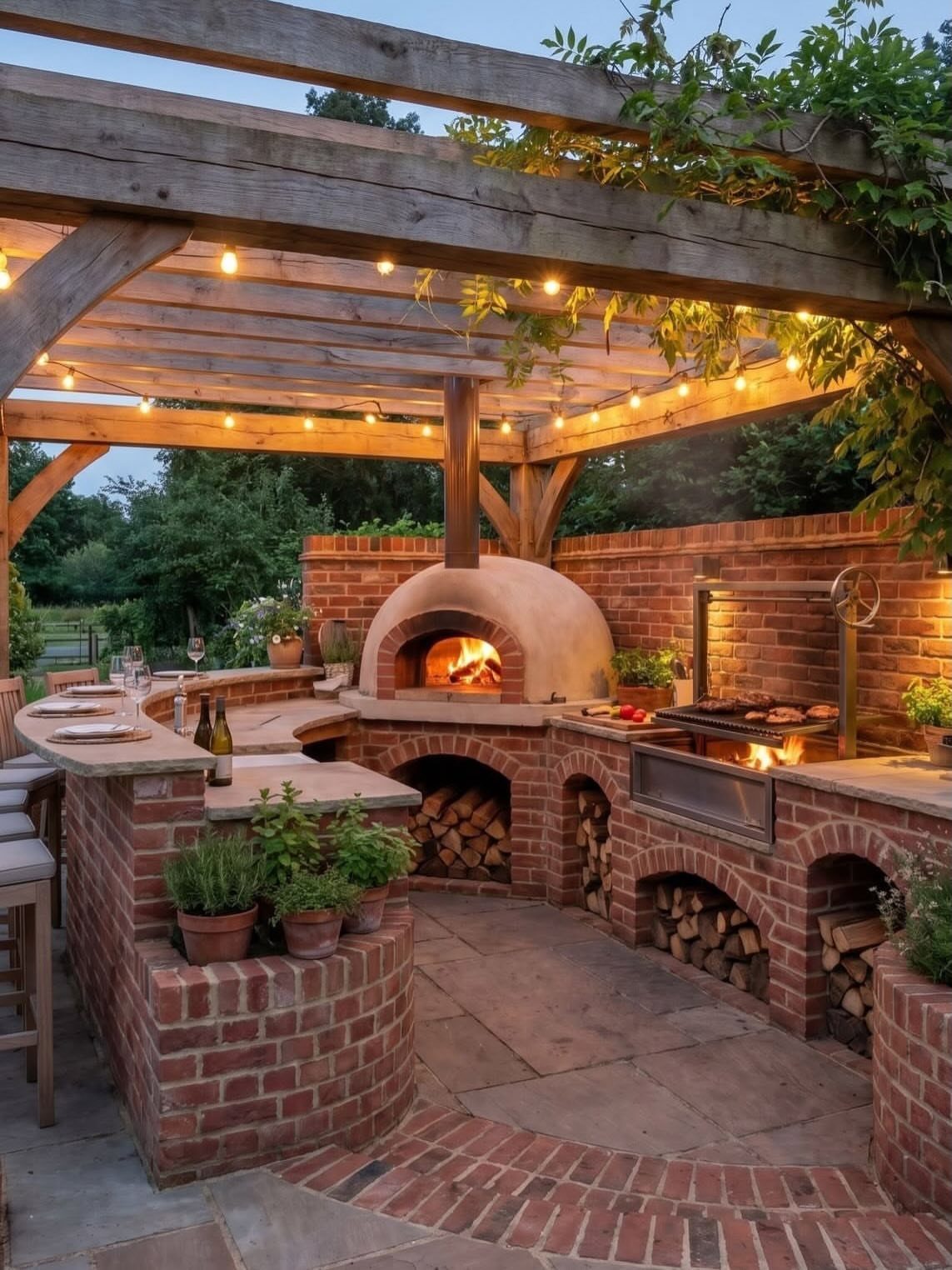
Wood-fired pizza and grilled ribs from the same station means no one is stuck inside rolling dough while the party happens outside.
The dome oven holds heat for hours after the pizza is done, so you can slow-roast or keep dishes warm without extra fuel.
Both the oven and the grill need fire-resistant materials throughout, not just at the firebox. A side shelf within arm’s reach saves you from dripping sauce across the countertop on the way to the stone.
Good airflow matters more here than in a simple grill because the oven needs sustained high heat while the grill runs cooler.
This is a project that grows. Start with the BBQ, add the oven later if the budget or the skill level isn’t there yet.

Size: Large 6 x 12 inch (15 x 30cm). Food grade 304 Stainless Steel Bushcraft Cooking Grill Grate, Strong and Lightweight. (Large Grill & Bag ONLY)

【PREMIUM MATERIALS】Joyfair campfire grill grate is made of pure stainless steel, so there will be no harmful coating peeling off, and no toxic substances released into food, Heavy gauge stainless steel open fire grill grate provide strong support and will not deform even after long-term burning, rust-proof and sturdy for years of high-intensity use

This 304 stainless steel charcoal bed fire grate is fitting for camping grill MT-2, or other fire pits with suitable size.
3. Classic Brick BBQ with Chimney
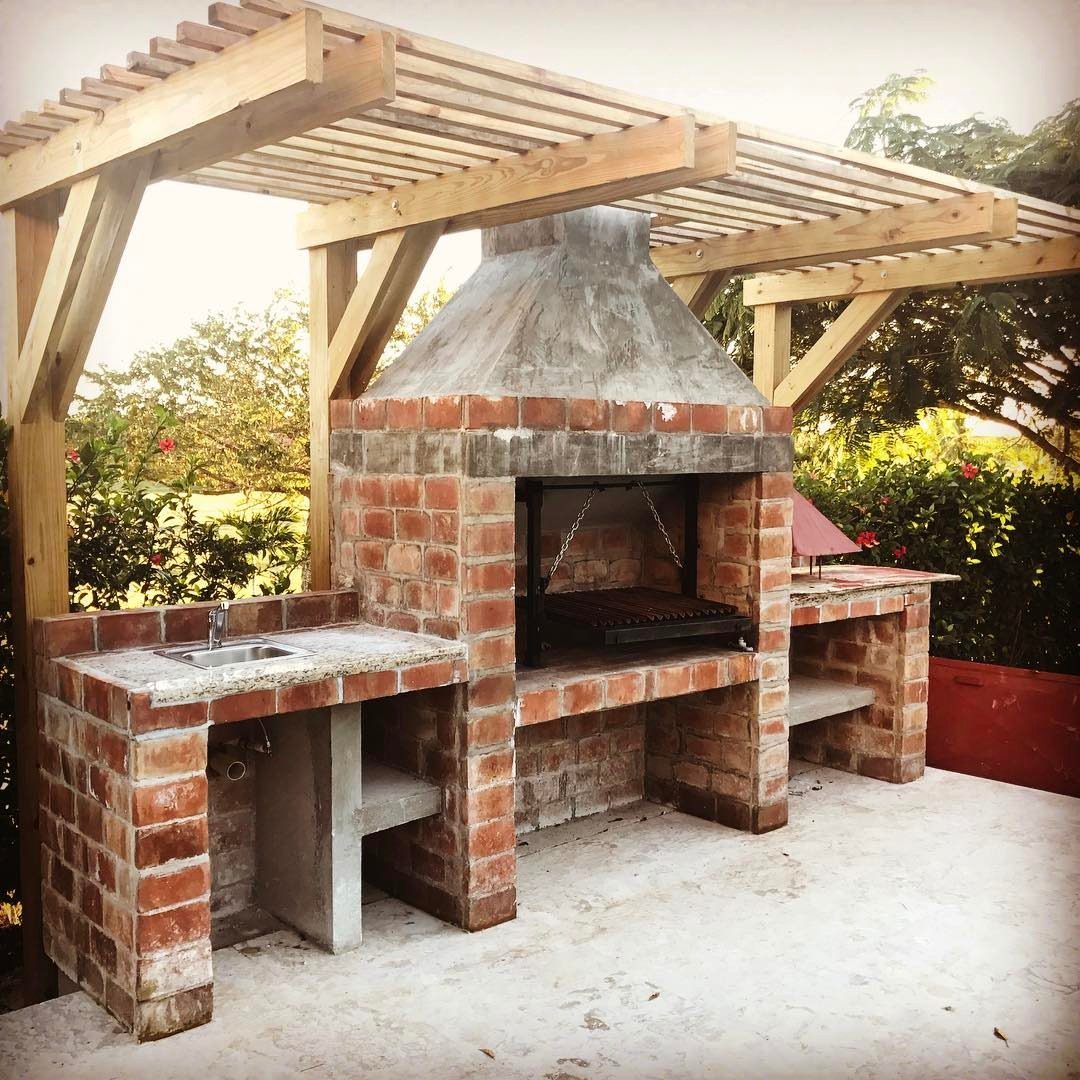
A chimney on a brick BBQ does 3 things at once: pulls smoke away from your face, feeds the fire steady air, and keeps heat more predictable across the grate.
Clay bricks handle the temperature swings without cracking, which matters because a chimneyed grill runs hotter and longer than an open pit.
The chimney needs real height to work.
Too short and it smokes at seated level; too narrow and it chokes the fire. Fire-resistant materials throughout, not just around the grate, because the whole column gets hot.
This is the traditional look for a reason. It costs more than an open pit and takes longer to build, but the cooking experience is cleaner and the structure lasts.

【Multi-functional Outdoor Pizza Oven】 Our outdoor oven is much more than a pizza oven, as well as roasting meat, steaks, fish, bread and vegetable dishes and so much more. With the 12" pizza stone, you’ll get that perfect crispy crust on the bottom and around the edges of the pizza.

Heavy-Duty & WaterResistant Pizza Oven Cover:Protect your outdoor pizza oven from the elements with this durable, water-resistant cover. Designed to withstand harsh weather conditions, it ensures your oven stays in top shape year-round.

4. Modern Minimalist Brick Grill
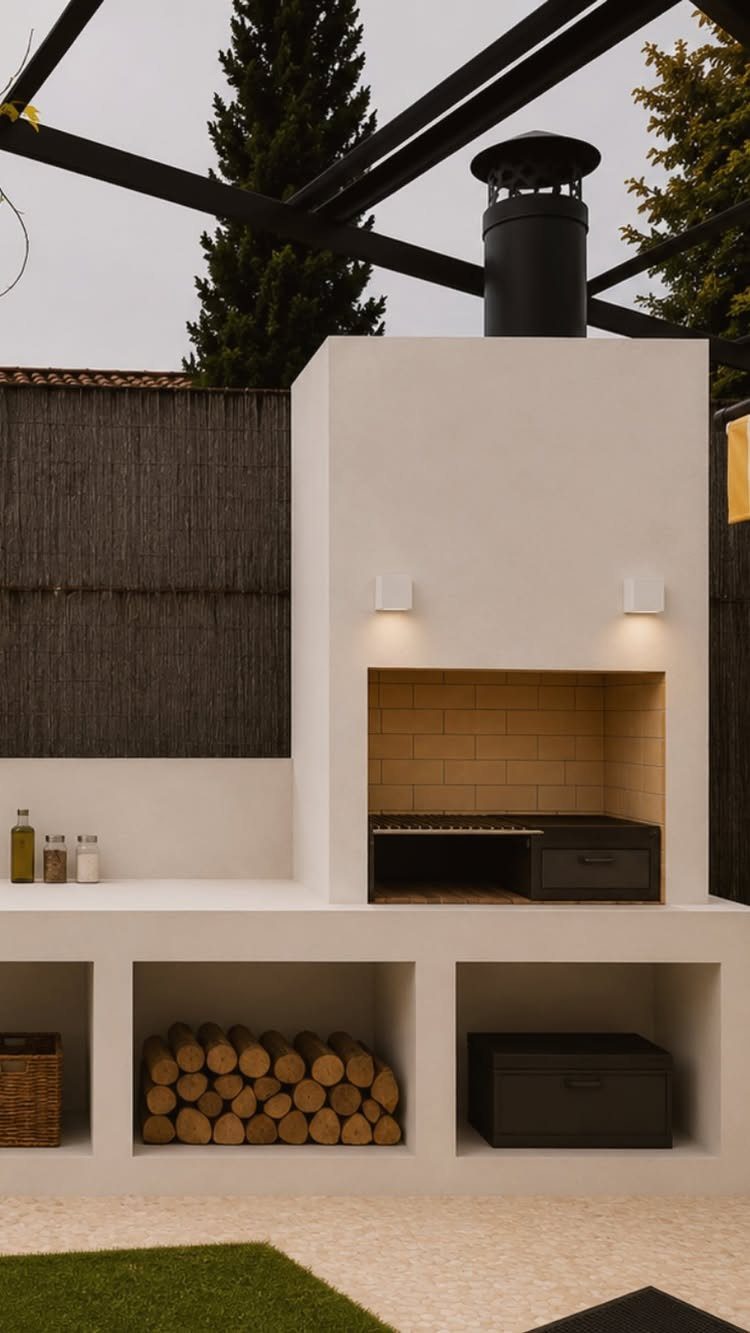
Smooth white plaster and clean lines hide the fact that this is still a brick grill underneath.
The firebox shows tan brick against the white, and the black metal chimney gives it vertical punctuation without ornament. Firewood stores in open cubbies below, ready to hand.
Gray bricks or painted finish both work for the minimal look; keeping the surface uniform rather than variegated matters more than which one you pick. Concrete countertops run cool and flat, though they stain if you leave grease sitting.
This suits smaller patios where a rustic pile of brick would overwhelm the space. Light colors show smoke and grease fast, so the clean look demands more wiping down than a weathered red-brick build.

FIELD & STREAM BEST OVERALL CHARCOAL CHIMNEY: Named “Best Overall Charcoal Chimney” by Field & Stream and recognized by major grilling publications for its innovative airflow design, extreme ignition speed, and massive charcoal capacity.
5. Cinder Block BBQ
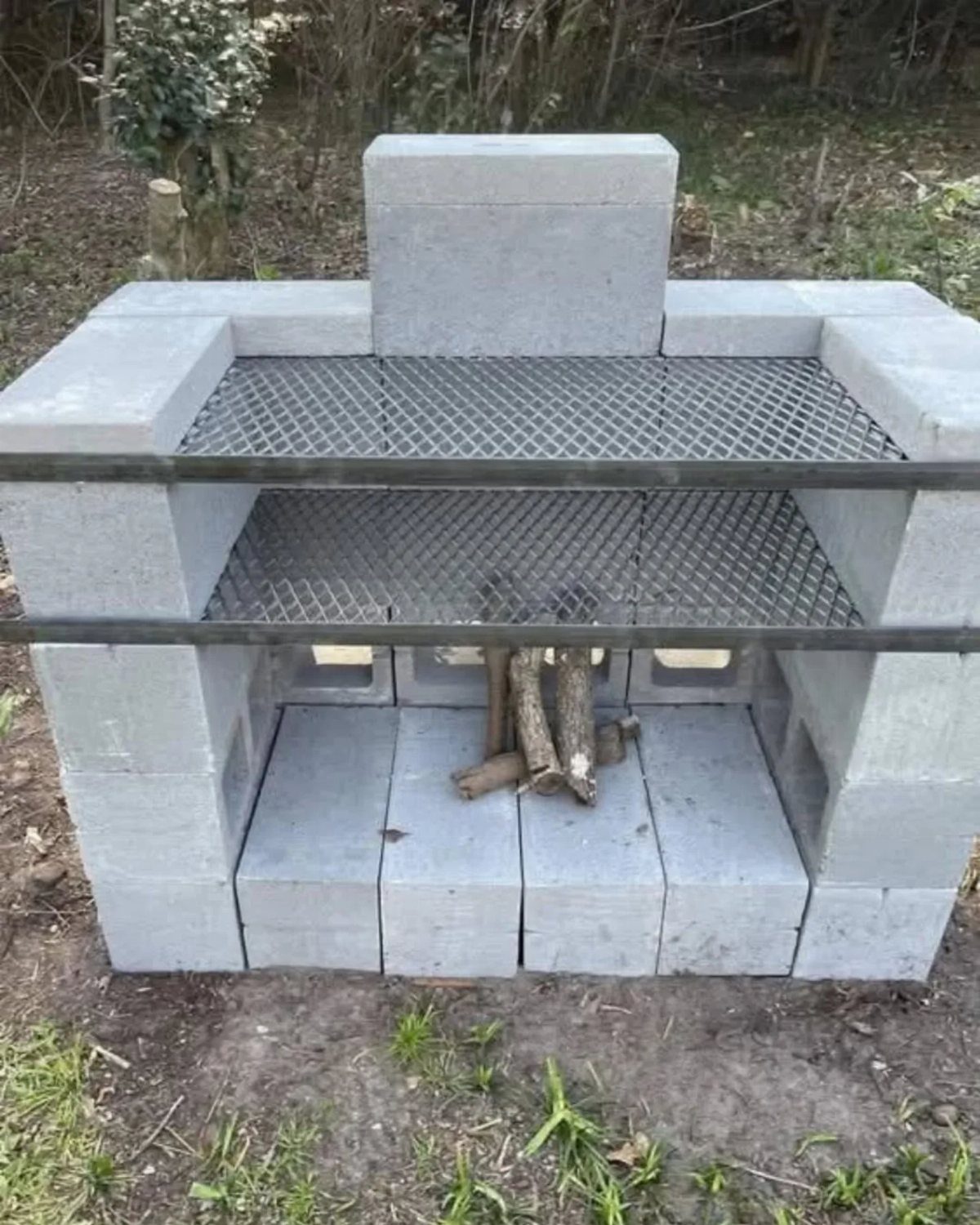
Cinder blocks and 2 metal grates are all this takes.
Stack the blocks dry, drop in the grates at 2 heights, and you are cooking. No mortar, no cutting, no weekend lost to measuring twice.
The two grates sit at different heights; the upper one cooks, the lower one warms or rests food.
This is the cheapest way to a working brick-style BBQ.
It moves if you need it to, and if one block cracks you swap it rather than rebuild. What you trade away is longevity and looks.
The gray block reads industrial, not finished, and the gaps leak heat and ash. For a first project or a rental you will leave behind, that trade is often right.
6. Brick Outdoor Kitchen with Sink
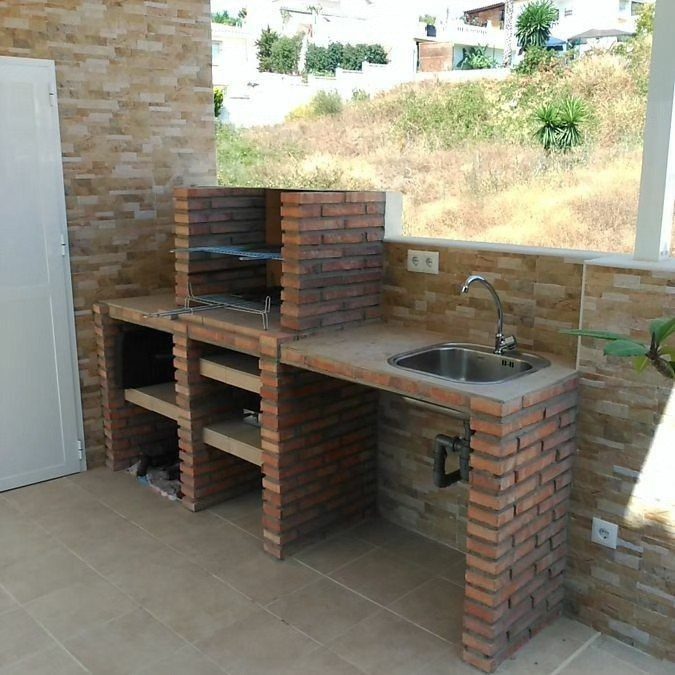
Running water at the grill changes how you cook outside. Rinse tools, wash hands, fill pots for corn or lobster, all without tracking through the house with greasy fingers.
A concrete countertop overhanging red brick gives you room to set plates, and open shelves below keep trays and fuel within reach.
Plumbing this is the hard part. You need supply and drain lines run to the pad before you build, or you are tearing up finished work later.
The grill section still wants fireproof brick around the firebox, but the sink side can use standard brick since it never sees flame.
This build assumes you are staying put.
The sunk cost of plumbing makes it a poor choice for a house you might sell soon unless the next owner cooks too. For a forever backyard, though, the convenience compounds every time you fire it up.
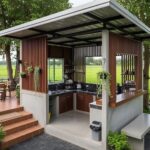
7. Pavilion-Covered Brick BBQ Station
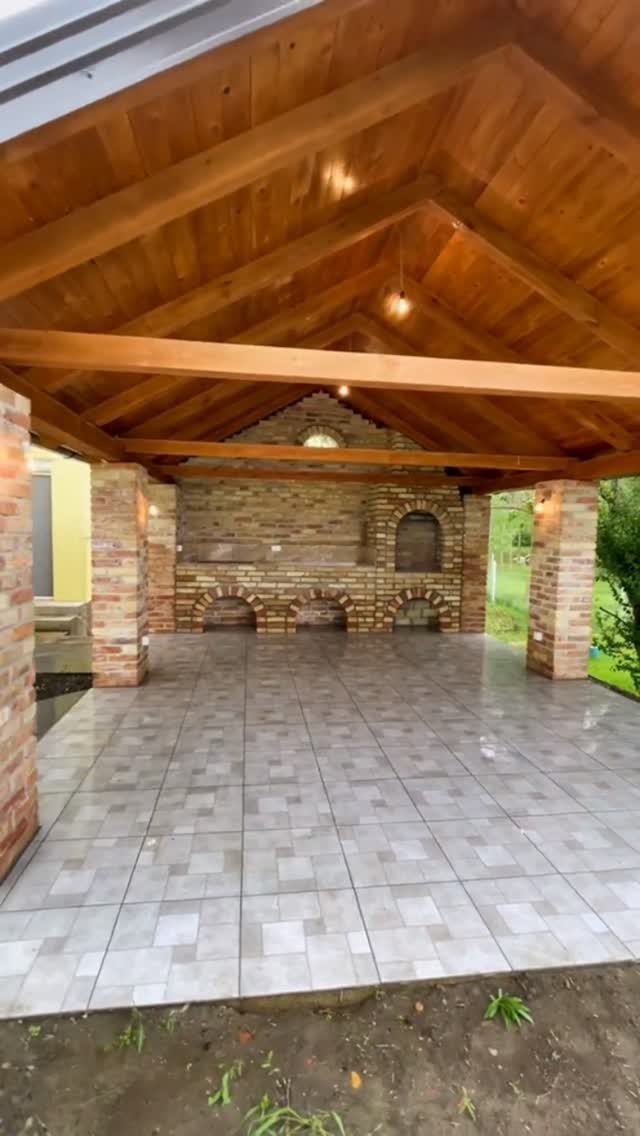
A roof over the grill lets you cook through drizzle and August sun alike. Wooden pavilion posts frame brick arches that shelter multiple stations, so one person can tend coals while another rolls dough at the oven.
The structure demands planning before any brick is laid. Run electrical for lights and outlets, and decide whether the roof will be open beam or shingled; ventilation gaps along the ridge keep smoke from pooling overhead.
The brickwork itself stays standard, but the footprint is fixed once the pavilion posts go in.
This suits hosts who cook for groups regularly. The covered space becomes an outdoor room, usable even when the grill is cold.

Universal Compatibility: 22x15 Inches Pizza oven kit is easy to install and compatible with Weber Grill, BGE, Kamado Joe Classic, Pit Boss, Char Griller
8. Dual Grill and Stovetop Brick Station
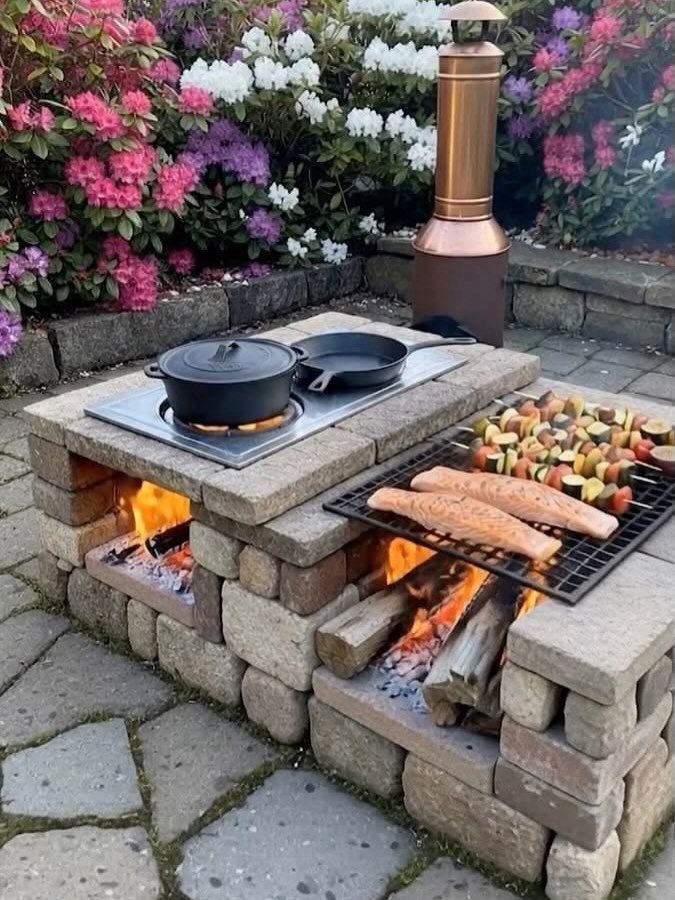
Splitting the fire between a grill grate and a flat stovetop means skewers and a cast-iron pot of beans finish together.
One chamber holds the meat over open flame; the other supports a metal plate or griddle for pans that would tip on bars.
Both sides draw from the same firebox below, separated by a brick divider.
The stovetop needs airflow gaps or it will soot your pans; half-inch slots cut into the plate work. Fireproof brick throughout, since both chambers run hot.
This trades some grill space for versatility. For a camp-style cook who wants fried eggs with morning coffee or a simmering sauce beside seared steaks, the split layout pays back every time.

【All-in-One BBQ Fire Starter Set】 Complete charcoal chimney starter kit includes 20 fire starters, heat-resistant glove, fan and clip, giving you everything needed to light charcoal and start grilling without extra purchases

LARGE CAPACITY CHARCOAL CHIMNEY: Holds up to 6.6 pounds of charcoal, briquettes, or meat-smoking hardwoods such as hickory or applewood for outdoor charcoal grills, fire pits, and camping

Compact Folding Style - Folds down in only 3 steps to become ultra-thin for easy storage and convenient carry; Fully assembles in less than 15 seconds.
9. Brick BBQ with Tiled Countertop
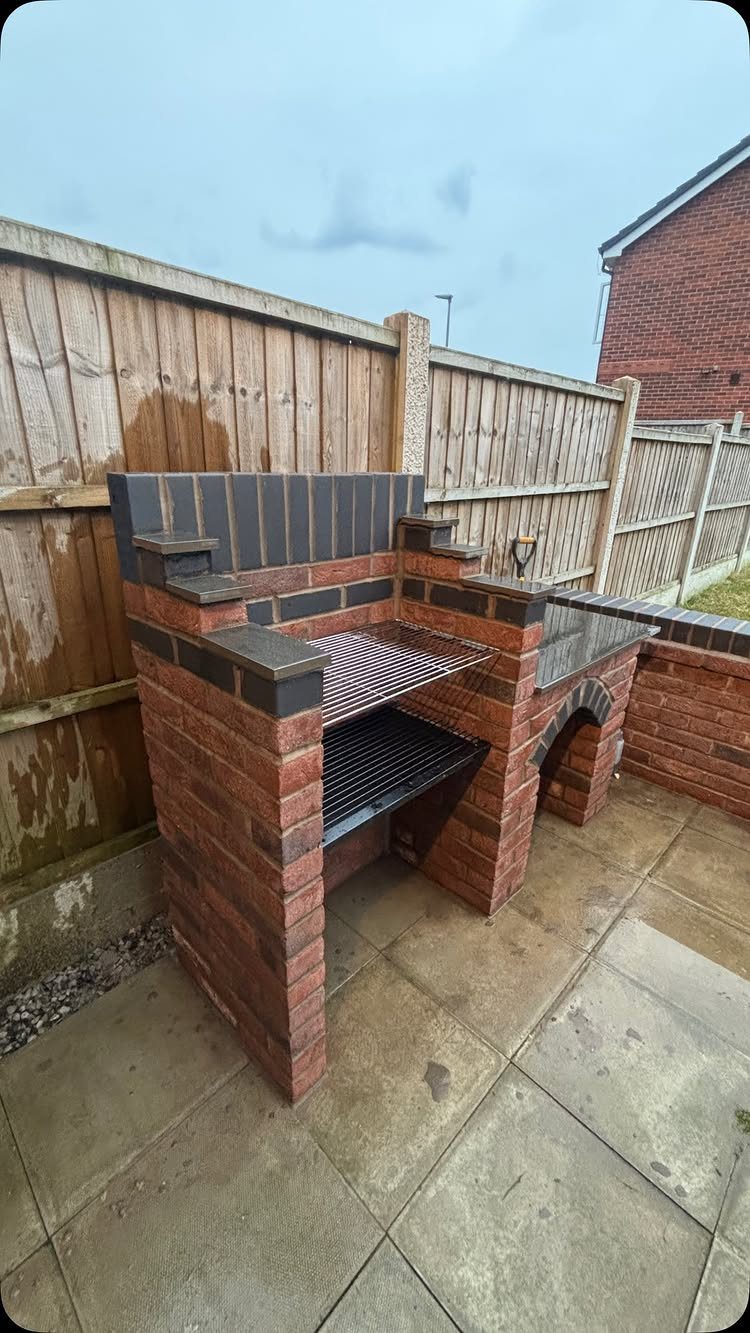
Red brick with dark tiled counters reads finished without reading fancy. The tiles wipe clean after raw chicken prep, and the dark color hides the grime that light stone shows by July.
Set the tiles on a poured concrete slab or cement board, not directly on brick; thermal movement cracks grout lines otherwise.
Use outdoor-rated tile and epoxy grout, the same as a pool surround. The grill opening stays fireproof brick, with standard brick safe for the counter structure.
This is the middle ground in cost and effort. Less than a full outdoor kitchen, more polished than raw brick, it suits a permanent backyard where you grill twice a week and want the setup to look intentional.

【LARGE COVERAGE FOR BIG GRILLS & SPACES】 Our large under grill mats for outdoor grill deliver unbeatable full coverage, perfect for oversized grills, family-sized cookouts, and expansive patio areas. Unlike standard grill mats, this large grill pad shields entire decks, lawns, and wood floors from hot embers and spills—no overlapping or gaps needed, making it the ultimate under grill mat for big outdoor cooking moments.

36-Inch Wide Coverage: Designed as a 36-inch round fire pit mat, this spacious heat-resistant pad provides broad coverage beneath fire pits and grills. It helps shield decks, patios, lawns, grass, wood, concrete, brick, and other outdoor surfaces from stray embers, hot ash, grease, and food drips while keeping your outdoor area cleaner.

🔥【UPGRADE 3 LAYER PROTECTION】--- Fire pit mats for under fire pit features 3-layer fire protection structure. The first layer (Glass Fiber) can withstand temperature up to 1800°F/1000℃; The second layer (High Heat Dissipation Insulation Cotton) insulate all heats, greatly reduce the heat transfer to the ground; The third layer (Fire-Resistant Silicone Coating) for fire and high temperature resistance. It can perfectly protect your deck and lawn, allowing you to easily enjoy barbecue.
10. Brick Grill with Log Storage
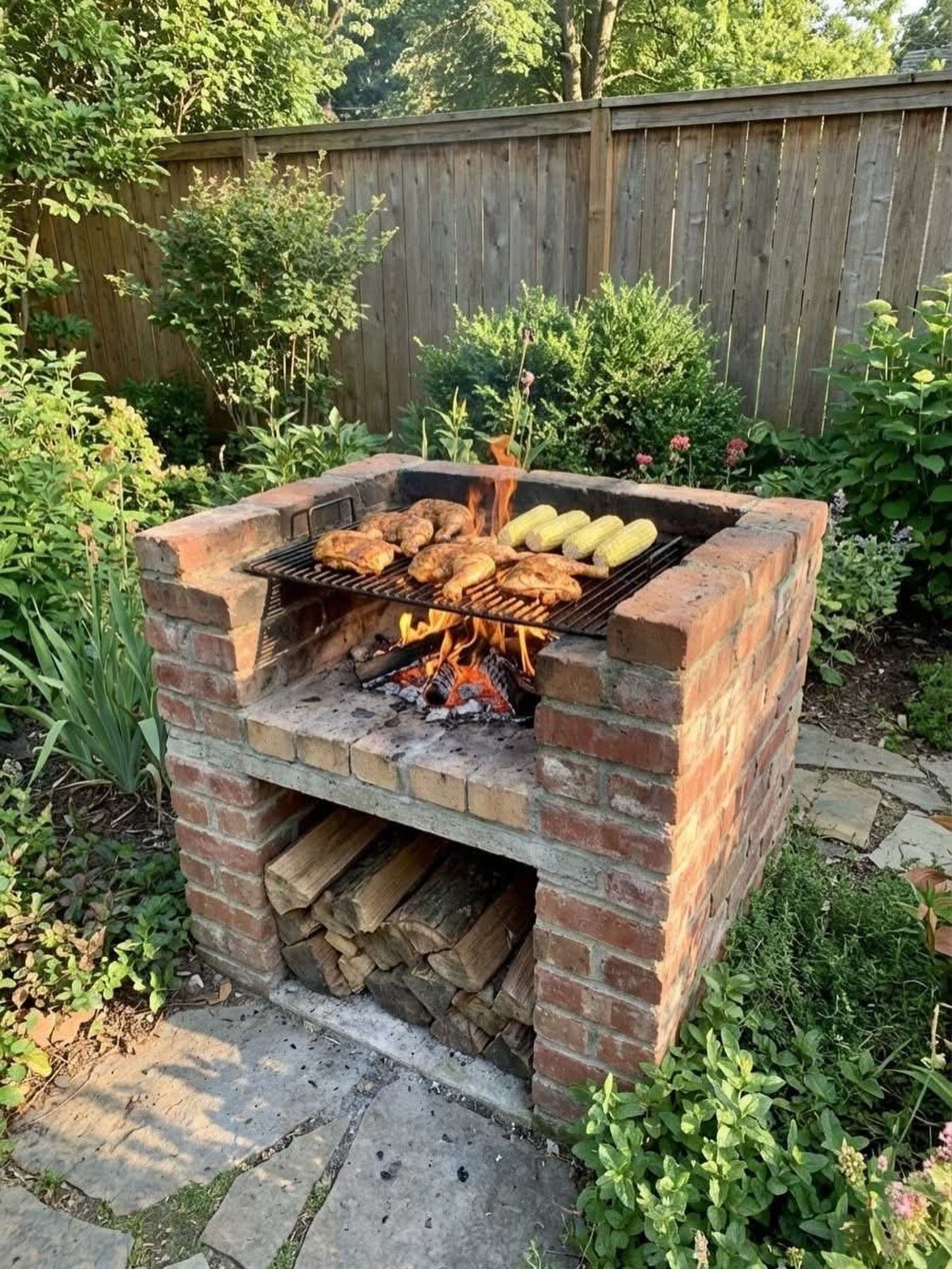
An open fire over stacked logs, with more logs waiting below: the storage niche keeps fuel dry and within arm’s reach. No trotting to the woodpile mid-cook, no damp newspaper starter runs.
The lower compartment needs a slatted floor or gravel bed so air circulates and moisture drains.
Brick walls 3 sides, open front, sized to a weekend’s worth of splits. A brick grill at standard height with log storage built underneath leaves enough clearance that stray embers from the grate will not reach the wood pile.
This design asks for dry firewood storage, which most backyards lack. If your climate is wet, a covered version with a hinged door protects the fuel better, though it costs more and asks more of the builder.
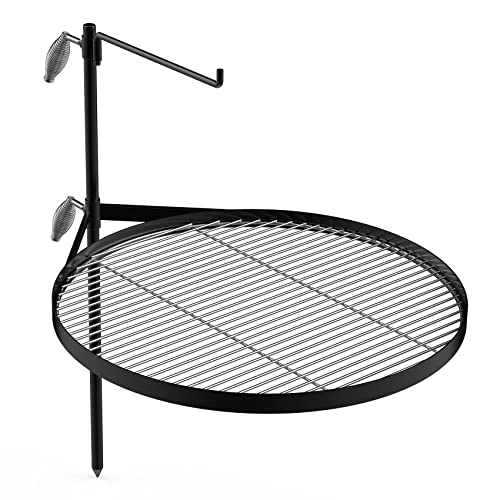
【Large Area】- 24 inches diameter; Ground spike is 33 inches. Sturdy cooking grate is large enough to hold meat and vegetables to have a good BBQ, and you can grill your favorite food as you want.

Superior Durability: The Barebones Heavy Duty Grill Grate is built to withstand the rigors of outdoor cooking. Crafted with high-quality materials, this grill grate can handle heavy use and high temperatures with ease

EASY TO LIFT HOT/GREASE GRATE/GRID/PLATE: A necessary BBQ accessory, the grill gripper is good to clamp hot grids. You can easily pick up the grate with just one hand
Benefits of Building a Brick BBQ
A brick BBQ outlasts three or four store-bought grills before it needs any attention.
The mass holds heat steady after the lid of a thin-metal grill would have lost it, so steaks cook evenly and you spend less time fiddling with vents.
Building it yourself means the width matches your crowd, the height matches your back, and the shelf sits on the side you actually use.
That customization costs mostly time and sweat rather than cash; even with fireproof materials, a simple dry-stack pit runs less than many cart grills.
What you get back is slower and less portable than wheeling a kettle grill home from the hardware store.
Weight and permanence are the trade. For a yard you plan to keep, that trade usually favors brick.
Materials for Brick BBQ
Permanent builds need mortar rated for high heat; standard Type N will crack the first time you fire it up.
Preblended refractory mortar mixes with water and goes straight on; dry mix versions need the same attention to ratio you would give concrete. Either beats standard mortar, which crumbles where the fire lives.
For dry-stack builds, the weight of the bricks does the holding together.
No mortar means no curing time and easy disassembly if you move or miscalculate the layout. The trade is precision: every course has to sit flat because the stack will not forgive a shim.
Metal grates need sizing before you buy. Measure the opening you plan, then subtract half an inch for thermal expansion and easy lifting.
Building Techniques
Mortar sets a build in place and seals the gaps that leak smoke and ash. The downside is commitment: a mortared pit stays where you poured the footing, and fixing a crack means chisel work.
Dry-stack builds trade polish for flexibility. A level concrete slab is non-negotiable; any wobble concentrates stress and the stack fails where it rocks.
For a first project, dry-stack lets you test dimensions before sealing them. Run a season, note what annoys you, then take it apart and rebuild with mortar if the location and size prove right.
Design Considerations
Smoke travels downwind and pools under low roofs.
Position the grill so the usual breeze carries smoke away from seating and doors, not toward them. A 10-foot clearance from house walls and overhangs is the standard minimum; more is better if your yard allows.
The base has to be dead level and non-combustible.
Concrete slab, not pavers or gravel; pavers shift, and gravel lets embers through. Slope the slab slightly for drainage so water does not pool where you stand.
A basic grill needs room for the firebox, a grate, and elbows on both sides.
Work surfaces, seating, or storage add to that, and pavilion posts fix the layout permanently once they go in. Plan the full layout before the first brick, including where people will stand when the grill is hot and crowded.
Built-in seating sounds inviting, but cushions and guests need the same smoke clearance as the dining table. Put the social zone upwind or accept that some evenings the wind decides where everyone sits.
Frequently Asked Questions
What is the cheapest way to build a brick BBQ?
Cinder blocks cost the least up front.
The trade is looks and longevity; the gray block reads industrial and the gaps leak heat and ash, but for a first project or a rental you will leave behind, the math usually works.
Are bricks safe to use for grilling?
Standard bricks can spall or crack from repeated heating, so fireproof bricks are the right choice anywhere the fire lives. For outer structures that never see flame, standard brick is fine.
What kind of bricks work best for an outdoor BBQ?
Fireproof bricks are the right choice for the firebox and any chimney, since standard bricks crack from repeated heating. Standard brick is safe for outer structures, counters, and sink surrounds that never contact flame.
What type of mortar should I use?
Refractory mortar rated for high heat; standard Type N cracks the first time you fire it up. Either beats standard mortar, which crumbles where the fire lives.
How should I clean my brick BBQ?
Wire-brush the grates after each cook and shovel out ash and grease so nothing flares. Concrete countertops stain if you leave grease sitting, so wipe spills promptly.